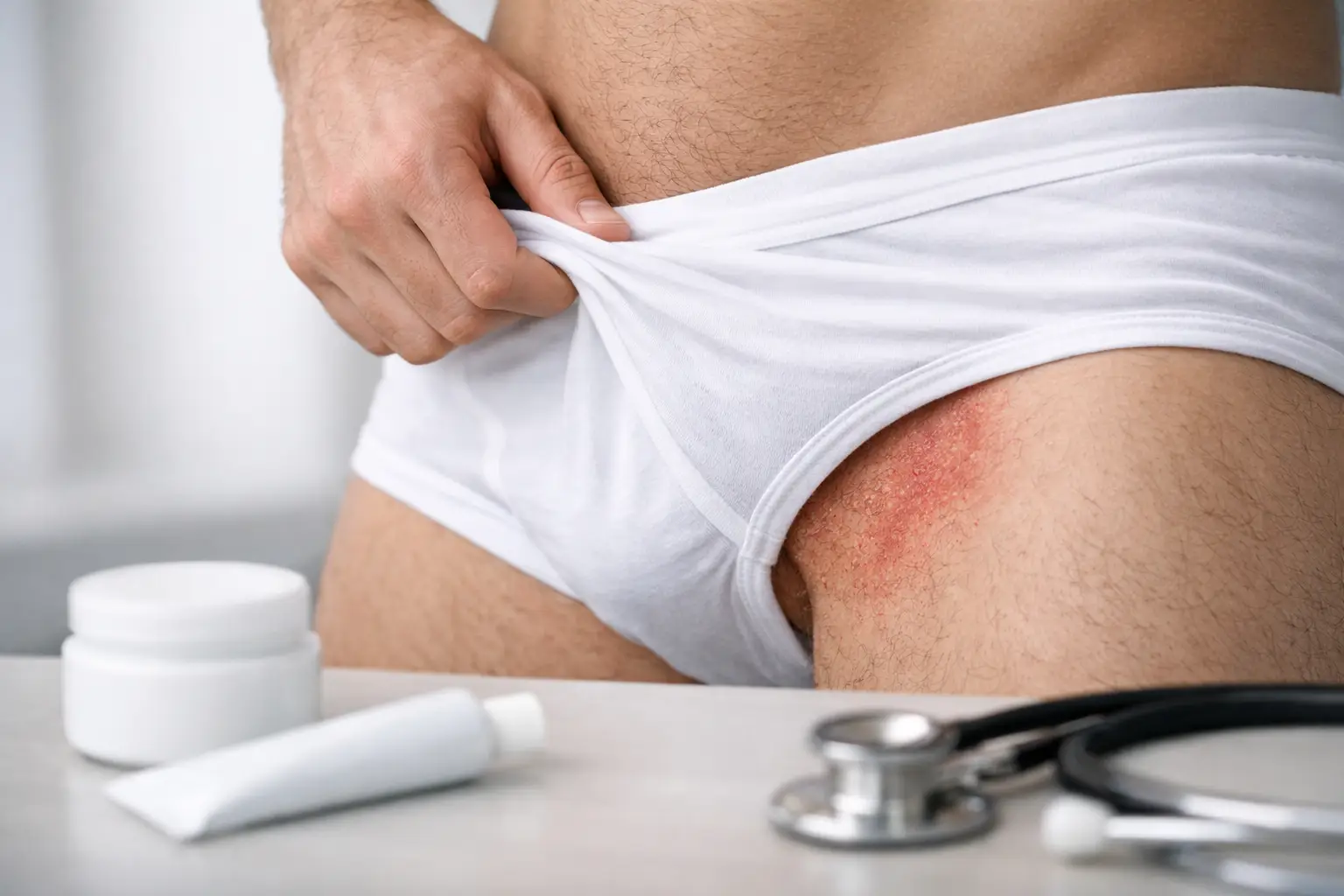
If the skin in your groin stays red-brown, itchy, and slightly scaly no matter how often you wash, you may be dealing with a bacterial infection rather than simple chafing or jock itch. Erythrasma treatment for groin area problems needs a targeted approach because this condition tends to settle into warm, moist skin folds and linger when the real cause is missed.
Erythrasma is commonly caused by Corynebacterium minutissimum, a surface-dwelling bacterium that thrives where friction, sweat, and occlusion create the right environment. The groin is one of its preferred sites, along with the underarms and spaces between the toes. Because it can look like a fungal rash, many people spend weeks using the wrong product and get little relief.
What groin erythrasma usually looks like
In the groin area, erythrasma often appears as reddish-brown or brown patches with clear but irregular edges. The skin may look dry, finely wrinkled, or lightly scaly rather than raw and intensely inflamed. Some people notice mild itching or burning. Others are more bothered by odor, discoloration, or persistent irritation that worsens with heat and sweating.
That milder appearance is part of why it gets overlooked. Fungal rashes in the groin often produce a more raised border and more active scaling at the edges. Erythrasma is usually flatter and more uniform in color. Still, there is overlap, and mixed infections do happen. A person can have erythrasma and a fungal infection at the same time, especially in chronically moist skin folds.
Why erythrasma treatment for groin area can fail
The biggest reason treatment fails is misidentification. If you assume every groin rash is fungal, you may keep applying antifungal creams to a bacterial problem. That does not always make the condition worse, but it may not control the bacteria driving the rash.
Another issue is moisture. Even when the right topical treatment is used, constant sweating, tight clothing, skin-on-skin friction, and delayed drying after showers can keep the area favorable for bacterial overgrowth. Recurrence is common when the environment never changes.
People with diabetes, obesity, excessive sweating, or a history of recurrent skin fold infections may be more prone to erythrasma. It also tends to persist in athletes, workers in hot environments, and anyone wearing non-breathable underwear or athletic gear for long stretches.
How to approach erythrasma treatment for groin area skin
Treatment works best when it addresses both the organism and the conditions helping it survive. For mild to moderate groin erythrasma, topical therapy is usually the starting point. The goal is to reduce bacterial overgrowth, calm symptoms, and help the skin barrier recover without adding unnecessary irritation.
A focused topical product should be applied to clean, dry skin. Consistency matters more than occasional heavy use. If the area is damp when treatment is applied, or if sweating resumes immediately afterward, the benefit may be limited. Many people do better when they wash gently, dry the fold thoroughly, then apply the product in a thin layer.
Natural topical options can make sense for people who want non-prescription care and prefer to avoid unnecessary antibiotic exposure. That approach is especially appealing for localized infections that are uncomfortable but not severe. The key is choosing a formulation designed for anti-infective use rather than a generic moisturizer or soothing cream that only masks symptoms.
If the skin is very inflamed, cracked, spreading quickly, or not improving after a reasonable trial of topical care, a clinician may recommend a prescription therapy. In some cases, oral treatment is used, but that depends on severity, extent, recurrence, and whether another diagnosis is in play.
What a good topical plan should include
An effective home plan is usually simple. Clean the area once or twice daily with a mild cleanser, not a harsh scrub. Pat dry completely, paying attention to the crease where moisture gets trapped. Apply a targeted antibacterial or anti-infective topical treatment as directed, and keep the area as dry as possible through the day.
Clothing choices matter more than many people realize. Loose, breathable underwear and pants reduce heat and moisture retention. If you exercise, changing out of sweaty clothes quickly can make a real difference. Rewearing damp compression shorts or underwear is a common reason the problem keeps cycling back.
If odor is part of the problem, treating the infection usually helps more than covering it with fragranced powders or deodorizing sprays. Those products can irritate the skin and complicate treatment. In the groin, simpler is usually better.
What to avoid while treating groin erythrasma
Do not keep switching from one random cream to another every few days. That makes it hard to know what is helping and raises the risk of irritation. Avoid strong exfoliants, alcohol-heavy products, fragranced body sprays, and aggressive washing. These can weaken the skin barrier and increase burning.
Steroid creams are another point of caution. They may reduce redness temporarily, but if the root cause is bacterial or mixed with fungal overgrowth, steroids can blur the rash and make proper treatment harder. If you have already used a steroid and the rash keeps returning, that is a clue the diagnosis may need a closer look.
How long improvement usually takes
With the right treatment, mild erythrasma can start looking better within one to two weeks. Discomfort, odor, and irritation often improve before the discoloration fully clears. Brownish patches may take longer to fade, even after bacterial control has improved.
That does not mean you should stop too early. In skin folds, partial treatment often leads to recurrence. Follow the recommended duration for the product you are using, and continue the moisture-control steps after the rash looks better. Prevention is part of treatment with this condition.
When the diagnosis may not be erythrasma
If the rash has a sharply raised border, central clearing, significant peeling, pustules, or intense itching, a fungal infection may be more likely. If there is marked tenderness, swelling, drainage, or open sores, that points away from simple erythrasma and needs medical review. Psoriasis, contact dermatitis, intertrigo, and inverse eczema can also affect the groin and mimic infection.
One useful clinical clue is that erythrasma can fluoresce coral-red under a Wood’s lamp because of bacterial porphyrins. Not every patient has access to that test, but it is one reason clinicians can distinguish erythrasma from similar-looking rashes when the picture is unclear.
When to seek medical care
Home treatment is reasonable for a small, mild rash that fits the pattern and is not getting worse. Medical care is the better choice if the rash is extensive, recurrent, painful, or resistant to treatment. It is also worth getting checked if you have diabetes, immune suppression, frequent skin infections, or uncertainty about whether the problem is bacterial, fungal, or something else.
If the groin rash keeps coming back, the answer may not be stronger medication alone. You may need to address sweating, friction, body weight, hygiene timing after exercise, or another skin condition that is disrupting the area. Recurrence usually has a reason.
Choosing a more targeted, antibiotic-conscious option
For many adults, the best over-the-counter approach is one that treats the infection directly while supporting symptom relief and daily comfort. A targeted topical anti-infective product can be a practical option when you want focused care for redness, itching, irritation, odor, and discoloration without defaulting to systemic antibiotics for a localized skin problem.
That is where condition-specific formulations stand apart from general skin creams. Theracont Scientific takes that focused approach by developing natural topical products around specific bacterial and fungal skin infections rather than treating every rash as the same problem. For consumers dealing with stubborn groin fold symptoms, that kind of specificity matters.
Erythrasma in the groin is uncomfortable, easy to mistake, and frustrating when it lingers. But it usually responds when treatment matches the cause and the skin environment stops feeding the infection. If you stay consistent, keep the area dry, and use a targeted topical plan, you give the skin a much better chance to clear and stay clear.