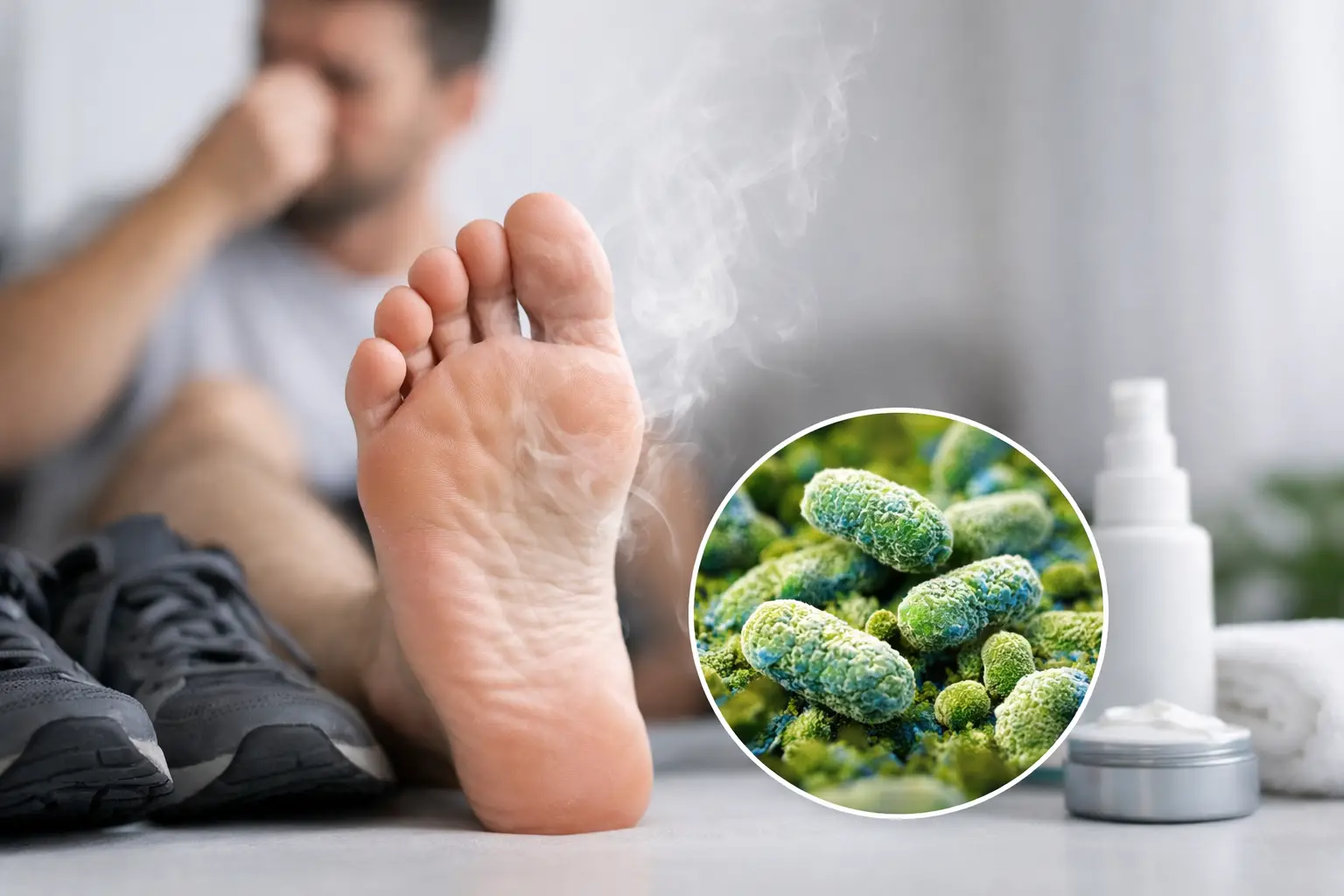
Take off your shoes after a long day and notice a sharp, sour, or unusually strong smell that does not wash away easily – that is not just “sweaty feet.” Foot odor caused by bacteria usually develops when moisture, skin debris, and heat create the right conditions for bacterial overgrowth. In some cases, odor is the main complaint. In others, it comes with peeling skin, itching, burning, or tiny pits on the soles.
That distinction matters because odor is a symptom, not a diagnosis. If the goal is real control, the focus has to be on what is driving the smell and whether bacteria are simply thriving on sweat or actively causing a skin condition.
Why foot odor caused by bacteria happens
Feet spend hours in a closed, high-friction environment. Sweat collects inside socks and shoes, the outer skin softens, and bacteria begin breaking down sweat components and dead skin. That breakdown releases the compounds people recognize as foot odor.
Not all foot odor is the same. Mild odor may come from ordinary bacterial activity on damp skin. More persistent or aggressive odor can point to an actual bacterial infection or overgrowth, especially when the skin barrier is damaged. If the skin is macerated, cracked, or chronically moist, bacteria gain an easier foothold.
The most common pattern is simple: too much moisture, too little airflow, and a bacterial population that keeps rebuilding after every shower. But there is an important clinical layer here. Some people with strong odor are not just dealing with sweat. They may be dealing with pitted keratolysis, erythrasma, or a mixed bacterial-fungal problem that requires a more targeted response.
When odor points to more than sweat
Strong odor alone does not confirm infection, but certain signs make bacterial involvement more likely. If the soles look white and soggy after wearing shoes, if there are shallow crater-like pits on weight-bearing areas, or if the smell becomes unusually pungent and persistent, pitted keratolysis should be considered. This is a superficial bacterial condition that often affects people with sweaty feet, athletes, workers in boots, and anyone whose shoes stay warm and damp for long periods.
If odor comes with reddish-brown discoloration in toe webs or other skin folds, erythrasma may be part of the picture. That condition is also bacterial. It can be mistaken for fungus, and that is one reason some people cycle through generic foot creams without much improvement.
There is also overlap with athlete’s foot. Fungal infections can damage the skin barrier and increase moisture retention, making secondary bacterial overgrowth more likely. In that setting, treating odor without addressing the fungal component may only give partial relief. The reverse is also true. If bacterial overgrowth is the main issue, relying only on antifungal products may not solve the smell.
The smell itself tells you something
Odor caused by bacteria is often described as sour, cheesy, sulfur-like, or sharply unpleasant. It tends to intensify after shoes come off or when socks are damp. A simple sweat smell usually improves quickly with washing and fresh footwear. Bacterial odor tends to return fast, even after basic hygiene.
That fast rebound is one of the clearest clues. If you clean your feet thoroughly, dry them well, and the odor is back within hours, the issue may be more than poor hygiene. It may reflect active bacterial growth, excessive sweating, skin breakdown, or all three.
Pain, redness, warmth, drainage, or spreading inflammation are different warning signs. Those symptoms can indicate a deeper infection and should not be handled like routine foot odor.
What actually helps
The first objective is to reduce the environment bacteria need. That means controlling moisture, limiting friction where possible, and cleaning the skin without leaving it damp. Wash the feet daily, including between the toes, then dry them completely. For many people, incomplete drying is where the problem restarts.
Sock and shoe management matters just as much as washing. Change socks at least once a day, more often if your feet sweat heavily. Breathable socks can help, but the bigger issue is getting damp fabric off the skin. Rotate shoes so each pair has time to dry fully before being worn again. If one pair always smells bad no matter what you do, the material may be holding bacterial residue and reinfecting the skin environment.
For recurrent cases, moisture control is not optional. If your feet stay wet for hours, odor control products alone will underperform. The bacteria are not the only problem – the habitat is.
Treat the cause, not just the smell
Deodorizing sprays can mask odor, but they do not eliminate bacterial overgrowth or correct infected skin. If the odor is persistent, the better approach is targeted topical care aimed at reducing the microbial burden while soothing irritated skin.
This is where condition-specific treatment matters. If the problem is pitted keratolysis, the goal is antibacterial action and skin recovery. If it is athlete’s foot with secondary odor, antifungal treatment may be necessary along with moisture control. If there is visible irritation, raw skin, scaling, or toe-web breakdown, using a generic cosmetic foot cream may do little besides temporarily soften already compromised tissue.
For consumers who want an over-the-counter option, natural anti-infective topicals can make sense when they are formulated for a specific foot condition rather than marketed as a catch-all skin cream. Theracont Scientific follows that condition-specific model, with products designed for bacterial and fungal skin problems that drive symptoms like odor, burning, scaling, and irritation.
The practical point is simple: matching treatment to the condition gives you a better chance of stopping recurrence.
What makes bacterial foot odor keep coming back
Recurring odor usually means one of four things is being missed. The first is moisture. If sweating is heavy and the skin stays damp, bacteria repopulate quickly. The second is footwear. Shoes can act like a reservoir if they never dry completely. The third is misidentification. What seems like ordinary odor may actually be pitted keratolysis, erythrasma, or a fungal infection with secondary bacterial overgrowth. The fourth is stopping treatment too early, when the smell fades before the skin has fully recovered.
There is also an “it depends” factor with activity level and work environment. Someone in ventilated shoes part of the day may improve with basic hygiene and a targeted topical. Someone spending ten hours in occlusive boots may need more aggressive moisture management or the odor will return regardless of what ointment they use.
When to suspect pitted keratolysis
Pitted keratolysis deserves special attention because it is strongly associated with malodor and often goes unrecognized. It typically affects the soles, especially pressure areas such as the ball of the foot or heel. The skin may look cratered or peppered with tiny punched-out pits. Some people feel tenderness or burning, but others mainly notice the smell.
Because it is bacterial, this condition does not respond the same way ordinary dry-skin products do. It needs targeted care that addresses the bacterial source and supports recovery of the outer skin layer. If the soles are persistently malodorous and look waterlogged or pitted, this diagnosis should be on the table.
When to get medical evaluation
Most mild cases of foot odor caused by bacteria can be managed at home if you respond early and use the right topical approach. But some situations need professional evaluation. That includes spreading redness, swelling, pain, drainage, fever, open cracks that are not healing, or symptoms in someone with diabetes, circulation problems, or immune compromise.
You should also get checked if the condition has lasted for weeks despite good hygiene and appropriate over-the-counter treatment. Chronic odor with discoloration or recurring skin breakdown deserves a closer look. Not every case is simple, and not every case should be treated as if it is.
A more effective way to think about foot odor
The most useful mindset is to stop treating odor as a cosmetic nuisance and start treating it as a clinical signal. If bacteria are driving the smell, the answer is not stronger fragrance. It is reducing moisture, restoring the skin barrier, and using targeted topical therapy that addresses bacterial or mixed microbial overgrowth directly.
That shift usually changes results. Once you identify what is feeding the odor, control becomes much more realistic – and so does keeping your feet comfortable, dry, and easier to live with day after day.