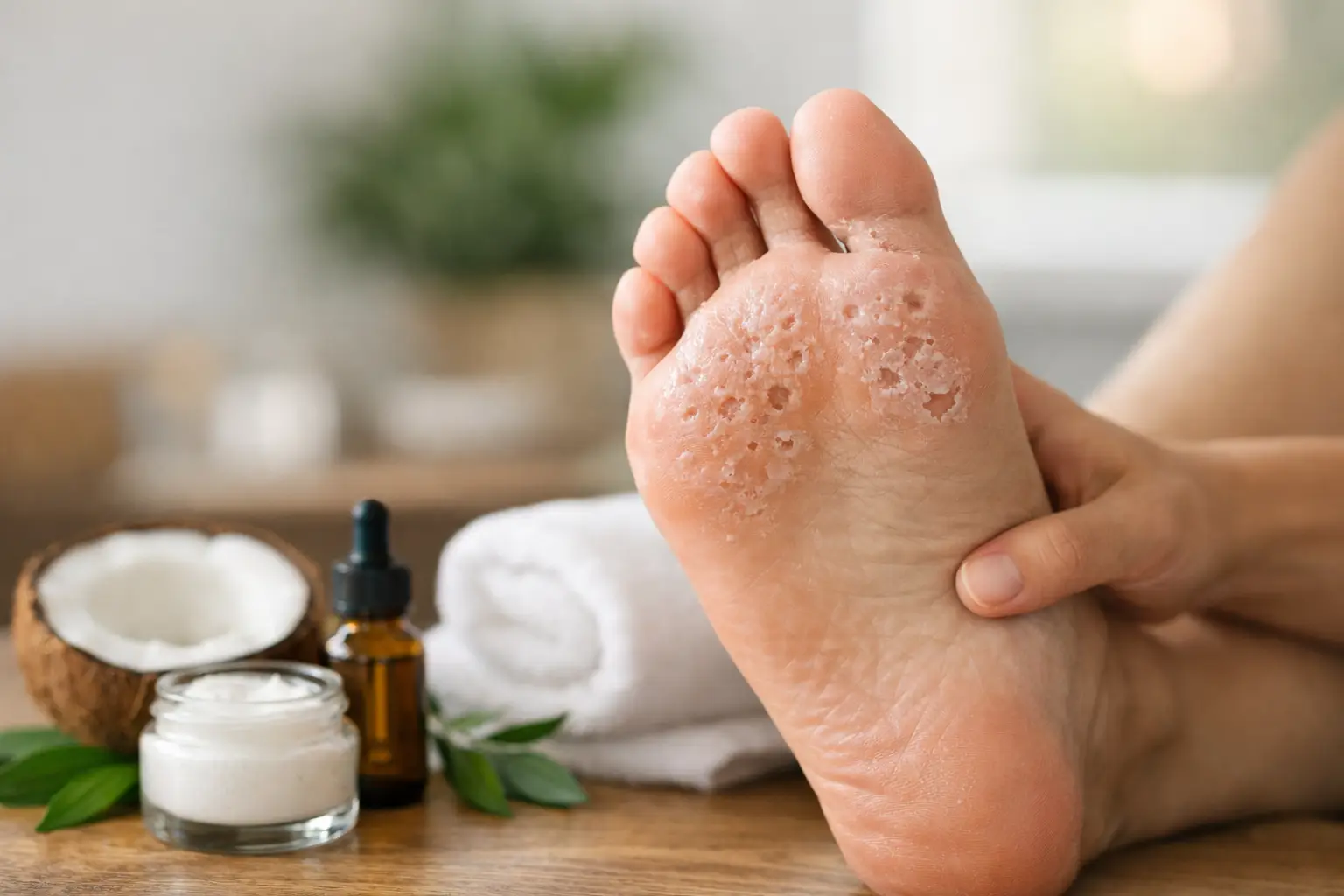
That sharp foot odor that keeps coming back, even after washing, is often the first sign that this is more than sweat. If you are searching for how to treat pitted keratolysis naturally, the goal is not just to mask odor or soften skin. The real objective is to reduce the bacterial overgrowth, keep the skin dry, and stop the cycle that allows the condition to return.
Pitted keratolysis is a superficial bacterial infection that usually affects the soles of the feet, especially pressure-bearing areas such as the heels, balls of the feet, and toes. It is known for tiny crater-like pits in the skin, excessive foot odor, and sometimes a white, soggy appearance caused by prolonged moisture. For many adults, it becomes a recurring problem because the conditions that trigger it – sweat, friction, heat, and occlusive footwear – stay in place long after the first outbreak.
What pitted keratolysis actually is
Pitted keratolysis develops when certain bacteria break down the outer layer of the skin. This process creates shallow pits or erosions in the stratum corneum, the top protective layer of the sole. It tends to show up in people with sweaty feet, workers who wear boots for long hours, athletes, and anyone who spends much of the day in closed shoes.
This is why simple moisturizing foot creams usually do not help. In some cases, they can make the problem worse by trapping more moisture against the skin. A natural approach has to be strategic. It should focus on controlling the environment the bacteria need, while using active ingredients that support antibacterial care without defaulting to synthetic antibiotics.
How to treat pitted keratolysis naturally at home
A natural treatment plan works best when it addresses three things at once: bacterial load, persistent moisture, and skin surface damage. If you only treat one of those factors, the pits and odor often come back.
Start by washing the feet thoroughly once or twice a day with a gentle cleanser, then drying them completely. That sounds basic, but it matters. The bacteria that contribute to pitted keratolysis thrive in damp, airless conditions. Drying between the toes and across the soles is not optional. It is part of treatment.
After cleansing, apply a natural topical product formulated for bacterial skin conditions rather than a general cosmetic balm. This distinction matters. Condition-specific ointments are designed to target the microbes involved while also calming irritation and reducing odor. Natural active compounds can be useful here, particularly when they are selected for antibacterial action rather than just fragrance or skin feel. KERACONT is idealised for this.
Natural care works best when moisture is controlled
One of the biggest mistakes people make is assuming the pits themselves are the main problem. They are a visible sign of infection, but the driving factor is usually moisture. If your feet remain wet for hours each day, bacterial regrowth becomes much more likely.
That means natural treatment is not only about what you apply. It is also about what you change. Breathable footwear, absorbent socks, shoe rotation, and keeping the feet cool can have as much impact as the ointment you choose. In recurrent cases, these measures are not temporary. They are part of long-term control.
For people with hyperhidrosis or chronically sweaty feet, it may take more than basic hygiene to get ahead of the condition. A natural regimen may still help, but results depend on how consistently moisture is reduced. If sweating remains intense, improvement can be slower and recurrence more common.
Signs your approach is working
When natural treatment is effective, odor usually improves first. The skin may then look less macerated, and the pitted areas may gradually become less noticeable as the surface recovers. Burning, tenderness, and irritation should also ease.
Recovery is rarely immediate. The outer skin needs time to normalize after the bacterial activity has been reduced. If you stop treatment the moment the odor fades, the condition can return before the skin barrier has fully recovered.
This is especially true if you continue wearing the same damp shoes or sweating into occlusive footwear for long periods. Pitted keratolysis is strongly tied to environment. That is why management has to continue beyond the first signs of improvement.
Natural ingredients can help, but formulation matters
Many people try essential oils or home remedies because they want to avoid prescription products. The challenge is that not every natural ingredient is suitable for damaged plantar skin, and not every DIY mixture is strong enough to reduce bacterial overgrowth in a meaningful way.
Some natural compounds have recognized antibacterial or skin-soothing value, but raw or poorly diluted ingredients can irritate the feet, especially when the skin is already eroded. A targeted topical formula is generally a better option than improvising with undiluted oils or kitchen remedies. The issue is not whether an ingredient is natural. The issue is whether it is formulated to treat a bacterial foot condition safely and consistently.
This is where condition-specific natural care has an advantage. Instead of acting like a generic moisturizer, it is designed around active control of symptoms such as odor, irritation, and bacterial burden. For consumers who want antibiotic-free support, that targeted design is more practical than experimenting with multiple unproven home treatments.
When pitted keratolysis may not be the only problem
Foot conditions often overlap. Pitted keratolysis can occur alongside athlete’s foot, excessive scaling, or other bacterial and fungal issues. If the skin is cracking, peeling between the toes, or showing widespread redness and itching, you may be dealing with more than one condition at once.
That matters because treatment needs can differ. A natural antibacterial approach may help with pitted keratolysis, but if fungal overgrowth is also present, symptom relief may be incomplete unless both issues are addressed. This is one reason persistent foot problems can feel confusing. The odor may improve while scaling remains, or the pits may lessen while itching continues.
In those cases, a more targeted diagnosis becomes useful. Adults with recurrent infections often do better with products developed for specific conditions rather than one general foot cream used for everything.
When home treatment is not enough
Natural treatment can be effective for mild to moderate cases, especially when odor, moisture, and shallow pits are the main symptoms. But it is not the right answer for every situation.
If the skin becomes painful, swollen, deeply eroded, or starts draining fluid, medical evaluation is the safer next step. The same is true if you have diabetes, poor circulation, neuropathy, or a compromised immune system. In those settings, even a superficial foot infection should not be managed casually.
You should also reassess if there is no improvement after a consistent home regimen. That may mean the diagnosis is off, the sweating issue is too strong to control with home care alone, or another condition is present. Natural care works best when it is matched to the actual problem.
A practical natural routine for recurring cases
For recurrent pitted keratolysis, consistency matters more than intensity. Cleanse the feet daily, dry them thoroughly, use a natural antibacterial topical product made for this condition, and reduce exposure to sweat-retaining footwear. Wash socks frequently, avoid rewearing damp shoes, and give the skin time to recover instead of constantly occluding it.
Some adults need to keep using maintenance care even after the visible pits clear. That is not a failure of treatment. It reflects the fact that the risk factors – sweating, friction, and enclosed shoes – are often ongoing. If your work or lifestyle keeps your feet in a high-moisture environment, long-term control is more realistic than expecting a one-time cure.
For consumers who want a more focused over-the-counter option, Theracont Scientific offers natural topical formulations built around condition-specific anti-infective care rather than generic cosmetic foot creams. That approach aligns better with how pitted keratolysis behaves in real life: as a bacterial problem that needs targeted control, not just deodorizing.
The most useful mindset is simple. Treat the bacteria, control the moisture, and respect recurrence risk. When you do all three, natural care has a far better chance of working and keeping your feet comfortable, dry, and easier to live with.