Symptoms
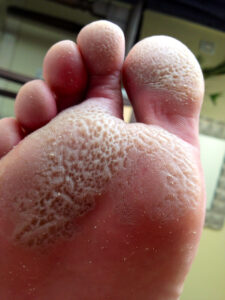
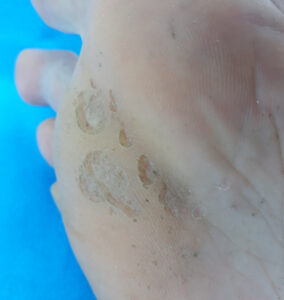
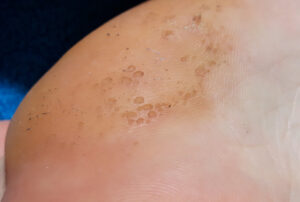
- crateriform pits, (leaky skin)
- bigger lesions,
- malodour,
- sliminess (socks typically sticks into the affected area),
- soreness,
- burning sensation,
- itching,
- pain while walking and running.
Affected skin area
- pressing-bearing areas of the soles,
- palm region of the hands (rare).
Causes
- bacteria with the abilities to degrade proteins,
- upper skin cells are degraded and beside malodorous byproducts are released.
Predisposing factors
- hyperhidrosis or sweating,
- prolonged use of occlusive footwear,
- active sport,
- increase in pH,
- humid climate,
- poor foot hygiene,
- obesity,
- immunodeficiency.
Use of KERACONT:
– clean the affeceted skin area at the end of the day (or ideally twice/day),
– apply KERACONT to the affected area, by creaming it normally,
– wait till the ointment dries and avoid to step on the treated area before drying. Therefore it is suggested to make treatments before sleeping or resting activities.
Facts about Pitted Keratolysis
It is a common bacterial skin infection mostly affecting the pressure bearing areas of the soles and very rarely the palm region of the hands.
Symptoms of Pitted Keratolyis are typical, as multifocal, discrete, superficial crateriform pits and superficial erosions characterize the affected area of the skin. The most common sites of onset of Pitted Keratolysis are the pressure-bearing areas of the palm, such as the ventral aspect of the toe, the ball of the foot and the heel. Friction areas are the next common sites where interface of the toes are more pronounced. Lesions are untypical on the non-bearing-locations of the soles. After the pits appeared, malodour malodour is becoming a very typical and cumbersome concominant sign of the infection.
Beside that in advanced cases patients complain about sliminess (socks sticks in to the affected area), itching, burning sensation and pain while walking.
Cause of Pitted Keratolysis is simply the colonisation and proliferation of such bacteria that due to their enzymatic activities can degrade the upper layer of the skin, the stratum corneum. In the last decades the roles of different groups and species of bacteria, like Kyotococcus sendentarius, Dermatophilus congolensis, Corynebacterium spp. etc. were demonstrated, but today the role of other species like Bacillus thuringiensis, Staphylococcus spp. were also reported. Under appropriate conditions the colonized bacteria start to proliferate and by producing protein degrading enzymes start to degrade the upper layer of the skin. This degradation process results different byproducts, such as thiols, sulfides and thioesters. Their release is practically associated with malodor.
Predisposing factors to Pitted Keratolysis include hyperhidrosis or sweating, prolonged use of occlusive footwear, active sport, increase in pH, humid climate, poor foot hygiene, and in some cases the special physiological conditions like obesity and immunodeficiency.
Recent surveys revealed high rates of occurence not only in sailors, soldiers, hard workers and athlets, but also office workers and citizens with high socioconomic status. Pitted Keratolysis virtually can affect everyone in any age.
Pitted Keratolysis is a common skin infection mostly affecting the pressure bearing areas of the soles and very rarely the palm region of the hands.
Symptoms of Pitted Keratolyis are typical, as multifocal, discrete, superficial crateriform pits and superficial erosions characterize the affected area of the skin. The most common sites of onset of Pitted Keratolysis are the pressure-bearing areas of the palm, such as the ventral aspect of the toe, the ball of the foot and the heel. Friction areas are the next common sites where interface of the toes are more pronounced. Lesions are untypical on the non-bearing-locations of the soles. After the pits appeared, malodour malodour is becoming a very typical and cumbersome concominant sign of the infection.
Beside that in advanced cases patients complain about sliminess (socks sticks in to the affected area), itching, burning sensation and pain while walking.
Cause of Pitted Keratolysis is simply the colonisation and proliferation of such bacteria that due to their enzymatic activities can degrade the upper layer of the skin, the stratum corneum. In the last decades the roles of different groups and species of bacteria, like Kyotococcus sendentarius, Dermatophilus congolensis, Corynebacterium spp. etc. were demonstrated, but today the role of other species like Bacillus thuringiensis, Staphylococcus spp. were also reported. Under appropriate conditions the colonized bacteria start to proliferate and by producing protein degrading enzymes start to degrade the upper layer of the skin. This degradation process results different byproducts, such as thiols, sulfides and thioesters. Their release is practically associated with malodor.
Predisposing factors to Pitted Keratolysis include hyperhidrosis or sweating, prolonged use of occlusive footwear, active sport, increase in pH, humid climate, poor foot hygiene, and in some cases the special physiological conditions like obesity and immunodeficiency.
Recent surveys revealed high rates of occurence not only in sailors, soldiers, hard workers and athlets, but also office workers and citizens with high socioconomic status. Pitted Keratolysis virtually can affect everyone in any age.
Predisposing factors to Pitted Keratolysis include hyperhidrosis or sweating, prolonged use of occlusive footwear, active sport, increase in pH, humid climate, poor foot hygiene, and in some cases the special physiological conditions like obesity and immunodeficiency.
Recent surveys revealed high rates of occurence not only in sailors, soldiers, hard workers and athlets, but also office workers and citizens with high socioconomic status. Pitted Keratolysis virtually can affect everyone in any age.
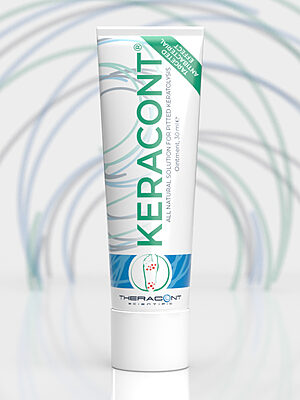
KERACONT means a new trend in Pitted Keratolysis treatment and control. KERACONT is free of traditional antibiotics. Its antibacterial effect is based on all natural active ingredients that specifically targets Pitted Keratolytic causing bacteria. As a result KERACONT effectively kills and inhibits the proliferation of Pitted Keratolytic bacteria and by this eliminates unpleasant symptoms in 2 days.