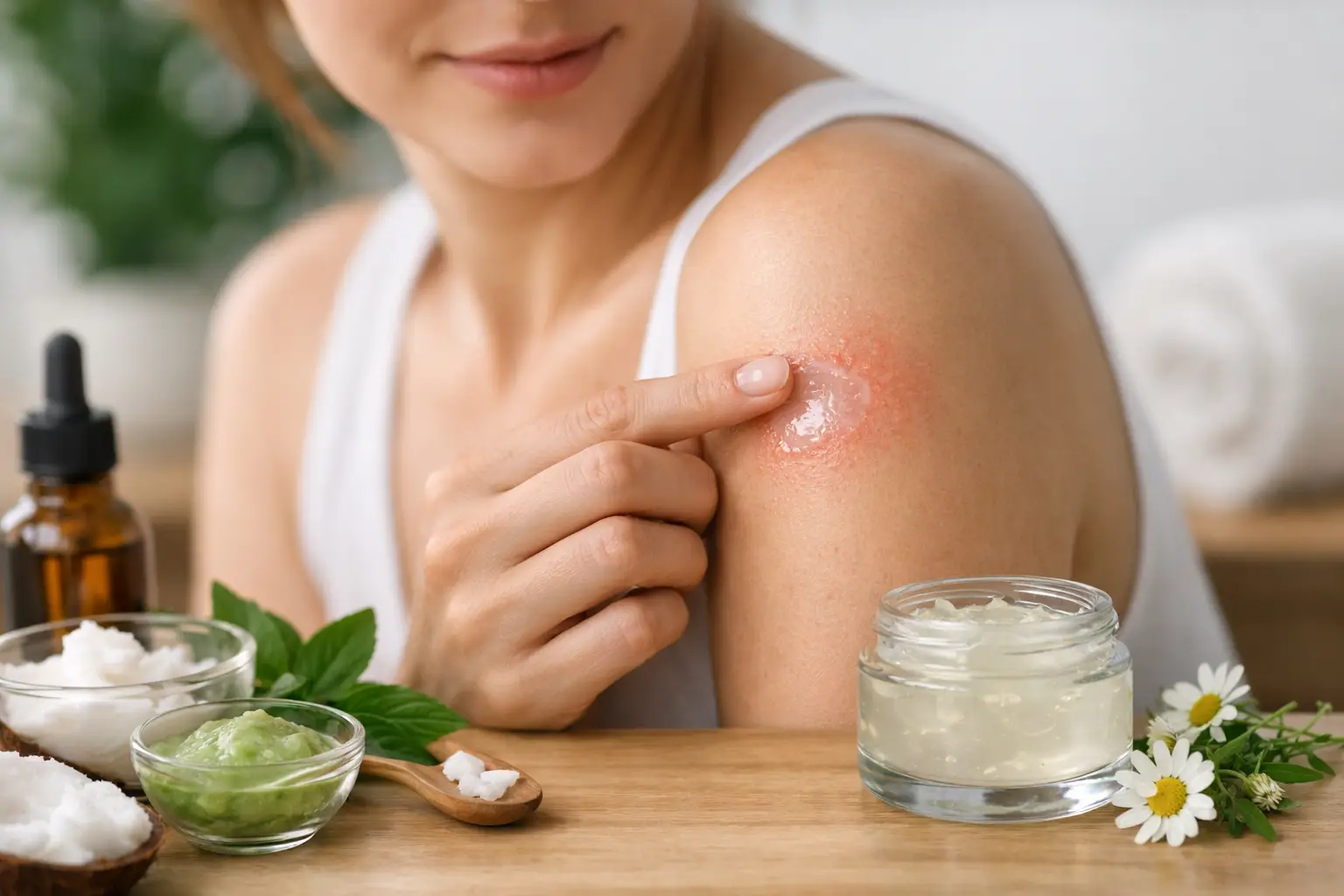
A skin infection rarely starts as a major problem. It starts as itching between the toes, a sour odor that does not wash away, a patch of redness in a skin fold, or scaling that keeps coming back after you thought it was gone. That is why antibiotic free skin infection treatment matters – especially for people dealing with recurrent bacterial or fungal overgrowth who want direct relief without turning first to systemic drugs.
For many mild to moderate superficial skin infections, the real need is not a broad, aggressive approach. It is a targeted topical treatment that addresses the organism on the skin, reduces irritation, and helps restore a healthier surface environment. That matters on the feet, in the groin, under the arms, and in other warm, high-friction areas where moisture and occlusion make infections easier to start and harder to eliminate.
When antibiotic free skin infection treatment makes sense
Not every skin infection should be self-treated, and not every rash is infectious. But there is a large middle category of common superficial conditions where an antibiotic-free approach can be practical and appropriate. Athlete’s foot, recurrent fungal irritation in skin folds, erythrasma-like discoloration in moist areas, pitted keratolysis associated with foot odor and crater-like pits, and some mixed bacterial-fungal overgrowth patterns often respond best to consistent local care.
The key distinction is depth and severity. If the issue is limited to the outer skin, has recognizable symptoms, and has not progressed into spreading warmth, swelling, drainage, fever, or significant pain, a targeted topical strategy may be enough. If the infection appears deep, rapidly worsening, or uncertain in origin, evaluation by a medical professional is the safer move.
This is where consumers often get frustrated. They do not want to ignore a real infection, but they also do not want to overuse antibiotics for every itchy patch or malodorous foot flare. That concern is reasonable. Antibiotics have a place, but they are not the only answer for every superficial skin problem.
Why many people look for antibiotic free skin infection treatment
The first reason is simple: many common skin infections are fungal, not bacterial. Antibiotics do not treat fungal organisms, and in some cases they can complicate the picture by disrupting the balance of normal skin flora. A person who assumes every inflamed rash needs an antibiotic may miss the real cause entirely.
The second reason is tolerance and accessibility. Many consumers want over-the-counter options that they can use quickly, consistently, and locally. A well-formulated topical ointment can concentrate care where the infection is active while minimizing unnecessary whole-body exposure.
The third reason is stewardship. Reducing unnecessary antibiotic use is not just a public health concept. It is also a practical household decision. If a superficial condition can be controlled with a non-antibiotic topical approach, that can be a more measured first step.
What a good topical treatment should actually do
A useful skin infection treatment should do more than make the skin feel calmer for an hour. It should actively address the source of the problem while improving the symptoms that push people to seek help in the first place.
For fungal conditions, that means reducing the organism driving scaling, itching, fissuring, and recurrence. For bacterial overgrowth, it means helping control odor, burning, irritation, and the moist environment that allows those organisms to persist. In mixed or uncertain cases, especially on the feet and in skin folds, a more specialized topical approach may be valuable because symptoms often overlap.
This is why condition-specific products matter. A generic skin cream may moisturize or temporarily reduce discomfort, but it may not be designed for pitted keratolysis, erythrasma, tinea pedis, or nail-adjacent fungal involvement. Each condition behaves differently. The texture of the product, the active compounds, the persistence of use, and the treatment area all affect results.
Common conditions people confuse with each other
One reason treatment fails is misidentification. The feet are a good example. Athlete’s foot can cause scaling, peeling, redness, and itching. Pitted keratolysis can produce intense foot odor and small punched-out pits on weight-bearing surfaces. Erythrasma may look like brownish-red discoloration in folds or between toes. These conditions can coexist, and they do not always respond to the same generic product.
In the groin and underarm area, fungal rash, bacterial overgrowth, chafing, and irritation from sweat can also blur together. A person may think the problem is simply moisture or friction when there is an active infection component sustaining the redness and discomfort.
That is why symptom pattern matters. Odor suggests bacterial involvement more strongly than a classic dry fungal rash. Thick scaling points more toward fungal activity. Brown or reddish discoloration in folds can suggest erythrasma. Nail discoloration and thickening raise concern for fungal nail infection, which usually requires a longer and more disciplined treatment course than skin-only involvement.
What to expect from antibiotic free treatment
The biggest mistake is expecting a chronic infection to clear after one or two applications. Superficial skin infections may be visible, but they are often persistent because the local environment favors them. Sweat, occlusive shoes, friction, skin-to-skin contact, and incomplete treatment all contribute to recurrence.
With a properly selected antibiotic-free topical treatment, the first signs of progress are usually symptom changes. Itching may decrease. Burning may calm down. Odor may lessen. Scaling may start to thin. Redness or discoloration may gradually improve after that. Nail involvement generally takes much longer than skin involvement because nails grow slowly.
It also depends on the location. Feet are notoriously difficult because they spend hours in socks and shoes. Skin folds improve faster when moisture and friction are controlled. Areas that remain constantly wet or occluded tend to relapse unless daily habits change alongside treatment.
How to improve results without making treatment complicated
Topical treatment works better when the skin is prepared properly. Clean the affected area gently and dry it thoroughly, especially between toes, under breasts, in the groin, or in other folds. Apply the product as directed and continue for the recommended period rather than stopping as soon as symptoms ease.
For foot infections, change socks regularly, rotate shoes, and avoid trapping moisture against the skin all day. For infections in folds, reduce friction and keep the area dry without over-scrubbing. Harsh washing can worsen skin barrier damage and make irritation feel more severe even if the infection load is decreasing.
Consistency matters more than intensity. Applying the right product regularly is more effective than switching between multiple creams every few days because progress feels slow.
Where antibiotic free treatment has limits
An antibiotic-free approach is not the answer to every skin infection. If you have fever, spreading redness, marked swelling, drainage, severe tenderness, or a wound that looks worse by the day, you need medical assessment. The same is true for people with diabetes, poor circulation, immune compromise, or recurring infections that never fully resolve.
There is also a difference between symptom relief and eradication. A soothing ointment may reduce burning or itching without fully controlling the infection. That is why formulation matters. The goal is not cosmetic comfort alone. The goal is active control of the bacterial or fungal drivers behind the condition.
And sometimes the diagnosis is simply wrong. Psoriasis, eczema, contact dermatitis, and friction dermatitis can mimic infection. If several weeks of appropriate treatment produce no clear improvement, it is time to reassess rather than keep repeating the same approach.
Choosing a more focused solution
Consumers often default to the broadest product on the shelf, but skin infections respond better to focused treatment. If your main issue is foot odor with visible pits, that points in one direction. If the problem is itchy scaling between the toes, that points in another. If you are dealing with persistent discoloration and irritation in skin folds, the treatment logic shifts again.
That targeted mindset is central to modern antibiotic free skin infection treatment. It is not about avoiding medication for the sake of it. It is about using a treatment that matches the condition, the location, and the symptom pattern while avoiding unnecessary antibiotic exposure when a non-antibiotic topical option is appropriate. Companies such as Theracont Scientific have built their approach around that principle – condition-specific, topical, and focused on active relief rather than generic skin care.
If your skin infection is superficial, recognizable, and caught early, the best next step is often not more guesswork. It is a targeted product, used consistently, with enough patience to let the skin actually recover.