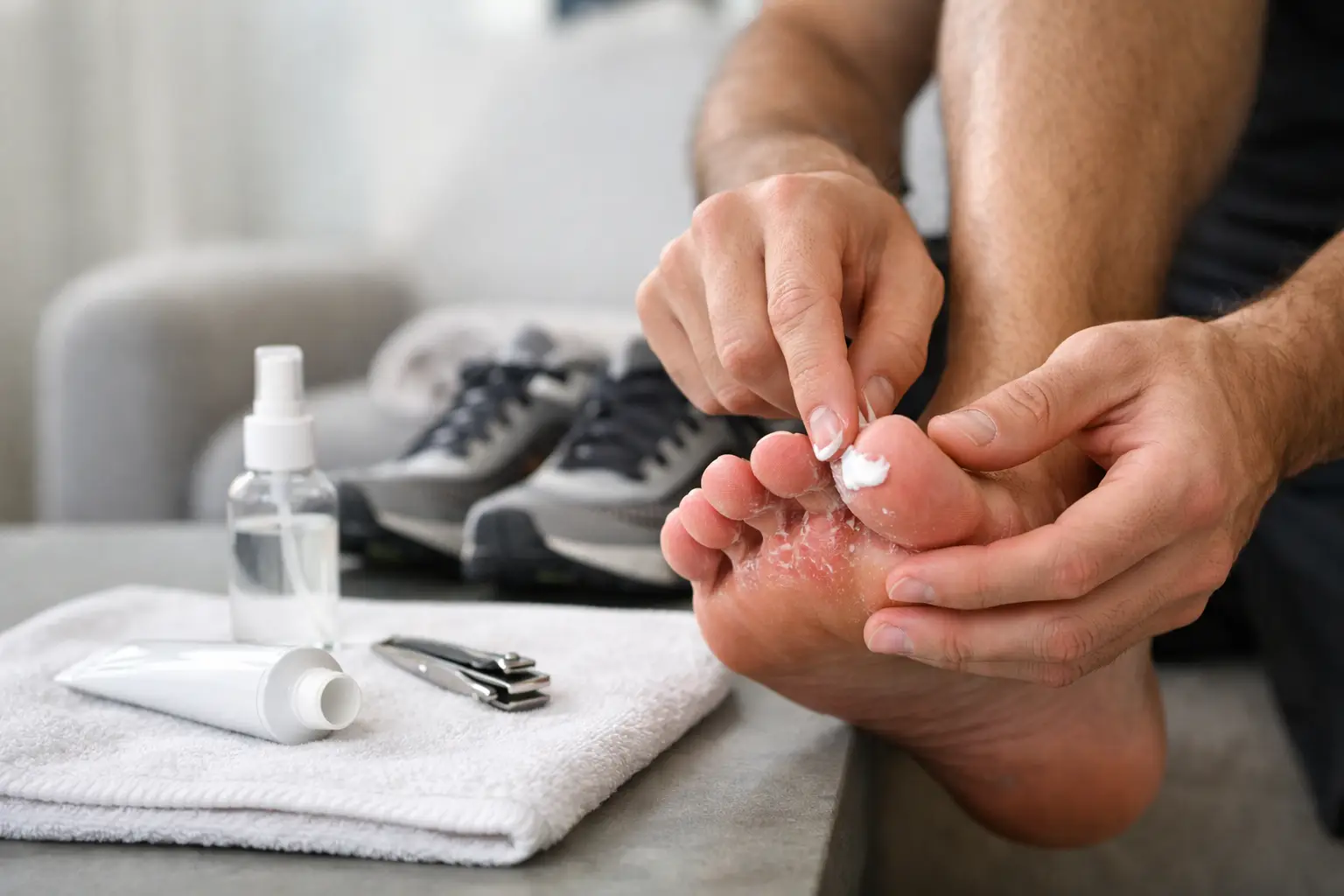
Athlete’s foot treatment usually fails for one simple reason: people stop as soon as the itching eases. The skin may look better within days, but the fungal overgrowth that caused the scaling, burning, redness, and odor can still be active. If treatment is too short, too weak, or too generic, the infection often returns.
Athlete’s foot, also called tinea pedis, is not just a cosmetic nuisance. It is a contagious fungal infection that thrives in warm, damp skin, especially between the toes and along the soles. For many adults, it becomes a recurring problem that affects comfort, mobility, hygiene, and confidence. Effective care starts with using a targeted topical treatment and continuing long enough to control the infection completely.
What effective athlete’s foot treatment needs to do
A useful treatment has to do more than calm symptoms. It should act directly against the fungal organisms driving the infection while also reducing itching, burning, peeling, and skin irritation. If a product only softens the skin or temporarily masks discomfort, it may leave the underlying condition active.
That distinction matters with athlete’s foot because symptoms can shift. Early infection may look like mild flaking or cracked skin between the toes. More advanced cases can involve raw areas, redness, stinging, a strong foot odor, thick scaling on the sole, or inflamed patches that spread along the side of the foot. Some cases remain localized. Others persist because moisture, friction, and repeated exposure keep feeding the problem.
A condition-specific antifungal ointment is often a practical choice because it stays in contact with the affected skin longer than lighter products. For adults looking for non-prescription care, a focused topical formula can provide direct treatment where fungal activity is concentrated.
Why athlete’s foot keeps coming back
Recurrent tinea pedis is common, and it is usually tied to environment, not bad luck. Fungus grows well in sweaty socks, tight shoes, locker room surfaces, and damp skin folds around the toes. If those conditions do not change, even a good treatment may seem less effective.
Reinfection is also easy. You can treat the skin, then put your feet back into contaminated shoes or walk barefoot on the same wet bathroom floor. In some people, the infection also overlaps with fungal nail involvement. When that happens, the nail can act as a reservoir, making the skin harder to clear fully.
There is also a treatment gap issue. Many over-the-counter shoppers reach for the first cream they see, use it inconsistently, and stop within a week. That approach may reduce itching fast, but it does not reliably eliminate fungal growth. Persistent infections usually need a more disciplined plan.
How to approach athlete’s foot treatment at home
Start by washing the feet gently and drying them thoroughly, especially between the toes. Then apply the topical treatment to the affected skin and slightly beyond the visible rash. That extra margin matters because fungal spread often extends past the obvious border.
Consistency is what changes outcomes. Apply the product as directed and continue through the full treatment window, even if symptoms improve quickly. The first sign of progress is often reduced itching or burning. Skin texture and color may take longer to normalize.
It also helps to reduce moisture exposure during treatment. Change socks daily, and more often if your feet sweat heavily. Rotate shoes so each pair has time to dry. If the infection is between the toes, avoid trapping excess moisture in that area after bathing.
Natural topical care can fit well here when it is formulated for anti-infective use rather than general moisturizing. The key is not whether a product is natural or synthetic in a marketing sense. The key is whether its active compounds are chosen to target fungal overgrowth while remaining practical for repeated daily use.
Signs your treatment is helping
You do not need the skin to look perfect overnight to know treatment is moving in the right direction. Reduced itching, less burning, fewer new cracks, and a decrease in scaling are meaningful signs. Odor may also improve as the local skin environment becomes less favorable to microbial overgrowth.
What often lags behind is appearance. Thickened, irritated, or discolored skin can take time to settle even after fungal activity is reduced. That is why stopping treatment based only on partial visual improvement can backfire.
Mild athlete’s foot may begin improving within a short period, while more stubborn cases need longer. If the infection has been present for weeks or months, expect a slower response. Chronic cases do not always mean the condition is severe, but they do require more discipline.
When athlete’s foot treatment may need a different plan
Not every foot rash is athlete’s foot, and not every athlete’s foot case responds the same way. If the skin becomes increasingly painful, swollen, or warm, or if there is drainage, cracking severe enough to bleed, or spreading redness, the issue may be more complicated than a routine fungal infection. Secondary bacterial involvement can change what treatment is appropriate.
People with diabetes, circulation problems, immune compromise, or repeated skin breakdown should be especially careful with self-treatment. In those situations, even a common foot infection can create a larger risk.
There is also a point where persistent recurrence suggests a missed source. Shoes, socks, communal surfaces, and untreated nail fungus all matter. If your skin improves and then flares again within a short time, the answer may not be a stronger product alone. It may be better infection control around the feet.
Choosing a treatment that matches the condition
The most practical athlete’s foot treatment is one that is specific, easy to apply, and realistic for daily use. Many people do better with targeted ointments because they are designed around the infection itself rather than broad skincare claims. When the goal is to control fungal growth and relieve irritation, product design matters.
Look for a formula intended for tinea pedis or athlete’s foot rather than a general-purpose skin cream. A treatment should make clear what condition it is built for and what symptoms it addresses. That level of specificity usually reflects a more serious therapeutic focus.
For consumers who want an antibiotic-free and naturally derived option, scientifically informed topical care can be a strong fit. That is part of the reason companies like Theracont Scientific position their products around specific infectious skin conditions instead of one-size-fits-all relief. Targeted treatment tends to be more useful than vague skincare.
Daily habits that support faster control
Treatment works better when the environment becomes less favorable to fungus. Keep toenails trimmed, avoid sharing towels, and wash socks after each use. If your shoes stay damp inside, the skin keeps facing the same problem every day.
Breathable footwear can help, but it depends on your routine. Someone working long shifts in enclosed shoes may need extra sock changes or shoe rotation. Someone using public gyms or pools should be more careful about foot exposure on shared surfaces. These are not dramatic changes, but they have a real effect on recurrence.
If odor is part of the problem, that can point to more than simple sweat. Fungal infection can disrupt the skin barrier and create conditions that are easier for other microbes to exploit. Addressing the infection directly often improves both irritation and odor together.
What not to do during treatment
Do not assume more product always means faster results. A heavy layer on damp skin can leave the area messy without improving efficacy. Apply enough to cover the affected area well, then let it do its job.
Do not cover persistent symptoms with only powders, deodorizing sprays, or moisturizers if you have obvious scaling, itching, or toe-web irritation. Those products may help with comfort or moisture control, but they are not a substitute for a true antifungal approach.
Most of all, do not quit early. Symptom relief is the beginning of successful treatment, not the end of it. The goal is not to make the feet feel better for three days. The goal is to reduce fungal burden enough that normal skin can recover and stay clear.
A persistent foot infection can be frustrating, but it is usually manageable with the right treatment and better control of moisture and reinfection. If you stay consistent, treat the full area, and choose a product made for the condition you actually have, you give your skin a much better chance to heal and stay that way.