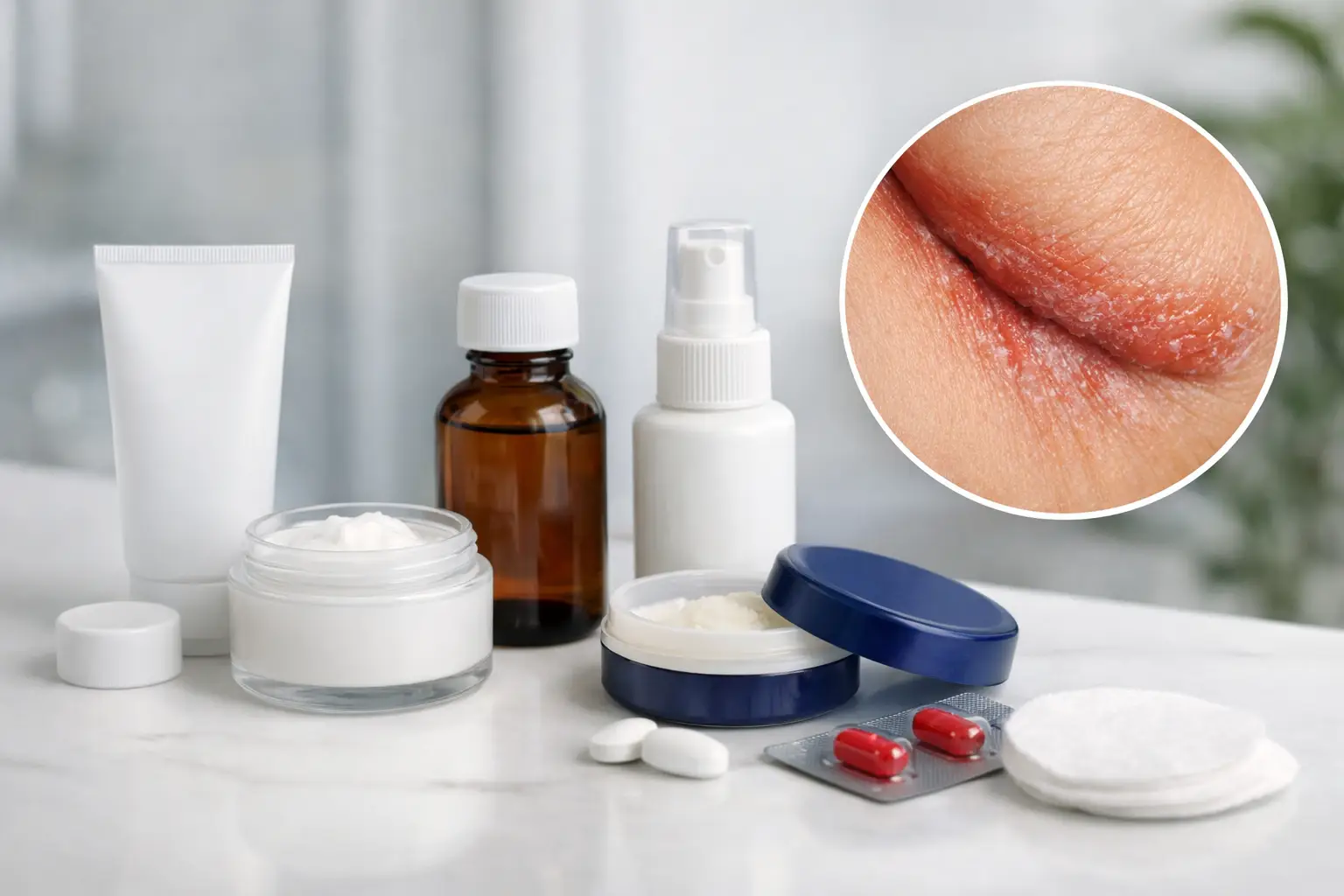
If you are searching for the best otc treatment for erythrasma, the real question is not which cream looks most familiar on a drugstore shelf. It is which over-the-counter treatment is actually suited to a superficial bacterial infection that thrives in warm, moist skin folds and often gets mistaken for fungus, chafing, or simple irritation.
Erythrasma is commonly caused by Corynebacterium minutissimum. It tends to show up in the groin, underarms, between the toes, under the breasts, and in other areas where skin stays warm and occluded. The rash is usually brown, reddish-brown, or pink with fine scaling, and it may itch, burn, or produce odor. Many people try standard antifungal products first because the rash looks similar to jock itch, intertrigo, or athlete’s foot. That is often where treatment goes off course.
What makes the best OTC treatment for erythrasma?
The best otc treatment for erythrasma is one that addresses the actual infection pattern, helps reduce bacterial overgrowth on the skin surface, and supports recovery in a high-friction environment. That usually means looking for a targeted topical product rather than a general moisturizer or a one-size-fits-all rash cream.
A useful OTC option should do three things well. It should help control the microbial load on the skin, relieve symptoms such as irritation or itching, and remain practical for daily use in areas that sweat, rub, and re-infect easily. If a product only soothes redness but does not help suppress the underlying bacterial issue, the rash may look better briefly and then return.
This is also why broad anti-itch creams can be a poor first choice. A product that simply masks irritation without treating the cause can delay proper care. The same goes for heavy ointments that trap moisture in skin folds if the formulation is not designed for infected areas.
Why antifungal creams do not always solve erythrasma
One of the most common mistakes is assuming every groin or fold rash is fungal. Erythrasma can overlap with fungal infections, and mixed infections do happen, especially between the toes. But erythrasma itself is bacterial, not fungal.
That matters because a standard antifungal cream may not fully clear it. Some people see partial improvement because reducing one organism changes the skin environment, but the bacterial component can remain. If the rash keeps coming back in the same spot, develops a brownish discoloration, or has a distinct fine scale with odor, erythrasma should stay on the list of possibilities.
This is where condition-specific OTC care has an advantage. Targeted topical anti-infective products are designed around the actual organisms involved and the practical demands of skin-fold treatment. For consumers trying to avoid unnecessary antibiotics while still wanting a direct therapeutic approach, that distinction matters.
What to look for in an OTC erythrasma product
A good OTC treatment for erythrasma should be chosen based on function, not marketing language. Look at whether the formula is intended for bacterial or mixed skin infections, whether it uses active botanical or other non-prescription anti-infective compounds, and whether it is made for recurring use on friction-prone areas.
The texture matters more than many people realize. A treatment that is too greasy can worsen occlusion in the groin or underarms. A product that is too weak or too cosmetic may not do enough to control the infection. The best option is usually a targeted topical ointment or cream that stays in contact with the skin, supports bacterial control, and is practical for repeated application.
Symptom fit matters too. If your main complaints are itching, burning, discoloration, and odor, choose a product positioned for active infection management rather than basic skin calming. Erythrasma is not just cosmetic discoloration. It is an infectious process, and the treatment should reflect that.
How to use OTC treatment so it actually works
Even a strong product can underperform if it is used inconsistently or applied to skin that stays damp all day. Wash the affected area gently, dry it thoroughly, and apply the product exactly as directed. In toe-web erythrasma, drying between the toes is especially important. In the groin or underarms, reducing prolonged moisture can make a major difference.
Treatment usually works best when paired with practical control measures. Change out of sweaty clothing quickly. Use breathable fabrics when possible. Rotate shoes if the feet are involved. If skin folds stay moist, recurrence is much more likely.
Do not stop too early just because the itching improves. Residual discoloration can linger after the active infection starts clearing, and symptoms often improve before the bacterial burden is fully controlled. Give the treatment enough time to work as directed.
Signs your rash may be erythrasma and not something else
Erythrasma often has a more uniform brown-red appearance than a classic fungal rash. It may have fine wrinkling or scaling rather than a sharply raised border. In body folds, it can look dry, slightly shiny, or patchy. Between the toes, it may cause scaling, maceration, and odor that people mistake for standard athlete’s foot.
That said, diagnosis is not always obvious from appearance alone. In clinical settings, a Wood’s lamp exam may show a coral-red fluorescence, which helps identify erythrasma. At home, you do not have that tool, so pattern recognition matters. If antifungals repeatedly fail, if the rash is chronic in a skin fold, or if odor and brown discoloration are prominent, erythrasma becomes more likely.
There is also an it-depends factor here. Some rashes are mixed. A person can have fungal intertrigo and erythrasma at the same time. In those cases, partial response to one treatment does not rule the other out.
When OTC treatment is reasonable and when it is not
OTC care is reasonable for mild to moderate erythrasma that is localized, superficial, and not causing severe pain, spreading inflammation, drainage, or open skin. For many adults, especially those with recurrent fold rashes who want a non-prescription option, targeted OTC treatment is a practical first step.
But not every case should be managed at home for long. If you have diabetes, poor circulation, recurrent skin infections, significant immune compromise, or extensive involvement, medical evaluation is the safer move. The same is true if the rash worsens, starts cracking deeply, develops swelling, or fails to improve after a fair treatment trial.
Facial rashes, rapidly spreading redness, or painful erosions deserve more caution. Those are not situations to keep self-treating indefinitely.
The trade-off between prescription antibiotics and OTC options
Traditional medical treatment for erythrasma may involve topical or oral antibiotics. Those treatments can be appropriate, especially in persistent or widespread cases. But many consumers want to avoid jumping straight to antibiotics for a superficial condition, particularly if they are dealing with recurrent episodes and prefer a more targeted non-prescription approach first.
That is where well-formulated OTC anti-infective products have a clear role. The trade-off is straightforward. A prescription may act faster in some severe cases, but an OTC option offers accessibility, repeat use, and a lower barrier to starting treatment. For people with mild disease or early symptoms, that can be enough. For stubborn cases, it may not be.
Theracont Scientific’s approach reflects this middle ground – condition-specific topical care that is designed to target superficial infection while supporting symptom relief, without defaulting immediately to synthetic antibiotic use.
How long should you try the best OTC treatment for erythrasma?
If you have chosen a targeted OTC product and are using it correctly, you should expect some symptom change within a couple of weeks, sometimes sooner. Odor, irritation, and active redness often improve before discoloration fully fades. That is normal.
If there is no meaningful change after consistent use, reassessment is warranted. Either the diagnosis is wrong, the infection is mixed, or the case needs stronger intervention. Waiting months while rotating random antifungals, powders, and steroid creams usually prolongs the problem.
A practical rule is simple. Improvement means continue as directed. No improvement means stop guessing and get the rash evaluated.
Choosing smarter, not just faster
The best OTC treatment for erythrasma is not the loudest product on the shelf or the cheapest tube in the aisle. It is the one that matches the biology of the condition, works in moisture-prone skin folds, and helps control symptoms without turning treatment into trial and error.
If your rash has been labeled fungal again and again but keeps returning, it may be time to treat it like what it could actually be. A targeted OTC anti-infective approach can be a sensible place to start, especially when comfort, odor control, and confidence are already on the line. The sooner the treatment matches the condition, the sooner the skin has a real chance to clear.