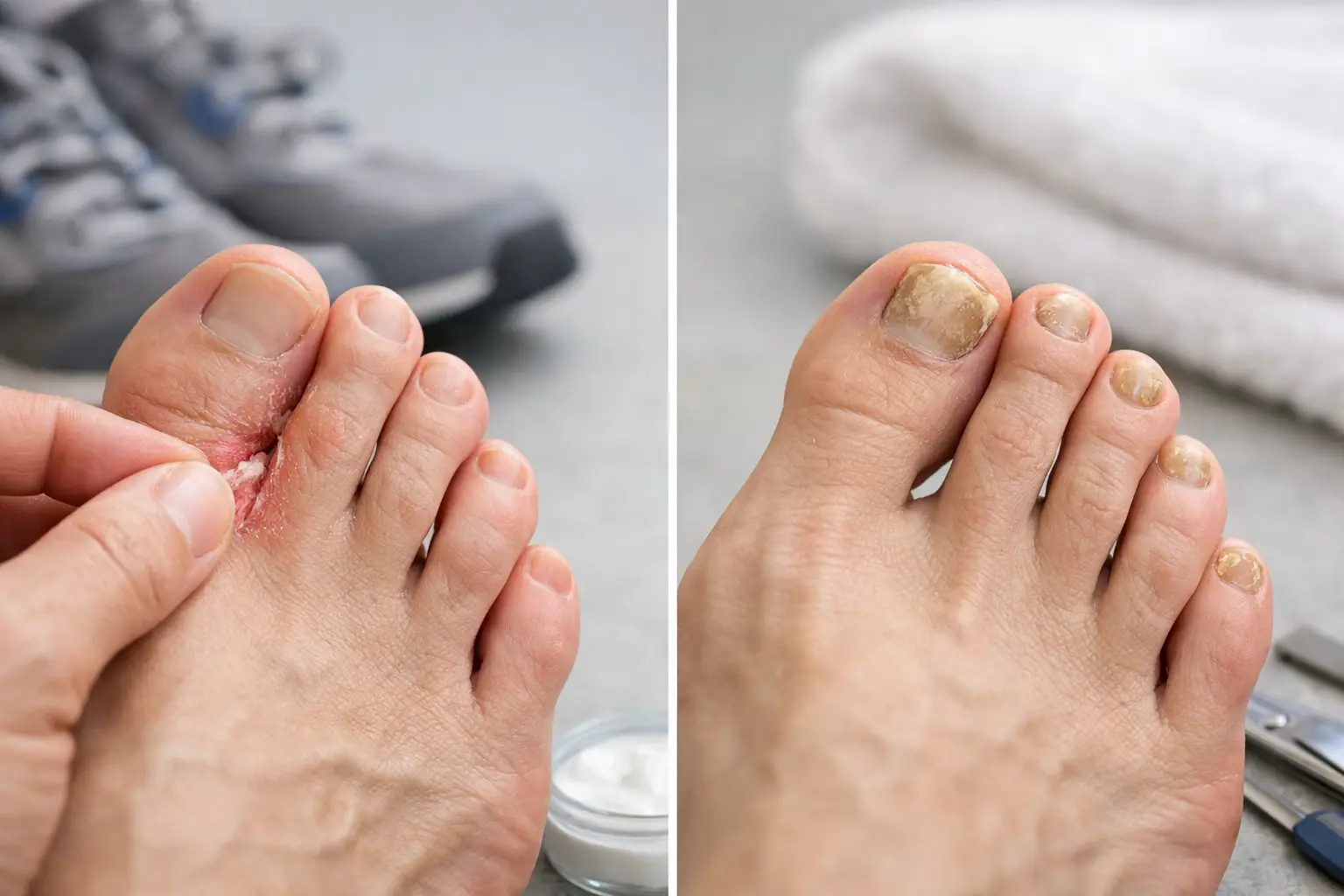
If the skin between your toes has been itching, peeling, or burning, the next question is a practical one: can athlete’s foot spread to nails? Yes. The same fungal organisms that cause athlete’s foot can move from the surrounding skin into the toenail unit, where the infection becomes harder to control, slower to clear, and more likely to keep coming back.
That progression matters because nail fungus is not just a cosmetic issue. Once the nail is involved, you may see thickening, yellow or brown discoloration, brittleness, lifting from the nail bed, and debris building under the nail. At that stage, treatment usually takes longer than it would have if the skin infection had been controlled early.
Can athlete’s foot spread to nails? Yes, and it happens more often than people think
Athlete’s foot, also called tinea pedis, is commonly caused by dermatophyte fungi. These organisms thrive in warm, damp environments such as sweaty socks, enclosed shoes, locker rooms, and shower floors. They feed on keratin, the protein found in the outer skin layer and in nails, which is why the infection does not have to stay limited to the skin.
When the fungal load remains active around the toes, the fungus can enter through small breaks in the skin, the cuticle area, or the hyponychium, which is the skin under the edge of the nail. Repeated friction, trimming nails too short, nail trauma, and constant moisture all make that spread easier.
In other words, untreated athlete’s foot can become a source infection for onychomycosis, the medical term for fungal nail infection. That is one reason persistent peeling or scaling on the feet should not be brushed off as simple dry skin.
How the spread from skin to nail usually happens
The spread is typically gradual, not dramatic. A person may start with itching or flaking between the fourth and fifth toes, then develop scaling on the sole or around the toe webs. If the area stays moist and infected, fungal organisms remain in direct contact with the nail folds and nail plate day after day.
Over time, the fungus can establish itself under the free edge of the nail or around its sides. Once beneath the nail, it gains protection from washing and casual surface treatments. That is why skin fungus is often easier to treat than nail fungus. The nail plate creates a physical barrier, and the infected portion has to either be penetrated effectively or grow out over time.
This is also why partial treatment often fails. If the itching improves but active fungus remains on the skin, the nail can still become infected later. Likewise, if the nail is treated but the surrounding skin is not, the foot can keep reseeding the nail.
Early signs the nails may be getting involved
Nail involvement does not always start with a severely damaged nail. Early changes can be subtle. You may notice a small area of yellowing near the edge, a chalky white patch, slight thickening, or a nail that suddenly seems more brittle than usual.
Some people first notice that the nail looks dull instead of translucent. Others see material collecting under the tip or find that the nail is harder to trim. If athlete’s foot symptoms are present at the same time, those nail changes deserve attention.
A fungal nail infection can affect one nail at first, usually a big toe or little toe, and then spread further if not controlled. It is not unusual for skin symptoms to come and go while the nail changes continue to worsen slowly.
Why nail fungus is harder to eliminate
Once the fungus reaches the nail, treatment becomes less straightforward. Skin turnover is relatively fast, and topical antifungals can contact the infected surface directly. Nails are different. They grow slowly, especially toenails, and dense keratin makes drug penetration more difficult.
That means even an effective treatment may require consistent use for weeks to months, depending on the severity and how much of the nail is involved. A damaged or thickened nail also creates places where fungal material can persist.
This is where people often lose time. They wait for the nail to improve on its own, or they use a general skin cream that is not designed for persistent fungal involvement. The result is prolonged infection, continued shedding of fungal material into socks and shoes, and repeated reinfection of nearby skin.
Who is most likely to develop nail spread?
Not every case of athlete’s foot moves into the nails, but some risk factors make it more likely. Chronic moisture is a major one. Feet that stay damp inside work boots, athletic shoes, or occlusive footwear give fungus a stable environment.
Nail trauma also matters. Running, hiking, sports, and repetitive toe impact can create micro-injuries that make fungal entry easier. People with circulation problems, diabetes, immune suppression, or a history of recurrent fungal infections may also have more difficulty clearing infection before it reaches the nail.
Age is another factor. Toenails generally grow more slowly with age, and older adults are more likely to have thickened nails, reduced circulation, and long-standing exposure to fungal reservoirs in shoes or communal wet areas.
What to do if you suspect athlete’s foot has reached the nails
Start by treating the problem as a fungal infection until proven otherwise, but be realistic about the limits of self-diagnosis. Psoriasis, eczema, trauma, and bacterial issues can sometimes mimic fungal nail changes. If the nail is significantly thickened, painful, draining, or rapidly changing, a medical evaluation is a smart next step.
For mild to moderate cases, the key is to address both sites of infection. The surrounding skin and the nail need attention at the same time. Focusing on one while ignoring the other often leaves a reservoir behind.
Keep the feet clean and dry, change socks regularly, and reduce the warm, wet environment fungus needs to survive. Trim nails straight across, avoid digging into corners, and disinfect clippers after use. Rotate shoes so they can dry fully between wears. If your shoes hold moisture or odor, they may also be holding fungal material.
A targeted topical antifungal approach can be useful when started early, especially for skin involvement and early nail changes. Product selection matters. Broad cosmetic creams are not the same as condition-specific antifungal formulations designed to reduce fungal burden while also calming burning, scaling, and irritation. Theracont Scientific approaches this category with a condition-specific, anti-infective focus that aligns with how persistent foot fungus actually behaves.
When home treatment may not be enough
It depends on how far the infection has progressed. If the nail is only slightly discolored at the edge and skin symptoms are recent, topical care and strict foot hygiene may be enough to stop progression. If several nails are affected, the nail is very thick, or the infection has been present for months, clearance is usually more difficult.
Pain, swelling around the nail, foul odor, or signs of secondary bacterial infection should not be ignored. The same is true if you have diabetes, neuropathy, poor circulation, or immune compromise. In those cases, even minor foot infections deserve prompt attention because complications can escalate more quickly.
A clinician may recommend confirmatory testing, debridement, prescription topical therapy, or oral antifungals depending on severity. Oral treatment can be effective for some patients, but it comes with trade-offs, including potential drug interactions and the need for medical oversight. That is one reason many consumers prefer to act early, before the infection becomes entrenched.
How to reduce the chance of recurrence
Fungal infections are stubborn because they do not only live on the body. They can persist in socks, shoes, bath mats, and shower surfaces. If treatment improves symptoms but those reservoirs are ignored, recurrence is common.
The most practical prevention plan is consistent rather than complicated. Dry carefully between the toes after bathing. Use breathable footwear when possible. Do not share nail tools or towels. Wear sandals in communal showers and pool areas. If your feet sweat heavily, changing socks during the day can make a real difference.
Most importantly, treat athlete’s foot early. Waiting until the nail changes are obvious gives the infection more time to establish itself in a place that is harder to reach and slower to heal.
The real takeaway on athlete’s foot and nails
Yes, athlete’s foot can spread to nails, and when it does, treatment usually becomes slower, more frustrating, and more expensive. The advantage is timing. If you catch the infection while it is still active on the skin or just beginning to affect the nail, you have a better chance of controlling it before it turns into a long-term problem.
If your feet are itching, scaling, burning, or developing nail discoloration, treat that combination like a real infection, not a minor nuisance. Acting early is often the difference between a manageable skin condition and a stubborn nail fungus that lingers for months.