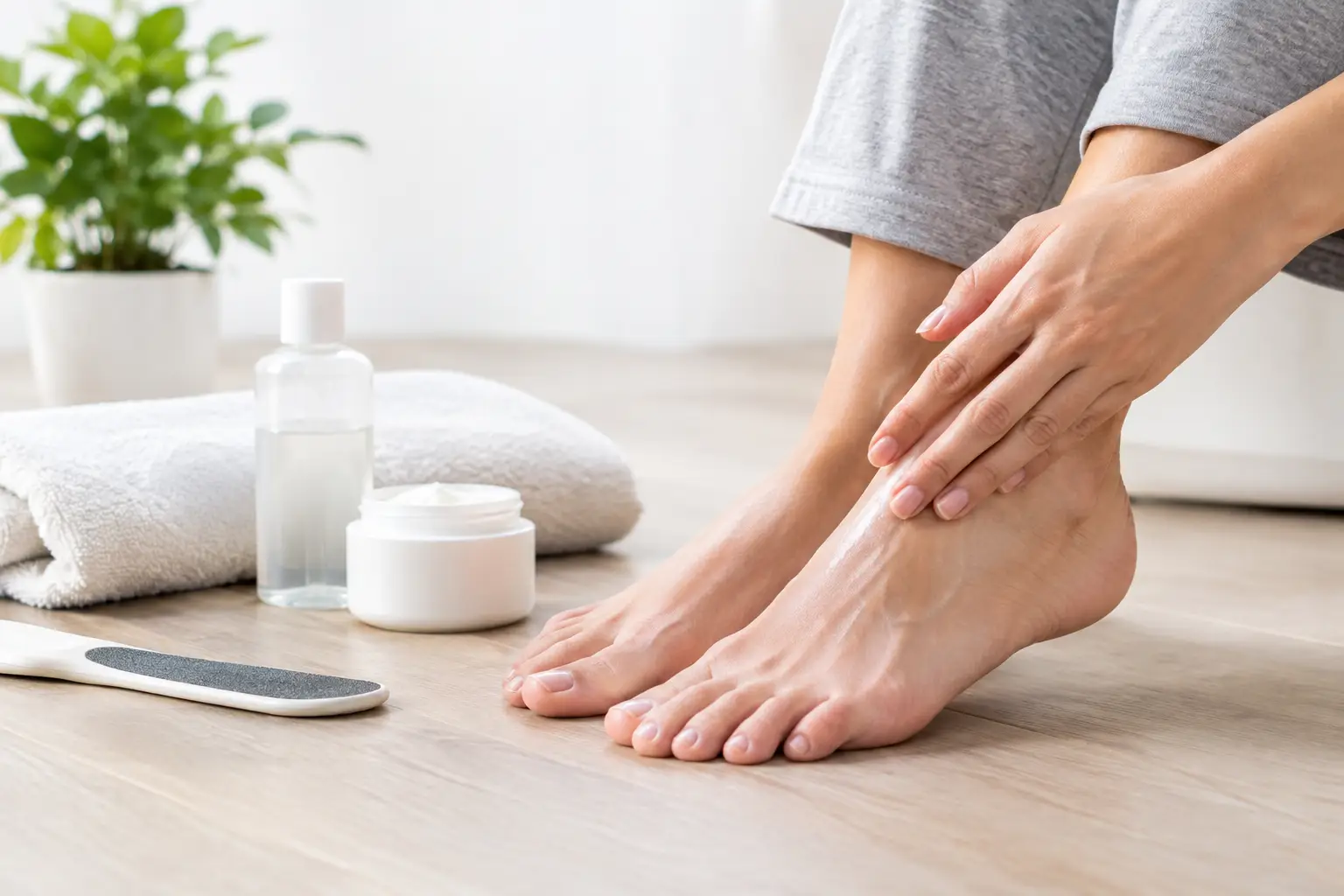
A pair of damp socks left on after a workout can turn an ordinary day into the conditions athlete’s foot thrives on: warmth, moisture, friction, and enclosed skin. Effective fungal skin hygiene is not about scrubbing harder or masking odor. It is about interrupting the environment that allows tinea pedis, commonly called athlete’s foot, to persist between the toes, across the sole, or along the sides of the foot.
Athlete’s foot is a fungal infection of the skin, not a sign that someone is unclean. It commonly causes itching, burning, peeling, scaling, cracking, redness, or white, soggy skin between the toes. Some people develop dry, powdery scale on the soles, while others notice painful fissures, blisters, or an unpleasant odor when moisture and bacterial overgrowth are also present. The right hygiene routine can reduce reinfection and support treatment, but persistent symptoms still require focused antifungal care.
Fungal Skin Hygiene Starts With Moisture Control
The fungi responsible for athlete’s foot spread most easily in moist shared environments and on damp skin. Locker-room floors, public showers, pool decks, shared footwear, and sweaty shoes can all contribute. The infection can then move from one foot to the other, from the feet to the groin, or from the skin to the nails, where it may become much harder to treat.
After bathing, showering, swimming, or exercise, dry the feet carefully instead of quickly rubbing a towel over them. Pay particular attention to the spaces between the toes, where trapped water can soften the skin and weaken its protective barrier. Use a clean towel, and do not share towels or washcloths with other people in the household when an active infection is present.
Socks matter because they sit directly against the affected skin for hours. Change them whenever they become damp from sweat, exercise, rain, or work boots. Breathable socks can help, but the best choice depends on how much a person sweats and how long footwear must stay on. Someone working a long shift in safety boots may need a midday sock change, while another person may do well simply by changing promptly after exercise.
Shoes also need time to dry. Alternating pairs can give each pair a chance to air out fully, rather than placing damp feet back into the same enclosed environment each day. Remove insoles when possible, keep shoes in a ventilated area, and avoid wearing another person’s shoes. If an infection is active, wearing sandals in public shower areas and around communal pools helps limit exposure and reduces the chance of spreading fungal material to others.
Recognize When Hygiene Alone Is Not Enough
Good habits reduce moisture and exposure, but hygiene does not eliminate an established fungal infection by itself. Athlete’s foot often continues because fungal organisms remain in the outer skin layers even after itching temporarily improves. Stopping treatment as soon as symptoms fade can allow the infection to return, especially when the original source remains in shoes, socks, or untreated nail fungus.
A condition-specific topical treatment can address the infection while hygiene reduces the conditions that support it. ATHLECONT is an all-natural topical ointment formulated for athlete’s foot and ringworm, providing a focused option for people seeking symptom relief and targeted antifungal care without unnecessary synthetic antibiotic use. Apply any topical product only to clean, thoroughly dried skin and follow the product directions consistently.
Do not assume every red, itchy foot rash is athlete’s foot. Eczema, contact reactions to footwear, psoriasis, bacterial infections, and other conditions can look similar. Athlete’s foot is more likely when scaling and itching begin between the toes or recur after sweaty footwear, but appearance alone cannot confirm every case. A clinician can help when the diagnosis is uncertain, particularly if previous over-the-counter treatment has not worked.
Watch for signs that the skin barrier may be significantly compromised. Increasing pain, warmth, swelling, pus, spreading redness, fever, or red streaking can indicate a bacterial infection that needs prompt medical evaluation. People with diabetes, poor circulation, nerve damage, immune suppression, or a history of serious foot problems should seek medical advice early rather than treating a worsening rash at home.
Nail changes deserve attention as well. Thickened, yellow, brittle, or lifting toenails may signal onychomycosis, a fungal nail infection. Nail involvement can act as a reservoir for repeated athlete’s foot because fungi may remain in the nail even when the surrounding skin looks clear. Nail infections usually require a different treatment strategy and often take much longer to improve than skin infections.
Build a Routine That Limits Reinfection
The most effective athlete’s foot routine is practical enough to repeat every day. Clean the feet after activities that cause sweating, dry them fully, put on clean socks, and choose footwear that can air out. This is not a one-time reset. Fungal organisms are persistent, and recurrence is common when people return to damp socks, wet shoes, or shared shower surfaces before treatment is complete.
Launder socks, towels, and bath mats regularly, especially during an active infection. High heat can be useful when the fabric allows it, but always follow the garment’s care label. Keep footwear separate from clean laundry, and do not walk barefoot through the home if there are shared bathrooms or if other household members could be exposed. These steps are particularly useful when multiple people use the same gym bag, locker area, or bathroom.
Avoid aggressive scrubbing, harsh chemicals, and picking at peeling skin. They can create small breaks that sting, delay healing, and increase the chance of secondary infection. The goal is not to strip the skin. It is to keep the area clean and dry while using an appropriate antifungal treatment consistently enough to address the fungal burden.
If symptoms are mild and clearly improving, continue the hygiene routine and treatment as directed rather than relying on appearance alone. If the rash spreads, returns repeatedly, involves the nails, or fails to improve after a reasonable course of treatment, seek professional guidance. A focused approach now can protect daily comfort, reduce odor and irritation, and help keep a small foot infection from becoming a recurring problem.