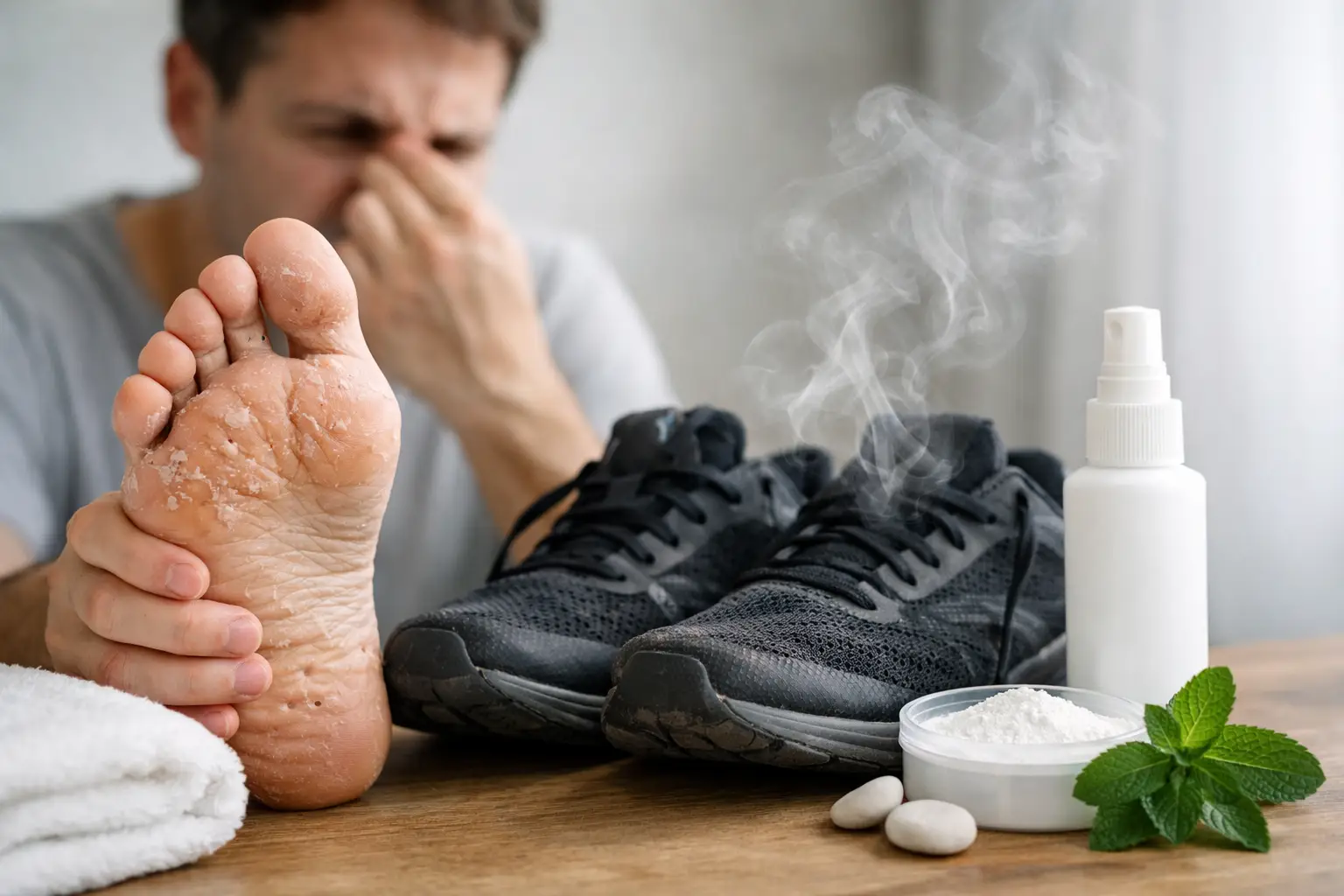
That sharp, sour foot odor that seems to come back within hours is not always “just sweaty feet.” If you are searching for how to relieve pitted keratolysis odor, the key issue is usually bacterial overgrowth in damp, pressure-bearing skin – most often on the soles and between the toes.
Pitted keratolysis is a superficial bacterial skin infection. It commonly affects people whose feet stay warm, occluded, and sweaty for long periods, including athletes, workers in tight shoes, and anyone prone to hyperhidrosis. The odor can be the most distressing symptom, but it usually appears alongside tiny crater-like pits, a whitish soggy surface, tenderness, or a burning sensation on the bottom of the feet.
Why pitted keratolysis odor gets so strong
The smell is not coming from sweat alone. Sweat creates the environment, but bacteria drive the odor. When bacteria break down keratin and other material on the outer layer of the skin, they generate byproducts that produce a very noticeable malodor. That is why washing your feet once may help briefly but often does not solve the problem.
This also explains why standard foot powders or cosmetic deodorizing sprays can fall short. They may cover the smell for a few hours, but if the bacterial load remains high and the skin stays wet, the odor returns quickly. Real relief depends on lowering bacterial overgrowth and changing the moist environment that allows it to thrive.
How to relieve pitted keratolysis odor effectively
The most reliable approach is targeted and simple. You need to reduce moisture, lower friction where possible, and use a treatment that addresses the infection itself rather than only masking symptoms.
Start with cleansing, but be strategic about it. Wash the feet daily with a gentle cleanser, paying close attention to the soles, toe webs, and any visibly pitted areas. After washing, dry thoroughly. This matters more than many people realize. Residual moisture trapped between toes or inside shoes keeps the surface of the skin softened and more vulnerable to bacterial activity.
After the feet are dry, apply a condition-specific topical treatment designed for bacterial skin involvement. This is where many people lose time by using the wrong product. Heavy moisturizers can trap moisture. Generic antifungal creams may help if athlete’s foot is also present, but they do not directly target pitted keratolysis. If the problem is bacterial, the treatment plan has to reflect that.
For people who prefer antibiotic-free care, a targeted topical ointment with natural active compounds can be a practical over-the-counter option, especially when it is formulated specifically for pitted keratolysis rather than marketed as a broad, all-purpose skin cream. The goal is not simply to make feet smell better. The goal is to reduce the organisms contributing to odor while calming the damaged skin barrier.
Control moisture or the odor usually comes back
Even effective treatment can underperform if sweating and occlusion stay unchecked. Pitted keratolysis tends to persist when feet spend all day inside non-breathable shoes, work boots, or athletic footwear that hold heat and moisture close to the skin.
If your feet sweat heavily, change socks during the day. Choose moisture-wicking socks over thick cotton if cotton stays damp on you. Rotate shoes so each pair has time to dry fully before you wear it again. If possible, remove shoes when you are at home and let the feet air out.
There is some nuance here. Going barefoot can help reduce moisture exposure at home, but it may not be ideal if the skin is tender or if floors increase friction on already irritated soles. In that case, breathable sandals may be a better middle ground.
For persistent sweating, antiperspirant use on the feet may help some people reduce recurrence. If sweating is severe and constant, that is worth discussing with a medical professional because hyperhidrosis can keep fueling the cycle.
Shoes and socks matter more than people think
If you want to know how to relieve pitted keratolysis odor for more than a day or two, your footwear habits have to change with your treatment plan. Shoes that smell strongly often act as a reservoir for moisture and bacteria. If you treat the feet but keep putting them back into damp, contaminated shoes, improvement may be slow.
Allow shoes to dry completely between uses. Wash socks in hot water when appropriate for the fabric. Replace old insoles if they hold persistent odor. In some cases, severely worn or chronically damp shoes may need to be replaced.
This is one of the trade-offs people resist because it feels inconvenient, but it is often where odor control either succeeds or fails. A good topical can reduce bacterial activity on the skin. It cannot fully compensate for footwear that recreates the same environment every day.
When odor is not the only problem
Pitted keratolysis can overlap with other foot conditions, especially athlete’s foot. That matters because fungal involvement can add scaling, itching, or toe-web breakdown, while the bacterial component drives pits and strong odor. If both are present, treatment may need to address both issues rather than assume one diagnosis explains everything.
This is why symptom pattern matters. Tiny punched-out pits on the sole, especially in pressure areas, point toward pitted keratolysis. More peeling, cracking, and persistent itch between the toes may suggest fungal involvement too. If you are treating one condition and seeing little progress, mixed infection is a real possibility.
A targeted care approach is usually more effective than rotating random foot products and hoping one works. Theracont Scientific is built around that condition-specific model because bacterial and fungal foot problems do not respond best to generic skincare.
How fast can odor improve?
Odor often improves before the skin looks fully normal. That can happen within days if the bacterial load drops and moisture control is consistent. The pits and surface texture may take longer to settle, especially if the skin has been affected for weeks or months.
Improvement depends on how long the condition has been present, how heavy the sweating is, whether there is overlapping fungal infection, and whether your shoes and socks are working against treatment. Mild cases may respond quickly. More stubborn cases need steady daily care.
What you do not want is to stop treatment as soon as the smell fades. Odor relief is a good sign, but recurrence is common when people return immediately to the same damp conditions without finishing a reasonable course of care.
When to get medical evaluation
Home treatment is reasonable for many mild to moderate cases, but some situations call for a professional assessment. Seek medical care if the skin becomes increasingly painful, swollen, red, or draining, or if you have diabetes, poor circulation, or an immune condition that raises your risk from foot infections.
You should also get checked if the diagnosis is unclear, if the odor is severe and persistent despite treatment, or if the condition keeps returning. Recurrent cases may need a more detailed plan focused on sweating control, footwear habits, and confirmation that pitted keratolysis is actually the main problem.
The practical mistake to avoid
The biggest mistake is treating odor as a hygiene issue alone. Pitted keratolysis odor is a symptom of bacterial activity in a wet, compromised skin environment. If you only scrub harder or add fragrance, you may temporarily reduce smell without changing the cause.
The better strategy is targeted relief: cleanse, dry thoroughly, use an appropriate topical aimed at the condition, and aggressively reduce the moisture that lets bacteria repopulate. That approach is usually more effective, more rational, and more sustainable than cycling through cosmetic foot products.
If your feet have been embarrassing, uncomfortable, or resistant to basic deodorizing measures, treat the odor like the clinical symptom it is. Once you control the bacteria and the moisture they depend on, the smell usually becomes much easier to break.