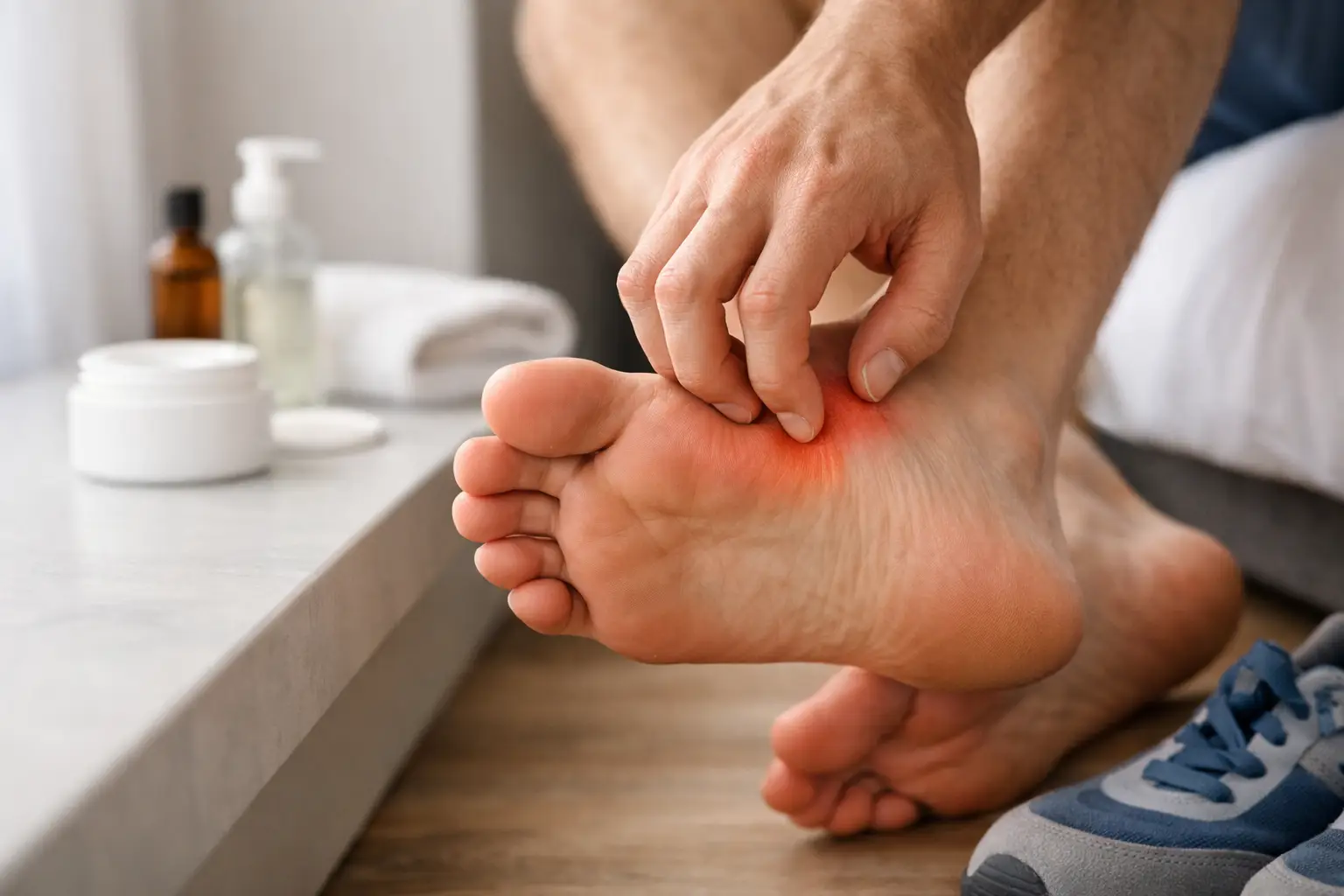
When your feet itch, burn, and start feeling hot inside your shoes, the problem is usually not just “dry skin.” Effective itching burning feet treatment starts with identifying what is driving the symptoms – most often fungal infection, bacterial overgrowth, moisture damage, or friction-related irritation. If you treat the wrong cause, symptoms may ease briefly and come right back.
That is why symptom pattern matters. Burning between the toes points to a different problem than burning on the soles, and itching with scaling is not the same as itching with odor and shallow pits. A targeted treatment approach works better than using a random cream and hoping for relief.
What usually causes itching and burning feet
In adults, the most common cause is athlete’s foot, also called tinea pedis. This fungal infection often produces itching, burning, scaling, peeling, cracking, and redness, especially between the toes or along the sides of the foot. Some cases stay mild. Others spread across the sole and become stubborn, recurrent, and very uncomfortable.
Bacterial involvement is another possibility, especially if odor is strong, sweating is heavy, or the skin looks soggy and damaged. Conditions such as pitted keratolysis can cause burning, irritation, and noticeable foot odor, often with small crater-like pits on pressure-bearing areas of the sole. Erythrasma may also affect skin folds and toe spaces, producing discoloration, irritation, and persistent discomfort.
Not every case is infectious. Friction, contact dermatitis from footwear materials, excessive sweating, and over-drying from harsh soaps can all cause itching and burning. But when symptoms persist, recur, spread, or develop alongside scaling, odor, discoloration, or toe-web breakdown, infection should move high on the list.
Itching burning feet treatment starts with the cause
A useful rule is simple: dry, flaky, itchy skin may need barrier support, but itchy burning feet with peeling, odor, maceration, or recurring inflammation often need active antimicrobial treatment. This is where many people lose time. They use moisturizers on fungal skin, steroid creams on untreated infection, or deodorizing sprays that reduce odor without addressing bacterial or fungal growth.
For athlete’s foot, treatment should focus on antifungal action and moisture control. For bacterial overgrowth, treatment needs to address the organisms on the skin surface while reducing the wet environment that helps them persist. If symptoms are mixed, which is common, a targeted topical product designed for the condition is usually more effective than a general skin cream.
Natural active compounds can play a meaningful role here, particularly when they are formulated for anti-infective use rather than added for marketing appeal. The difference is specificity. A condition-focused ointment should be built to reduce the infectious burden while also calming itching, burning, redness, and skin irritation.
How to tell fungal from bacterial foot problems
There is overlap, so this is not always obvious at home. Still, patterns help.
Fungal infections often cause persistent itching, peeling, scaling, fissures, and a powdery or flaky appearance. The toe webs may crack or sting. The skin may feel raw after sweating or exercise, and symptoms often worsen in occlusive shoes.
Bacterial overgrowth tends to bring more odor, more moisture, and more tenderness on weight-bearing skin. If the sole looks wet, white, eroded, or pitted, bacterial involvement becomes more likely. Burning can be pronounced because damaged skin is exposed to constant pressure and friction.
Some feet have both. A fungal infection can compromise the skin barrier, then bacteria take advantage of the damaged, sweaty environment. In those cases, treatment has to be practical and direct. You need to manage the infection and the moisture at the same time.
What actually helps relieve symptoms
The best itching burning feet treatment usually combines three things: a condition-specific topical, aggressive moisture management, and enough consistency to fully clear the problem rather than stopping as soon as symptoms improve.
A targeted topical ointment is the main treatment step when infection is suspected. For fungal symptoms, use a product intended for athlete’s foot or tinea pedis rather than a cosmetic foot cream. For bacterial conditions, choose a formula designed for bacterial skin overgrowth and odor-related foot damage. This matters because active compounds need to match the biology of the condition.
Moisture control is not optional. Change socks when they become damp. Choose breathable footwear when possible. Let shoes dry completely between wears. Wash feet daily, but dry carefully between the toes. If the skin stays wet, treatment response is slower and recurrence is more likely.
Consistency is where many cases fail. People often stop after the itching settles down, even though the infectious source is still present. Continue treatment as directed for the product and monitor the skin for full normalization, not just partial relief.
When over-the-counter care is enough
Mild to moderate cases often respond well to non-prescription topical treatment if the condition is recognized early and treated correctly. This is especially true when symptoms are localized, there is no major swelling or drainage, and the person is otherwise healthy.
Adults often prefer over-the-counter care because it is accessible, direct, and easier to start immediately. That can be a real advantage. Early treatment tends to shorten the course and may prevent spread to toenails, toe webs, or other high-friction skin areas.
For consumers looking for an antibiotic-free approach, condition-specific natural anti-infective topicals can make sense, particularly when the goal is to reduce microbial overgrowth while avoiding unnecessary use of systemic drugs. Theracont Scientific positions its foot-focused formulas around that exact need: targeted symptom relief with direct action against the organisms contributing to the problem.
What can make itching and burning worse
Some common habits delay healing. Heavy ointments that trap moisture between the toes can worsen maceration. Harsh scrubbing can create more breaks in the skin. Fragrance-heavy products may irritate already inflamed tissue. Wearing the same shoes every day without drying them out creates an ideal environment for recurrence.
Steroid creams are another area where caution matters. They may reduce visible redness and itching for a short time, but if the underlying problem is fungal, symptoms can come back in a less obvious and more persistent form. That does not mean steroids are never used in dermatology. It means self-treating an unidentified foot rash with steroids is often a poor first move.
There is also a trade-off with soaking. A brief, purposeful cleansing soak may feel soothing, but repeated soaking can overhydrate the skin and weaken the barrier, especially in toe webs. If you soak your feet, drying them thoroughly afterward is essential.
When to get medical evaluation
Home treatment has limits. If the skin is severely cracked, swollen, bleeding, draining, or rapidly worsening, medical care is the right next step. The same applies if you have diabetes, poor circulation, neuropathy, or immune compromise. In those settings, even minor foot infections deserve more caution.
You should also get evaluated if symptoms do not improve after a reasonable course of targeted treatment, if the condition keeps returning, or if toenails are becoming thickened, discolored, or distorted. Nail involvement can act as a reservoir for reinfection and often needs a different treatment plan.
If the diagnosis is uncertain, a clinician can help distinguish fungal infection, bacterial disease, dermatitis, psoriasis, or less common causes of burning feet. That matters because these conditions can look similar at home but require different treatment strategies.
Preventing the next flare
Once feet settle down, prevention becomes part of treatment. Keep the skin clean and dry, especially after exercise. Rotate shoes. Avoid sharing footwear. Replace worn-out insoles that stay damp or hold odor. If you are prone to recurrence, start treatment promptly at the first sign of scaling, itching, or burning rather than waiting for a full flare.
It also helps to pay attention to where symptoms begin. Toe-web itching often points to trapped moisture and fungal activity. Sole burning with odor may suggest bacterial overgrowth on high-pressure skin. Those details help you choose a more precise response next time.
Foot symptoms are easy to dismiss until they affect every step, every workout, and every hour in shoes. If your skin is itching, burning, peeling, or producing odor, treat it like a skin infection problem until proven otherwise – because the fastest path to relief is usually the most targeted one.