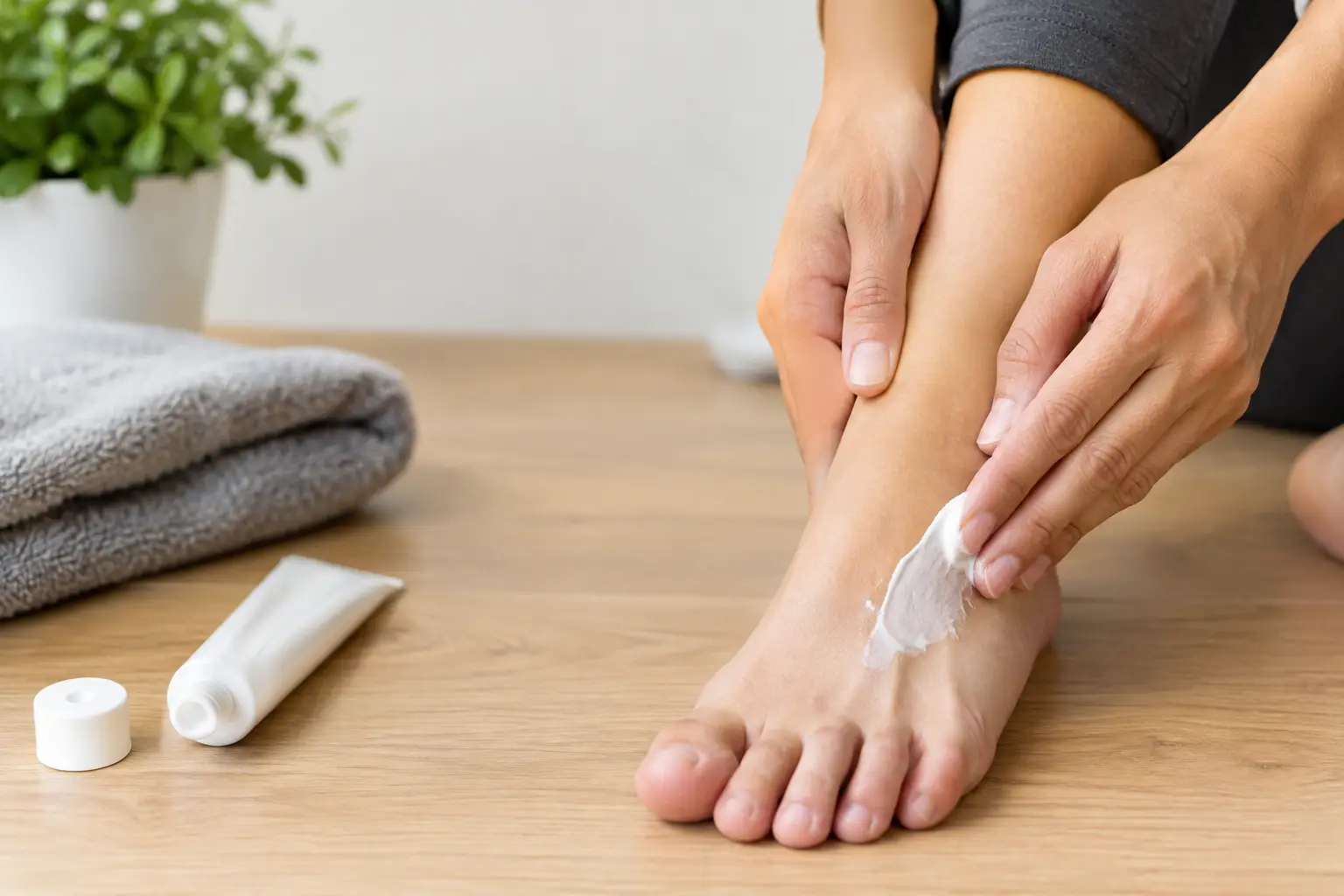
Persistent foot odor that returns soon after washing is not always a hygiene problem. It can be pitted keratolysis, a bacterial skin infection that creates tiny crater-like pits on pressure areas of the soles. This guide to OTC infection ointments explains what to look for when odor, moisture, and visible pits point to bacterial overgrowth rather than ordinary sweaty feet.
When Foot Odor May Be Pitted Keratolysis
Pitted keratolysis is most common in people whose feet stay warm and damp for long periods. Non-breathable shoes, sweaty socks, athletic activity, work boots, and hyperhidrosis can create the environment bacteria need to multiply. The result may be a strong sulfur-like odor, whitish or gray skin, slipperiness, and shallow pits that become more visible when the skin is wet.
Unlike athlete’s foot, pitted keratolysis usually does not cause pronounced scaling between the toes. It may occur alongside a fungal infection, however, so symptoms can overlap. If there is itching, peeling, cracking, or a spreading rash, a fungal component may also need attention.
Choosing OTC Infection Ointments for Pitted Keratolysis
A useful OTC approach should match the suspected cause. Antifungal creams are designed for fungal conditions such as athlete’s foot, but they may not address the bacteria responsible for pitted keratolysis. For odor-producing pits and moisture-related bacterial overgrowth, choose a condition-specific topical treatment formulated for that purpose.
KERACONT is Theracont Scientific’s all-natural anti-infective ointment developed specifically for pitted keratolysis. Its targeted approach is intended to help address infection-causing bacteria while relieving common symptoms such as malodor, irritation, and visible pitting. This can be a practical non-prescription option for adults seeking focused care without unnecessary synthetic antibiotic use.
Apply any topical product only to clean, thoroughly dried skin and follow its label directions. Treatment works best when the daily moisture cycle is interrupted: change damp socks, rotate shoes so they can dry fully, and choose breathable footwear when possible. These measures do not replace treatment, but they reduce the conditions that encourage recurrence.
When to Get Medical Advice
Seek medical evaluation if pain, swelling, warmth, drainage, open sores, fever, or rapidly spreading redness develops. People with diabetes, poor circulation, immune suppression, or reduced feeling in the feet should not self-treat a suspected infection for long without professional guidance.
If odor and pits do not improve after consistent use of an appropriate OTC treatment, the diagnosis may be different or more than one condition may be present. Start with a targeted solution for pitted keratolysis, keep feet dry, and give persistent symptoms the clinical attention they deserve.