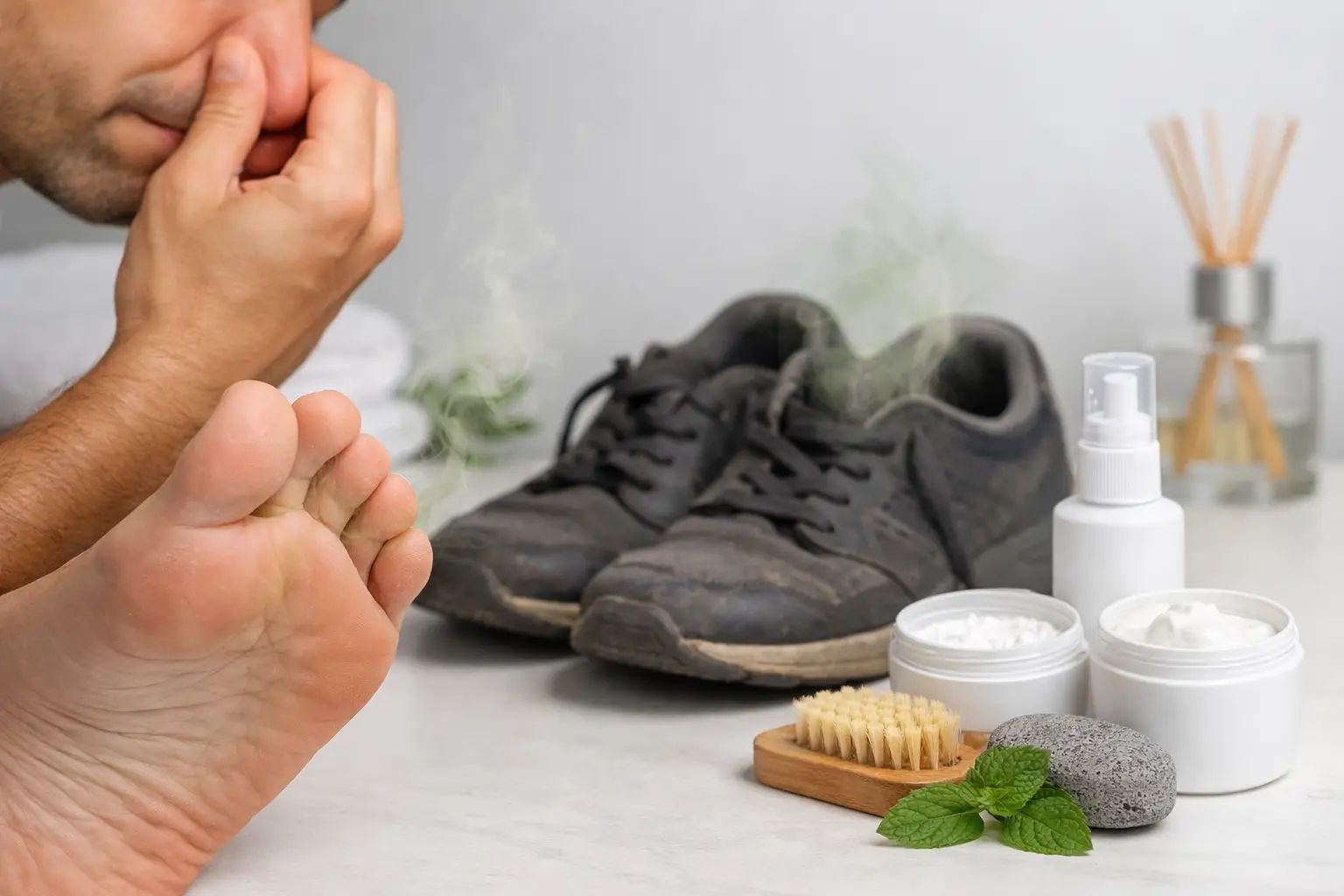
If your feet still smell shortly after washing them, the problem is usually not “bad hygiene.” It is often microbial overgrowth. When people search how to get rid of foot fungus smell, they are usually dealing with a mix of sweat, skin breakdown, and infection activity inside warm, enclosed shoes. The odor can be sharp, sour, or cheesy, and if it keeps returning, the goal is not to cover it up. The goal is to treat what is causing it.
Why foot fungus smell happens
Foot odor linked to fungus usually starts with the environment. Feet sweat heavily, shoes trap heat, and socks hold moisture against the skin. That gives fungi an ideal place to grow, especially between the toes and along the sole. As the skin becomes macerated, flaky, or cracked, odor-producing microorganisms feed on sweat and damaged tissue.
That is why the smell is rarely a standalone issue. It often shows up with itching, burning, scaling, whitening between the toes, redness, or peeling. In some cases, the odor is mild and the visible rash is obvious. In other cases, the smell is the first sign that something is off.
There is also an important distinction here. A fungal infection such as athlete’s foot can cause odor directly, but strong foot odor may also involve bacterial overgrowth, including conditions that affect the soles and create crater-like pits or an intense sulfur-like smell. If your symptoms are persistent, severe, or do not match a simple fungal pattern, the underlying cause may be mixed rather than purely fungal.
How to get rid of foot fungus smell at the source
The fastest way to improve odor is to reduce moisture and actively treat the infection. Deodorizing sprays can temporarily mask the smell, but they do not address fungal growth inside the skin or contamination in shoes and socks.
Start by washing your feet thoroughly once or twice daily with soap and water, paying close attention to the spaces between the toes. Then dry the skin completely. This step matters more than many people realize. Residual moisture between the toes keeps the environment favorable for fungal survival and continued odor.
After drying, apply a targeted topical antifungal treatment to the affected areas. The product should be used as directed and continued long enough to suppress active growth, not just until the smell improves. Stopping early is one reason odor and symptoms return. A condition-specific topical formula can be especially useful when the goal is both infection control and symptom relief, including itching, burning, irritation, and malodor.
If the skin is raw, cracked, or severely inflamed, treatment may need a little more patience. Irritated skin can stay tender even as the infection starts to come under control. That does not always mean the product is failing. It may simply mean the skin barrier needs time to recover while the microbial burden is reduced.
Clean feet are not enough if your shoes stay contaminated
One of the most common reasons foot fungus smell keeps coming back is reinfection from footwear. You can treat the skin correctly and still end up putting your feet back into a damp, contaminated environment every day.
Shoes need time to dry fully between wears. If possible, rotate pairs rather than using the same shoes every day. Remove insoles when practical and allow them to air out separately. If a pair of shoes stays damp, smells strongly even after drying, or has been worn for months during an active infection, it may be difficult to fully control the problem without replacing that pair.
Socks matter too. Choose breathable socks that wick moisture away from the skin, and change them whenever they become damp. For some people that means once a day. For others, especially those who sweat heavily or work long shifts, it may mean changing socks midday.
This is where treatment becomes practical rather than cosmetic. If you want to know how to get rid of foot fungus smell for good, you have to reduce the microbial load on both the skin and the materials touching it every day.
Signs the odor may not be fungus alone
Not all foot odor points to a simple fungal infection. If the smell is unusually strong, returns very quickly, or is centered on the weight-bearing areas of the sole rather than just between the toes, bacterial involvement becomes more likely. Pitted keratolysis, for example, can cause a pronounced foul odor and often affects people whose feet stay sweaty in closed footwear.
A mixed infection is also possible. Fungi can damage the skin barrier, and bacteria can then multiply more easily in the same area. In that situation, antifungal care alone may not fully resolve the smell. The condition may require a more targeted anti-infective approach aimed at the actual organisms driving the odor.
Pay attention to pattern and severity. If you see toe-web scaling with itching, athlete’s foot is a strong possibility. If you notice painful pits, excessive sweating, or a sudden overpowering odor from the soles, the diagnosis may be different. The treatment should match the condition.
Daily habits that help treatment work better
Once active treatment begins, small daily decisions can either support recovery or slow it down. Going barefoot in clean, dry indoor settings can help reduce moisture exposure, but walking barefoot in shared locker rooms or public showers increases the chance of continued fungal spread. Flip-flops or shower shoes are a better choice in those spaces.
Toenails should be kept trimmed and clean, especially if thickening, discoloration, or crumbly nail changes are present. Nail fungus can act as a reservoir, making foot infections harder to fully clear. If the nails are involved, the odor problem may take longer to improve because the fungal source is more persistent.
It also helps to avoid heavy occlusive products not designed for infected skin. Thick moisturizers can trap moisture if applied between the toes. Dryness on the sole is one thing. A damp toe web is another. The best routine depends on where the infection is active.
When odor improves slowly
Some people expect the smell to disappear in a day or two. Mild cases may improve quickly, but long-standing infections usually take longer. Odor often decreases before the skin looks normal again. That is encouraging, but it is not the endpoint.
Continue treatment for the recommended course, and keep up the shoe and sock changes even after symptoms improve. If you stop as soon as the smell fades, there is a good chance the remaining organisms will repopulate the area. Recurrent athlete’s foot is common for exactly this reason.
If you have diabetes, poor circulation, immune suppression, severe fissuring, spreading redness, swelling, or pain, self-treatment has limits. Those situations deserve medical evaluation because what looks like a routine fungal problem can become more complicated.
How to prevent foot fungus smell from returning
Prevention is mostly about controlling the environment that fungi prefer. Keep feet clean, keep them dry, and do not repeatedly wear damp shoes. Use a targeted topical product at the first sign of recurrence rather than waiting for odor and irritation to become established again.
For people with recurring symptoms, a condition-specific natural anti-infective ointment can make more sense than a generic skin cream or a fragrance-based foot product. The point is not to perfume the problem. The point is to reduce fungal or bacterial activity where it starts. That is the therapeutic logic behind focused topical care, and it is why companies such as Theracont Scientific emphasize targeted treatment rather than broad cosmetic claims.
There is also a practical reality here. Some feet sweat more than others. Some jobs require boots for ten hours a day. Some people are more prone to repeated fungal exposure at gyms, job sites, or communal spaces. Prevention is not perfection. It is consistent control of moisture, contamination, and early symptoms.
If your foot odor keeps returning, treat it as a skin infection warning sign, not a personal hygiene failure. The right response is specific care, not stronger fragrance. When you control the infection and the conditions that feed it, the smell usually has far less room to come back.