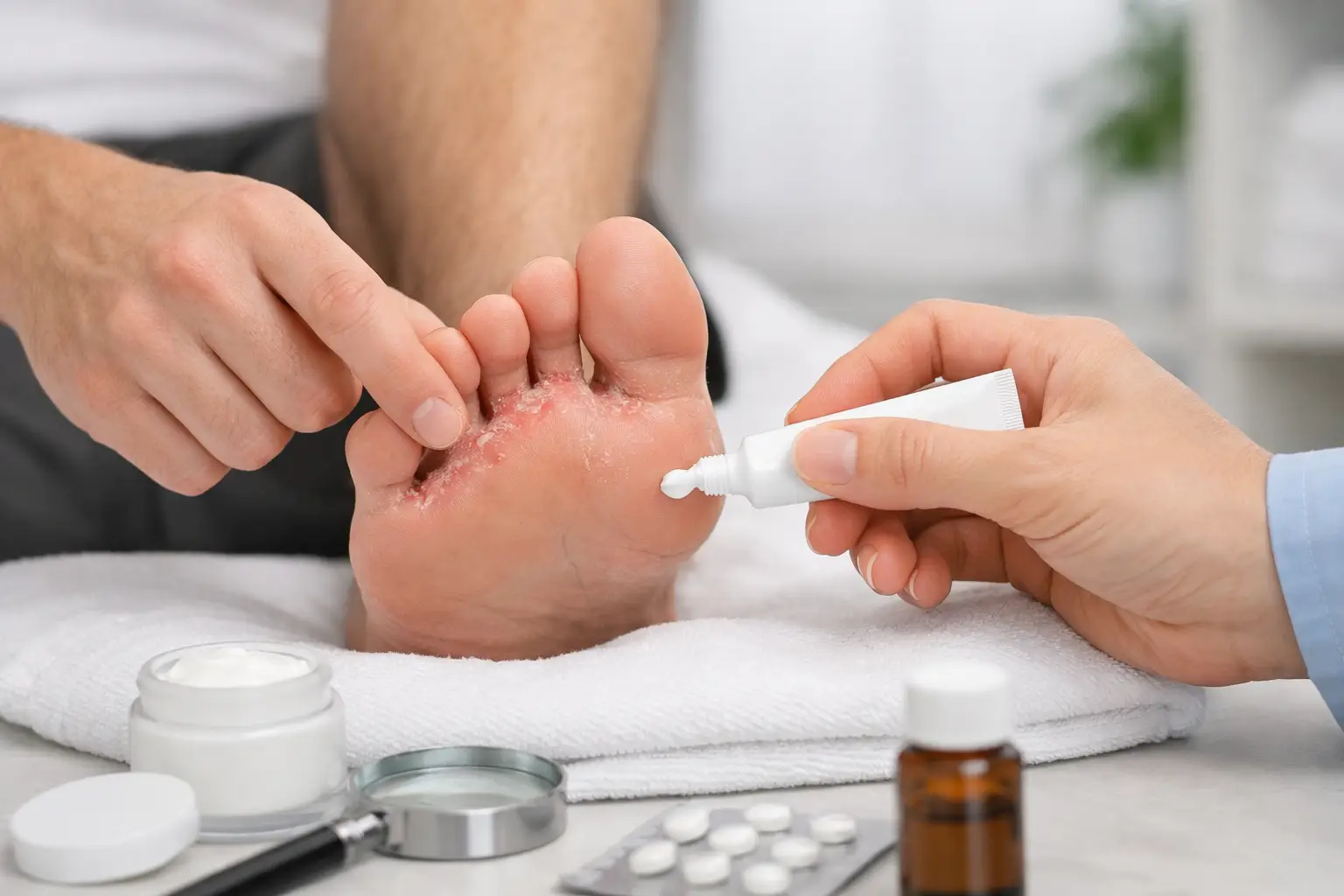
If the skin between your toes is peeling, burning, itching, or starting to crack, the question is usually not whether something is wrong. It is how to treat tinea pedis before it spreads, keeps coming back, or starts interfering with comfort, hygiene, and daily movement. Tinea pedis, commonly called athlete’s foot, is a fungal infection that thrives in warm, damp skin and often becomes stubborn when treatment is too short, too mild, or too general.
What tinea pedis actually is
Tinea pedis is a superficial fungal infection of the feet, most often caused by dermatophytes that feed on keratin in the outer skin layer. It commonly shows up between the toes, on the soles, or around the edges of the feet. In some cases it looks dry and scaly. In others it appears soggy, red, irritated, and raw. Some people notice intense itching. Others notice burning, odor, fissures, or flaking that does not improve with regular lotion.
That variation matters because people often mistake tinea pedis for dry skin, eczema, contact irritation, or simple sweat-related rash. If you use a moisturizer alone, the fungus remains active. If you use a steroid cream without controlling the infection, symptoms can temporarily look calmer while the fungal overgrowth continues underneath.
How to treat tinea pedis at home
Most mild to moderate cases can be treated at home with disciplined topical care and better moisture control. The key is targeted antifungal action, not cosmetic skin care.
Start by washing the feet gently and drying them completely, especially between the toes. This sounds basic, but it is one of the most important parts of treatment. Fungus persists where moisture remains. If the toe webs stay damp after bathing, sweating, or exercise, a topical product has a harder time doing its job.
Once the skin is clean and dry, apply an antifungal treatment as directed to the affected skin and a small margin around it. That margin matters because fungal spread often extends beyond the most obvious redness or scaling. A condition-specific topical ointment or cream is usually the most practical first step for adults managing symptoms at home. Products that focus on active antifungal control while also reducing itching, burning, scaling, and irritation are generally more useful than generic moisturizers or multipurpose skin creams.
Consistency is what separates real treatment from temporary improvement. People often stop as soon as the itching fades, but symptom relief is not the same as eradication. Continue treatment for the full recommended period, and in recurrent cases, a brief continuation phase after visible clearing may help reduce relapse.
Why some cases keep returning
Recurrent tinea pedis is common because the fungus is only one part of the problem. The environment around the feet often supports reinfection.
Shoes that trap heat, socks that stay damp, and repeated exposure to locker rooms, gym floors, shared showers, or contaminated insoles can keep the cycle going. Even a well-chosen antifungal can underperform if the feet go back into the same wet, occlusive conditions every day. If you treat the skin but ignore footwear hygiene, recurrence is much more likely.
Nail involvement also changes the picture. If you have thickened, discolored, brittle toenails, the fungus may be present in both the skin and nails. In that situation, the feet can keep getting reseeded from the infected nail plate, making tinea pedis harder to clear fully with skin treatment alone.
The treatment plan that works better
The most effective approach usually combines three elements: active antifungal treatment, aggressive moisture reduction, and contamination control.
Use the right topical product
Choose a treatment intended for fungal skin infections rather than a general soothing cream. The goal is to reduce the fungal load while calming the inflammation and discomfort that make the condition hard to ignore. If you prefer a natural non-prescription option, it still needs to be positioned and formulated as a therapeutic antifungal treatment, not as a cosmetic balm.
Ointments can work especially well on dry, scaly, hyperkeratotic areas of the foot because they stay in contact with the skin longer. Creams may feel lighter and can be easier to spread between the toes. The best choice depends on where the infection is located and whether the skin is dry and thickened or moist and macerated.
Keep the feet dry
Drying is treatment, not an extra step. Change socks when they become damp. Use breathable footwear when possible. Rotate shoes so they can dry fully between uses. After bathing, dry between every toe, even if the rest of the foot feels dry already.
If your feet sweat heavily, moisture control becomes even more important. Persistent sweat can blunt progress and make the skin barrier more fragile, which allows burning, fissuring, and recurrent irritation to continue.
Reduce reinfection from shoes and surfaces
Wash socks regularly in hot water when appropriate for the fabric. Do not keep reusing damp shoes. If one pair is your daily default, that pair may be helping the fungus survive. Sandals or open footwear can help during recovery when practical, although that depends on work requirements and climate.
At home, avoid walking barefoot on shared damp surfaces if multiple people use the same bathroom. In public spaces such as pools or locker rooms, protective footwear is a sensible prevention measure, especially if you have had repeat infections before.
When symptoms are more severe
Not all tinea pedis looks the same, and severity affects treatment decisions. If the skin is white, soggy, and splitting between the toes, the area can be painful and vulnerable to secondary bacterial involvement. If the sole is diffusely red, scaling, and thickened in a moccasin-like pattern, treatment may take longer because the fungus is spread over a broader, drier surface. If blisters are present, the inflammation may be more intense.
These variations do not always require prescription treatment, but they do require closer attention. Severe cracking, marked pain, swelling, drainage, pus, or rapidly expanding redness suggests the possibility of a secondary bacterial infection. That needs medical evaluation rather than trial-and-error self-treatment.
Common mistakes that slow recovery
One of the biggest mistakes is treating for only a few days. Another is using heavy lotion to soften peeling skin without addressing the fungal cause. A third is applying treatment but putting the feet back into sweaty socks and damp shoes for ten hours at a time.
People also misread improvement. Less itching does not automatically mean the infection is gone. Fungal activity may persist in mild form before flaring again. That is why follow-through matters.
There is also an it-depends issue with combination products that include anti-itch or anti-inflammatory ingredients. They may relieve discomfort quickly, but if the formula is not truly antifungal or if the anti-inflammatory effect overshadows the treatment plan, the infection can linger. Relief is valuable, but only if it comes with real fungal control.
When to see a clinician
Home treatment is reasonable for many cases, but some situations need a professional diagnosis. See a clinician if the rash is spreading despite treatment, if you have diabetes or poor circulation, if the skin is deeply cracked or bleeding, or if there are signs of bacterial infection such as warmth, tenderness, swelling, pus, or foul-smelling drainage.
You should also get checked if this is your first severe foot rash and you are not sure it is fungal. Psoriasis, eczema, contact dermatitis, and other conditions can mimic tinea pedis. If the diagnosis is wrong, the treatment will be wrong too.
Persistent or recurrent infection can also justify a more advanced plan. In some cases, oral antifungal therapy is considered, especially when nail involvement or widespread chronic infection is present. That decision depends on severity, recurrence, medical history, and potential medication risks.
Preventing the next flare after treatment
Once the skin clears, prevention should not stop. Tinea pedis often returns because the original conditions never changed.
Keep the feet dry, rotate shoes, and do not ignore early itching or peeling. If you are prone to recurrence, quick treatment at the first sign of symptoms may prevent a larger flare. People with frequent infections often benefit from using a targeted topical product as soon as they notice toe-web irritation, scaling, or odor rather than waiting for visible spread.
For consumers looking for a non-prescription approach, a condition-specific antifungal product from a focused company such as Theracont Scientific may make more sense than a generic cream that is not designed around persistent fungal symptoms. The value is not just natural positioning. It is targeted treatment with a clear therapeutic purpose.
Tinea pedis responds best when you treat it like an infection, not a minor annoyance. The sooner you control the fungus, dry the environment, and break the reinfection cycle, the sooner your skin can recover and stay that way.