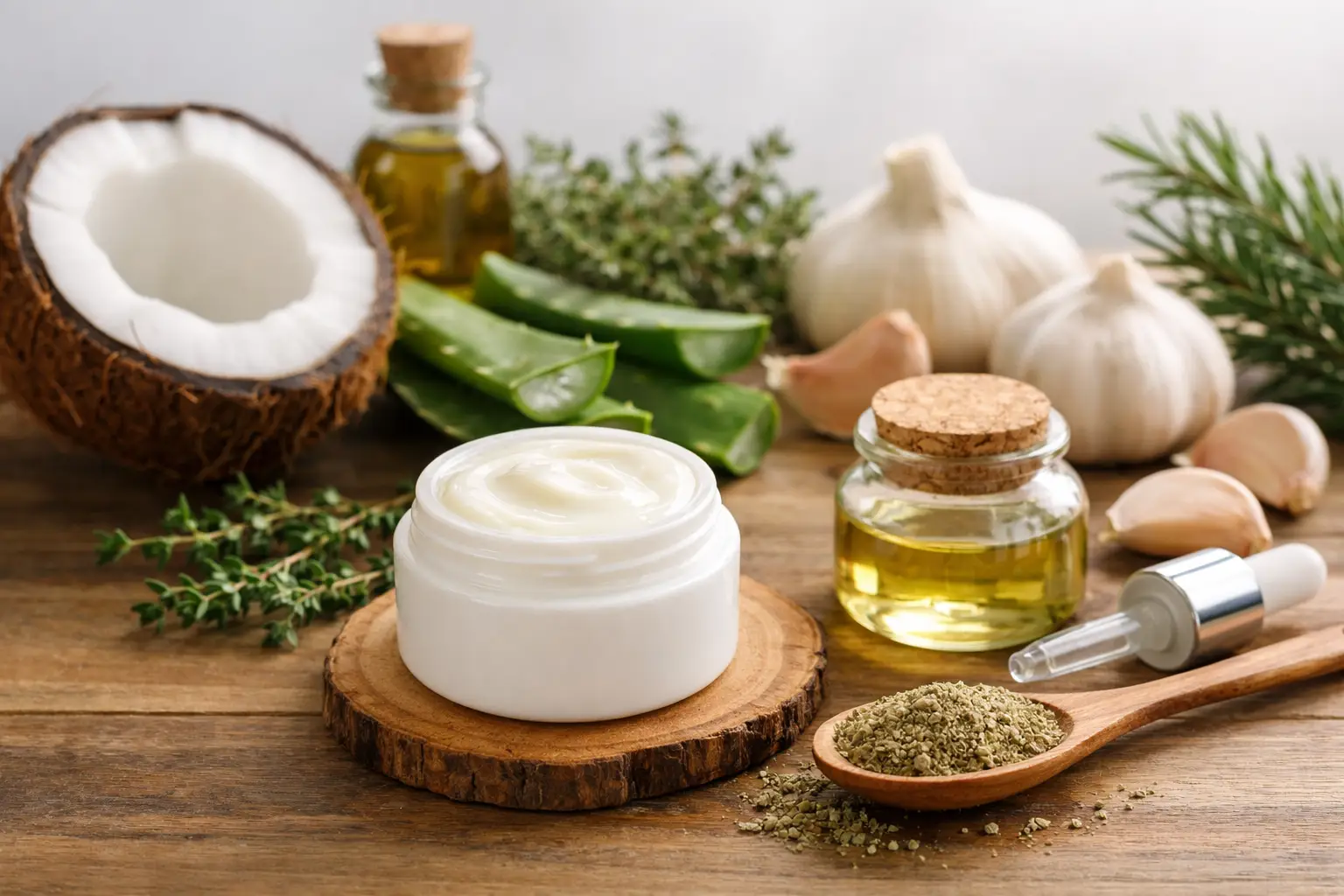
That persistent itch between the toes, the peeling skin that keeps coming back, the nail discoloration that does not improve with basic creams – fungal infections are rarely just cosmetic. A practical guide to natural antifungal ointments starts with one fact: the right topical treatment should do more than moisturize irritated skin. It should target fungal overgrowth directly while also reducing the symptoms that make daily life uncomfortable.
Natural antifungal ointments have gained attention for a simple reason. Many people want a non-prescription option that is focused, accessible, and gentler than harsher synthetic approaches, especially for recurring conditions such as athlete’s foot, tinea pedis, superficial fungal irritation, and some cases of fungal involvement around nails and skin folds. But not every natural product is built to perform like a treatment. Some are little more than scented balms. Others are formulated with active botanical compounds that have a real therapeutic role.
What a guide to natural antifungal ointments should actually cover
The first question is not whether a product is natural. The real question is whether it is designed to control fungal growth in a specific condition. A well-formulated ointment should address the organism involved, the site of infection, and the symptoms you are trying to stop – itching, burning, scaling, cracking, redness, odor, or irritation.
This matters because fungal infections behave differently depending on location. Athlete’s foot often thrives in damp, enclosed footwear and may cause maceration, odor, and fissuring between the toes. Fungal irritation in skin folds may involve more redness and friction. Nail involvement is usually slower, thicker, and harder to penetrate. One generic cream is not automatically appropriate for all three.
An ointment base can be useful when skin is dry, cracked, or inflamed because it stays in place longer than many lotions. That longer contact time may help active compounds remain on the affected area, especially on the feet. The trade-off is that heavier products can feel occlusive, so the formula still has to make sense for the site of use.
How natural antifungal ointments work
Natural antifungal ointments typically rely on plant-derived compounds with antimicrobial activity. Depending on the formula, these compounds may disrupt fungal cell membranes, create an unfavorable environment for growth, or reduce the microbial burden on the skin surface. At the same time, the ointment may calm inflammation and reduce dryness or irritation caused by the infection itself.
That dual role is important. People often stop treatment too early because symptoms improve before the fungal overgrowth is fully controlled. If an ointment reduces itching and burning quickly but does not actively support antifungal control, recurrence is more likely. Effective topical care should be both symptom-focused and organism-focused.
Natural does not automatically mean weak. It also does not automatically mean superior. Strength depends on the active compounds used, their concentration, the stability of the formula, and whether the product was developed as a targeted anti-infective rather than a general skincare item.
Ingredients that matter most
When evaluating a natural antifungal ointment, look past front-label marketing. The ingredient list and intended use tell you much more.
Tea tree oil is one of the better-known natural antifungal ingredients and is often used for athlete’s foot and minor fungal skin problems. It may help reduce fungal burden and odor, but concentration and tolerability matter. Too little may be ineffective. Too much may irritate sensitive skin.
Undecylenic acid, though not always thought of in the same category as botanical oils, is widely used in over-the-counter antifungal care and can be highly relevant in condition-specific formulas. Certain essential oils and plant compounds may also contribute antimicrobial activity, but they should be included for function, not fragrance.
Supportive ingredients matter as well. If the skin is cracked, inflamed, or peeling, the formula should help protect the barrier while treatment continues. That said, heavy emollients without true antifungal actives can make a product feel soothing while doing little to address the source of the problem.
A serious formula should tell you what condition it is intended for. That level of specificity usually signals better product design.
Choosing the right ointment for the condition
The best natural antifungal ointment depends on where the infection is, how long it has been present, and what symptoms are most prominent.
For athlete’s foot and tinea pedis, a targeted ointment should perform well in moist, high-friction areas and help with itching, peeling, burning, and persistent foot odor. If the spaces between the toes are raw or fissured, an ointment may be more useful than a lighter cream because it can protect compromised skin while delivering active ingredients.
For fungal issues around nails, expectations need to be realistic. Nail infections are difficult to treat with any topical product because the nail plate limits penetration. A natural ointment may still help support the surrounding skin and reduce surface fungal burden, but improvement is usually slower and often incomplete without disciplined, extended use.
For red, irritated areas in skin folds, the challenge is more complicated. Fungal overgrowth can overlap with bacterial imbalance, sweat retention, and friction. In those cases, a broad anti-infective approach may be more useful than a product that only claims to soothe irritation.
This is where condition-specific development matters. Companies such as Theracont Scientific have built their topical products around particular skin infections rather than treating all irritation as the same problem. That approach is more practical for consumers because symptom patterns often point to different causes.
What to check before you buy
A useful natural antifungal ointment should make clear claims about intended use, active compounds, and symptom targets. If the packaging only promises “healthy-looking skin” or “botanical comfort,” that is not enough.
Look for a product that explains whether it is meant for athlete’s foot, tinea pedis, recurrent fungal irritation, or another defined issue. Also consider whether the formula addresses related symptoms such as malodor, scaling, discoloration, or skin breakdown. Fungal infections often involve more than itch alone.
Pay attention to application instructions. Good topical treatments usually require consistent use over time, even after symptoms begin to ease. If directions are vague, the product may be more cosmetic than therapeutic.
It is also wise to consider skin sensitivity. Natural ingredients can still sting, sensitize, or trigger irritation, especially on broken skin. If you have a history of reactions to essential oils or fragranced products, review the formula carefully.
When natural antifungal ointments are a good fit – and when they are not
For mild to moderate fungal skin infections, especially on the feet or in other localized areas, a well-formulated natural ointment can be a practical over-the-counter option. It may be a good fit for adults who want direct treatment without a prescription and who prefer to avoid unnecessary antibiotic exposure for conditions that are not bacterial.
Still, there are limits. If the area is rapidly worsening, severely inflamed, draining, spreading widely, or not improving after consistent use, self-treatment may not be enough. The same is true if you are unsure whether the problem is fungal at all. Eczema, psoriasis, contact dermatitis, erythrasma, and bacterial conditions can mimic fungal infections. Using the wrong treatment delays relief.
People with diabetes, poor circulation, immune compromise, or significant nail deformity should also be more cautious. Foot infections in particular can become more serious when skin integrity is already impaired.
How to get better results from treatment
Even the best ointment will struggle if the environment keeps feeding the infection. Feet need to be kept as dry as possible, socks should be changed regularly, and shoes should be allowed to dry fully between wears. In skin folds, reducing trapped moisture and friction can make a major difference.
Apply the ointment to clean, dry skin unless the product directs otherwise. Be thorough at the edges of the affected area, not just the center of visible irritation. Fungal spread often extends beyond what looks inflamed.
Consistency matters more than intensity. Applying a targeted ointment as directed for the full recommended period is usually more effective than using it heavily for a few days and then stopping once symptoms calm down.
A natural antifungal ointment should earn its place by doing real work – controlling fungal overgrowth, reducing symptoms, and supporting damaged skin while it heals. If a product is specific about the condition, serious about active compounds, and designed for treatment rather than general skincare, it is far more likely to help you move from temporary relief to actual control.