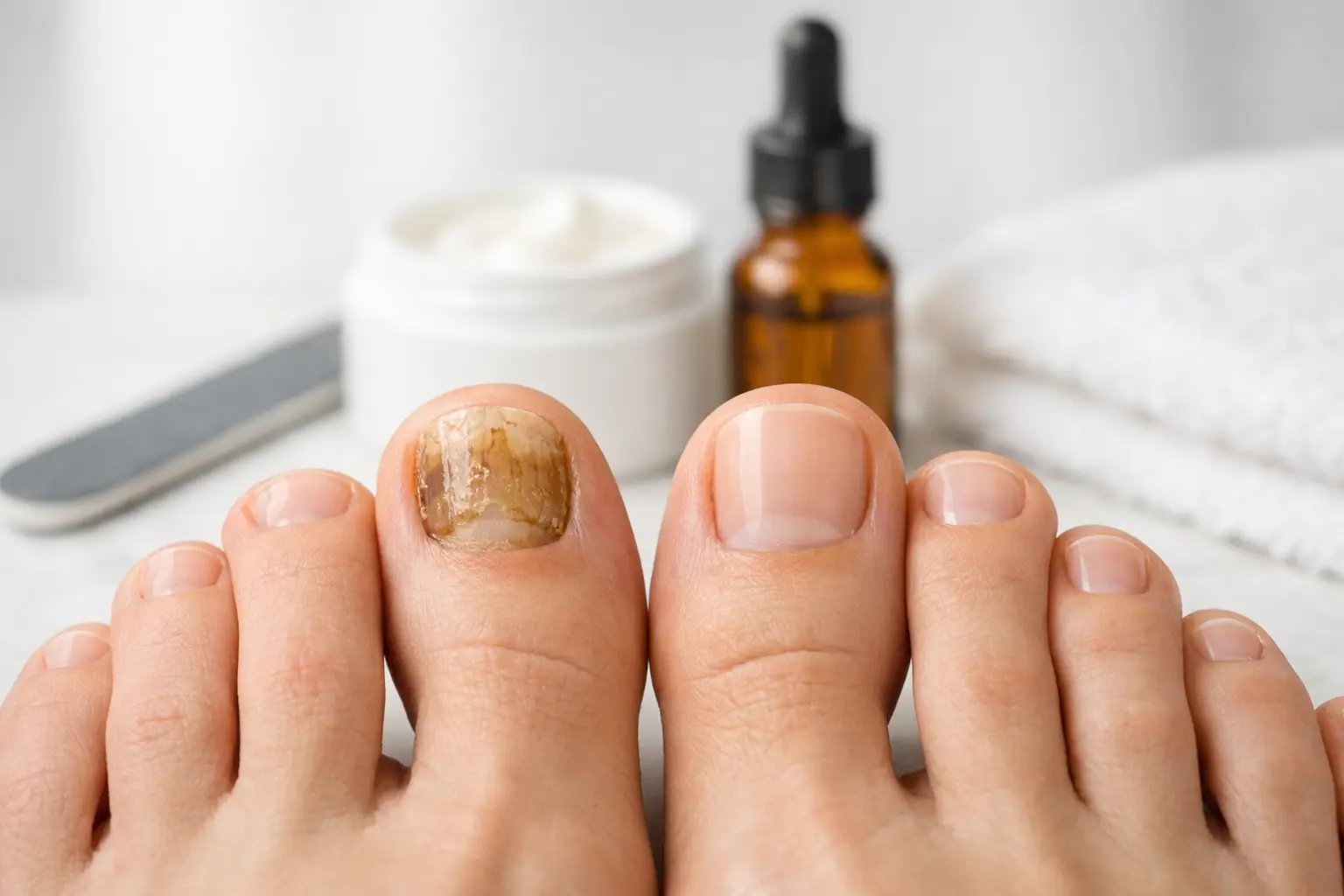
A thick, yellow, uneven toenail does more than change how your foot looks. It usually signals an active fungal problem inside or under the nail plate, and cosmetic fixes alone rarely change much. If you are looking for how to improve toenail fungus appearance, the most effective approach is to reduce the fungal burden, protect healthy nail growth, and manage the surface changes that make the nail look damaged in the first place.
Toenail fungus, or onychomycosis, changes nail color, texture, thickness, and shape because the organism disrupts normal nail structure as it grows. That matters for appearance, but it also matters for comfort. A distorted nail can press into shoes, collect debris, and become harder to clean. In persistent cases, the appearance problem is really a sign that the infection has had time to establish itself.
How to improve toenail fungus appearance starts with infection control
If the fungus remains active, the nail usually stays discolored and misshapen no matter how carefully you buff it or hide it with polish. The visible nail is largely dead keratin, so improvement depends on what is happening at the nail bed and matrix, where new nail is formed. That is why appearance improves slowly and why targeted antifungal care is more useful than purely cosmetic cover-up.
A practical treatment plan should do two things at once. It should help suppress the fungal organisms on and around the nail, and it should create better conditions for healthy nail growth. Natural topical antifungal formulations can fit well here, especially for people who want an over-the-counter option that is condition-specific and designed for direct antifungal action rather than general moisturizing.
That said, not every nail responds the same way. A mild case with limited discoloration can look better within months as healthier nail grows forward. A thick nail that has been infected for years may improve more slowly, and some shape changes can persist even after the fungal load drops.
What actually improves the look of an infected nail
Most people want a visible change they can track. In real terms, improvement usually means less yellow or brown discoloration, reduced thickness, a smoother surface, less crumbling at the edge, and a clearer line of new nail growth near the cuticle. These are useful signs because they suggest the nail is growing out in a healthier state.
Surface trimming helps appearance right away, but it is not the same as treatment. Filing down a thickened nail can make it less rough and easier to manage in shoes. It can also improve penetration if you are using a topical antifungal product. The trade-off is that aggressive trimming or digging under the nail can injure surrounding skin and create a better opening for secondary infection. The goal is controlled reduction, not trauma.
Keeping the nail short also helps limit debris buildup. Fungal nails often trap keratin fragments underneath, which adds to the opaque, dirty look people notice. Gentle, regular trimming reduces that visual bulk and makes daily cleansing more effective.
Thickness, color, and texture respond at different speeds
Color may take a long time to normalize because damaged nail has to grow out. Thickness sometimes improves earlier if the nail is carefully filed and the fungal load is being reduced. Texture can also change gradually, with less chalkiness or crumbling over time. This uneven progress is normal.
It is common to expect the whole nail to clear at once. In practice, the clearest early sign is often a narrow band of healthier-looking nail emerging from the base. That area tells you more than the older distal portion at the tip.
Daily care that supports clearer-looking nails
The nail environment matters. Fungus tends to persist where there is warmth, sweat, occlusion, and repeated exposure to contaminated footwear or surfaces. If you only treat the nail and ignore the foot environment, appearance often improves slowly or relapses.
Wash feet regularly and dry them fully, especially around the toes. Moisture control is not cosmetic housekeeping. It directly reduces one of the conditions fungal organisms favor. Change socks when they become damp, rotate shoes, and allow footwear to dry completely between uses. Breathable shoes can help, while tight, non-ventilated footwear tends to worsen both moisture retention and pressure on already distorted nails.
If athlete’s foot is also present, that should be addressed at the same time. Scaling skin between the toes or on the sole often acts as a fungal reservoir, allowing the nail to be repeatedly re-exposed. Treating only the nail while leaving tinea pedis active is a common reason progress stalls.
Nail grooming matters, but technique matters more
Use clean clippers and avoid sharing nail tools. Trim straight across when possible, then file thick or jagged areas carefully. If the nail is very hard, trimming after bathing may be easier, but do not leave feet damp afterward. Dry them thoroughly.
Avoid tearing the nail or cutting into surrounding skin. Small breaks around the nail fold can create irritation, tenderness, and more complicated local infection. If the nail is extremely thick or painful, professional debridement may be the safer option.
Should you use nail polish or cosmetic cover-up?
If your priority is immediate appearance, cover-up is understandable. But it depends on the condition of the nail and what else you are using. Heavy polish and artificial nails can trap moisture and make it harder to monitor whether the nail is improving. They can also hide warning signs like worsening discoloration, lifting, or inflammation around the nail.
If you choose to use polish, keep expectations realistic. It can camouflage discoloration, but it does not treat the fungal source. In many cases, a better short-term strategy is to reduce thickness, clean the nail surface, and focus on active antifungal care while the healthier nail grows in. That approach usually gives a more durable improvement in appearance.
When topical care is enough, and when it may not be
For mild to moderate cases, especially when the infection is limited to part of the nail and surrounding skin is intact, consistent topical antifungal care may be reasonable. This is often appealing for consumers who want an accessible, natural, non-prescription option with direct antifungal intent. A targeted formulation can be especially useful when it is built for fungal skin and nail conditions rather than positioned as a general skin cream.
Theracont Scientific’s approach reflects this kind of focused anti-infective care, with condition-specific topical products intended to address fungal overgrowth while supporting symptom relief.
Still, there are limits. If the nail is severely thickened, detached, painful, or if multiple nails are heavily involved, topical treatment alone may not be enough. Nails grow slowly, and the deeper the involvement, the harder it is for any topical approach to reach the full infected area. People with diabetes, poor circulation, immune compromise, or repeated nail trauma should be especially careful and may need medical assessment sooner.
How to improve toenail fungus appearance without making it worse
A common mistake is trying too many harsh methods at once. Over-filing, using irritating chemicals, or scraping under the nail aggressively can inflame the tissue and make the nail look worse before any real progress happens. Another mistake is stopping treatment as soon as the nail looks slightly better. Since the damaged portion must grow out, care usually needs to continue well beyond the first visible improvement.
Patience is not a cosmetic preference here. It is part of the treatment reality. Toenails grow slowly, often only a few millimeters per month. A visibly better nail depends on replacement growth, not just surface cleaning.
You will usually get better results from a steady routine than from frequent product switching. Keep the nail trimmed, reduce moisture exposure, disinfect or rotate footwear, and use a targeted topical antifungal consistently. Track change from the base of the nail rather than judging the oldest damaged section at the tip.
When to get medical help
If the nail becomes painful, the surrounding skin turns red or swollen, drainage develops, or the discoloration is dark and irregular rather than the usual fungal yellowing, get it evaluated. Not every abnormal nail is fungal. Psoriasis, trauma, bacterial infection, and other nail disorders can look similar. A diagnosis matters, especially if home treatment has failed repeatedly.
Medical evaluation is also sensible if there is no sign of healthier nail growth after a sustained period of proper care. Sometimes the issue is not poor compliance. Sometimes the condition is more advanced, mixed with another problem, or simply less responsive to topical management.
The clearest way to improve an infected nail’s appearance is to treat it like an infection first and a cosmetic issue second. Once fungal activity is reduced, the nail finally has a chance to grow in cleaner, smoother, and less discolored. That process is slow, but steady care gives the nail the best chance to look normal again.