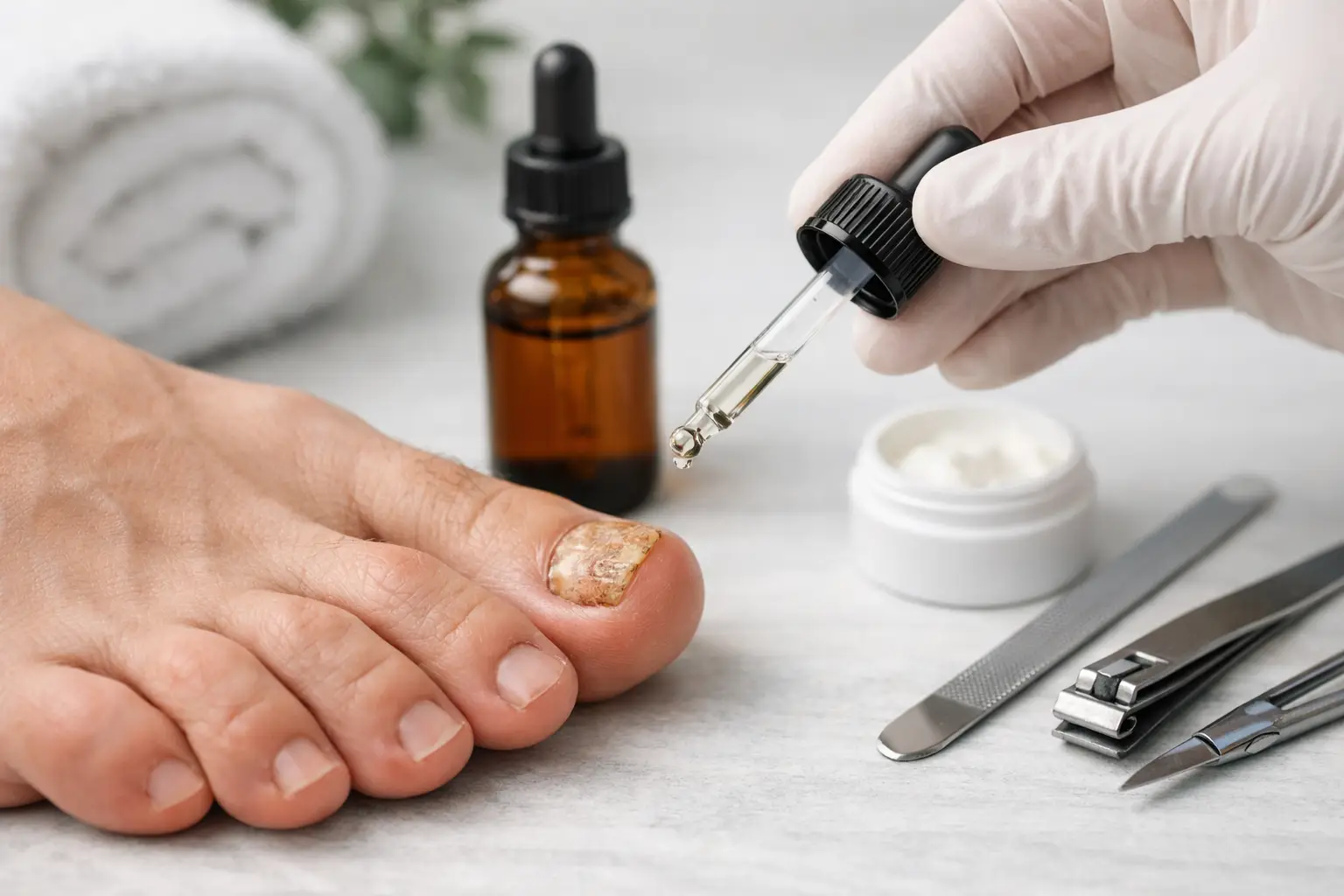
If your nail has turned yellow, thick, brittle, or oddly lifted at the edge, you are not dealing with a cosmetic issue alone. Toenail fungus treatment is about controlling an active infection before it spreads deeper into the nail, reaches nearby skin, or keeps returning after short-term improvement.
Onychomycosis can be stubborn because the fungus does not sit neatly on the surface. It settles into the nail plate and nail bed, where moisture, heat, and limited airflow help it persist. That is why many people try one product after another, trim the nail repeatedly, or wait for it to grow out, only to find the discoloration and thickening still there months later.
Why toenail fungus is hard to clear
Toenails grow slowly, and that alone changes the timeline. Even when treatment starts working, the damaged part of the nail does not instantly look normal. The goal is to stop fungal activity and allow healthy nail to gradually replace infected nail as it grows forward.
The structure of the toenail also creates a treatment barrier. Topical products must reach through or around a thickened nail, and that is difficult when the nail has become dense, crumbly, or separated from the nail bed. If the surrounding foot skin also has fungal involvement, especially athlete’s foot between the toes or on the sole, the nail can be reinfected continuously.
Shoes, socks, damp floors, and repeated pressure from walking or exercise add to the problem. A person may treat the nail faithfully but keep exposing the area to the same conditions that favored fungal growth in the first place. That is one reason recurrence is common.
What effective toenail fungus treatment needs to do
A useful treatment plan has to do more than mask appearance. It should reduce fungal overgrowth, limit spread, support a cleaner nail environment, and make reinfection less likely. In practical terms, that means the treatment has to be consistent, targeted, and realistic enough for daily use.
For mild to moderate cases, many people start with an over-the-counter topical approach. This can make sense when the infection is still limited, when only part of the nail is involved, or when someone wants to avoid oral medication. The trade-off is time. Topical care usually requires patience because nail improvement follows nail growth, not the calendar on the box.
Condition-specific topicals are generally a better fit than generic skin creams. The reason is simple – nails are different from soft skin, and fungal nail infections need focused action rather than broad moisturization or short-lived symptom relief. A targeted formula should be chosen for antifungal activity, practical application, and repeat use over months, not days.
Topical toenail fungus treatment: what to expect
Topical treatment is most useful when the nail is not completely destroyed and the infection has not advanced to severe pain, extensive deformity, or multiple nails with heavy involvement. It is also a reasonable option for people looking for non-prescription care, especially when they prefer natural active compounds over harsher synthetic approaches.
That said, expectations need to be accurate. A topical product may begin reducing active fungal burden well before the nail looks better. Less crumbling, slower thickening, reduced spread, and a clearer band of new nail growth near the cuticle are often earlier signs of progress than a fully normal-looking nail.
Application technique matters. The nail should be kept trimmed short, with loose or crumbly material gently reduced when safe to do so. A product placed on a long, heavily thickened nail without routine maintenance has a harder job. Clean, dry application is equally important because trapped moisture can work against treatment.
Natural, science-informed topical care can be especially appealing for people who want direct antifungal support without prescription barriers. Theracont Scientific aligns with that approach by focusing on targeted, antibiotic-free anti-infective formulations designed for specific fungal skin and nail conditions rather than one-size-fits-all creams.
When oral medication may be necessary
Not every case responds well to topical care alone. If the nail is very thick, the infection involves most of the nail, several nails are affected, or the condition has been present for a long time, oral antifungal medication may be discussed with a medical professional. Oral treatment can be more effective in some advanced cases because it reaches the nail from within as the nail grows.
The trade-off is that oral medication is not for everyone. Drug interactions, liver considerations, age, medical history, and monitoring requirements all matter. Some people also prefer to avoid systemic treatment unless clearly needed. That is why the best approach depends on severity, duration, and personal risk factors.
If you have diabetes, poor circulation, significant nail pain, repeated cellulitis, or uncertainty about whether the nail change is actually fungal, professional evaluation becomes more important. Psoriasis, trauma, and other nail disorders can mimic fungal infection.
Supporting treatment at home
Toenail fungus treatment works better when the environment around the nail changes too. If the fungus keeps getting the same warm, damp conditions, even a good product can be forced into an uphill battle.
Feet should be washed and dried carefully, especially around and between the toes. Socks need to be changed regularly, and shoes should be allowed to dry fully between uses. If a pair of shoes stays damp inside, it can continue exposing the foot and nail to fungal contamination.
Nail tools should not be shared, and old clippers or files used on infected nails should be cleaned thoroughly. Walking barefoot in communal locker rooms, pools, or showers also raises the odds of repeated exposure. People often focus only on the nail and forget the surrounding system that keeps the infection active.
If athlete’s foot is present at the same time, treating both conditions is usually the smart move. A nail infection and a skin infection on the foot often feed each other. Clearing one while ignoring the other can leave a reservoir for recurrence.
Signs your treatment is working
A common mistake is stopping too early because the nail still looks damaged. Fungal nail care is slow by nature. The damaged nail has to grow out, and that process can take many months.
The clearest sign of improvement is new nail growth coming in with a healthier color and smoother texture from the base of the nail. The infected area may still be visible farther out, but if the new growth is cleaner and the damaged section is moving forward with trimming, that usually suggests progress.
You may also notice less thickening, less debris under the nail, and less spread to neighboring nails. What you should not expect is a dramatic overnight change. Fast cosmetic promises are often not the same as true infection control.
When treatment fails or keeps recurring
If months of consistent care produce no healthier new growth, it is worth reassessing the diagnosis or the treatment method. Some cases fail because the product is not well matched to fungal nail infection. Others fail because the nail was too advanced for topical care alone, or because reinfection from skin, shoes, or shared surfaces never stopped.
Recurring infection can also point to pressure trauma from tight shoes, sweaty feet, gym exposure, or incomplete treatment duration. In other words, recurrence does not always mean the fungus is unusually aggressive. Sometimes it means the conditions that support it were left in place.
For stubborn nails, a more aggressive plan may be needed, including professional nail debridement, prescription treatment, or confirmation testing. There is no benefit in pretending every case should respond the same way. Some do well with disciplined topical care. Some require escalation.
Choosing a realistic path forward
The best toenail fungus treatment is the one that matches the actual condition of the nail and the habits that surround it. If the infection is caught early, a targeted topical regimen combined with better foot hygiene may be enough. If the nail is badly distorted, long-standing, or repeatedly infected, more intensive treatment may make better clinical sense.
What matters most is not chasing a quick cosmetic fix. It is reducing fungal activity, protecting the surrounding skin, and giving healthy nail a chance to return under conditions that do not keep feeding the infection. Start early, stay consistent, and treat the environment around the nail with the same seriousness as the nail itself. That is usually where real progress begins.