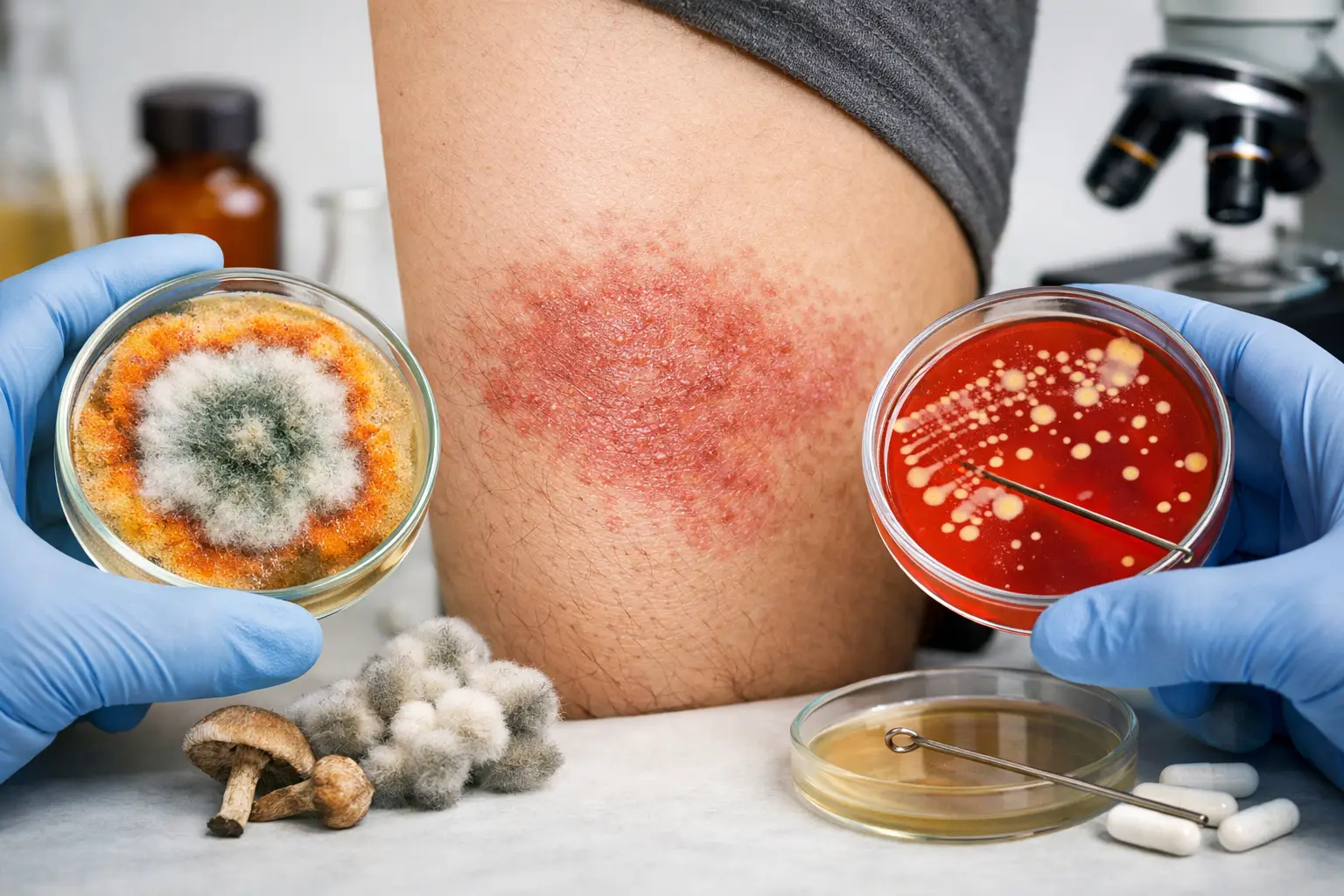
A rash in the groin, underarms, or between the toes often gets labeled as “fungus” right away. That shortcut causes a lot of confusion, because when people ask, is erythrasma fungal or bacterial, the medically accurate answer is bacterial. Erythrasma is caused most often by Corynebacterium minutissimum, a surface-dwelling bacterium that thrives in warm, moist, high-friction skin folds and can look a lot like a fungal rash at first glance.
Is erythrasma fungal or bacterial, and why is it confused with fungus?
Erythrasma is bacterial, not fungal. The reason people mix it up with athlete’s foot, jock itch, or yeast-related intertrigo is simple: the location and appearance overlap. It can show up as reddish-brown or brownish patches with mild scaling, well-defined edges, itching, burning, or skin irritation, especially in the groin, under the breasts, between the toes, and in the armpits.
Unlike many fungal infections, erythrasma often has a finer, drier scale and a more uniform brown or brick-red color. It may also come with persistent odor, discoloration, or skin tenderness in areas that stay damp. In toe webs, it can resemble athlete’s foot so closely that people treat it as fungus for weeks without much improvement.
That distinction matters because the underlying organism is different. If the problem is bacterial overgrowth rather than dermatophyte fungus, a condition-specific antibacterial approach is often more logical than repeatedly cycling through generic antifungal products.
What causes erythrasma and who gets it?
Corynebacterium minutissimum is part of the broader bacterial environment associated with human skin, but erythrasma develops when local conditions favor overgrowth. Heat, sweat, tight clothing, skin-on-skin friction, and poor air circulation create the kind of moist surface where bacteria can persist. Diabetes, obesity, excessive sweating, humid climates, and recurrent friction all increase risk.
Adults are affected more often than children, and recurrent cases are common in people with active lifestyles, work boots, occlusive footwear, or skin folds that stay warm through the day. Erythrasma is not always dramatic. Sometimes it starts as discoloration that looks harmless, then lingers for months because it is mistaken for dry skin, chafing, or fungus.
Toe-web erythrasma deserves special attention because it may occur alongside other problems, including fungal infection or pitted keratolysis. That overlap is one reason self-diagnosis can get messy. A person may have symptoms that suggest one condition while a different organism is actually driving the rash, odor, or discomfort.
Symptoms, prevention, and treatment
Typical symptoms include reddish-brown or tan patches, fine scaling, mild itching, burning, and persistent discoloration in folds or between toes. Some people notice a musty or unpleasant odor. Others mainly notice that the area never fully clears, even when they keep applying standard antifungal creams.
Clinicians sometimes confirm erythrasma with a Wood’s lamp exam, where affected skin can show a coral-red fluorescence due to bacterial porphyrins. Not every home case needs that level of confirmation, but it highlights the central point: erythrasma is a bacterial skin infection, and treatment should match that biology.
Prevention focuses on reducing the environment that supports bacterial overgrowth. Keeping folds and toe spaces dry, changing out of sweaty clothing promptly, rotating footwear, lowering friction, and managing recurring moisture can reduce relapses. If symptoms keep returning, it is worth considering whether the original diagnosis was incomplete or whether mixed infection is involved.
Treatment depends on severity and location. Some cases respond to topical antibacterial therapy and careful moisture control, while broader or stubborn cases may need clinical evaluation. For people looking for an over-the-counter, condition-specific option, THRASMAX is designed for erythrasma-focused care with natural active compounds and a direct anti-infective purpose. That kind of targeted approach may be especially useful for adults who want symptom relief without defaulting to unnecessary synthetic antibiotics for every recurring fold or toe-web flare.
If you have a persistent rash in a skin fold or between your toes and keep wondering whether it is fungus, pause and reassess. Erythrasma is bacterial, and treating the right cause is often the fastest path to relief, clearer skin, and fewer repeat flare-ups.