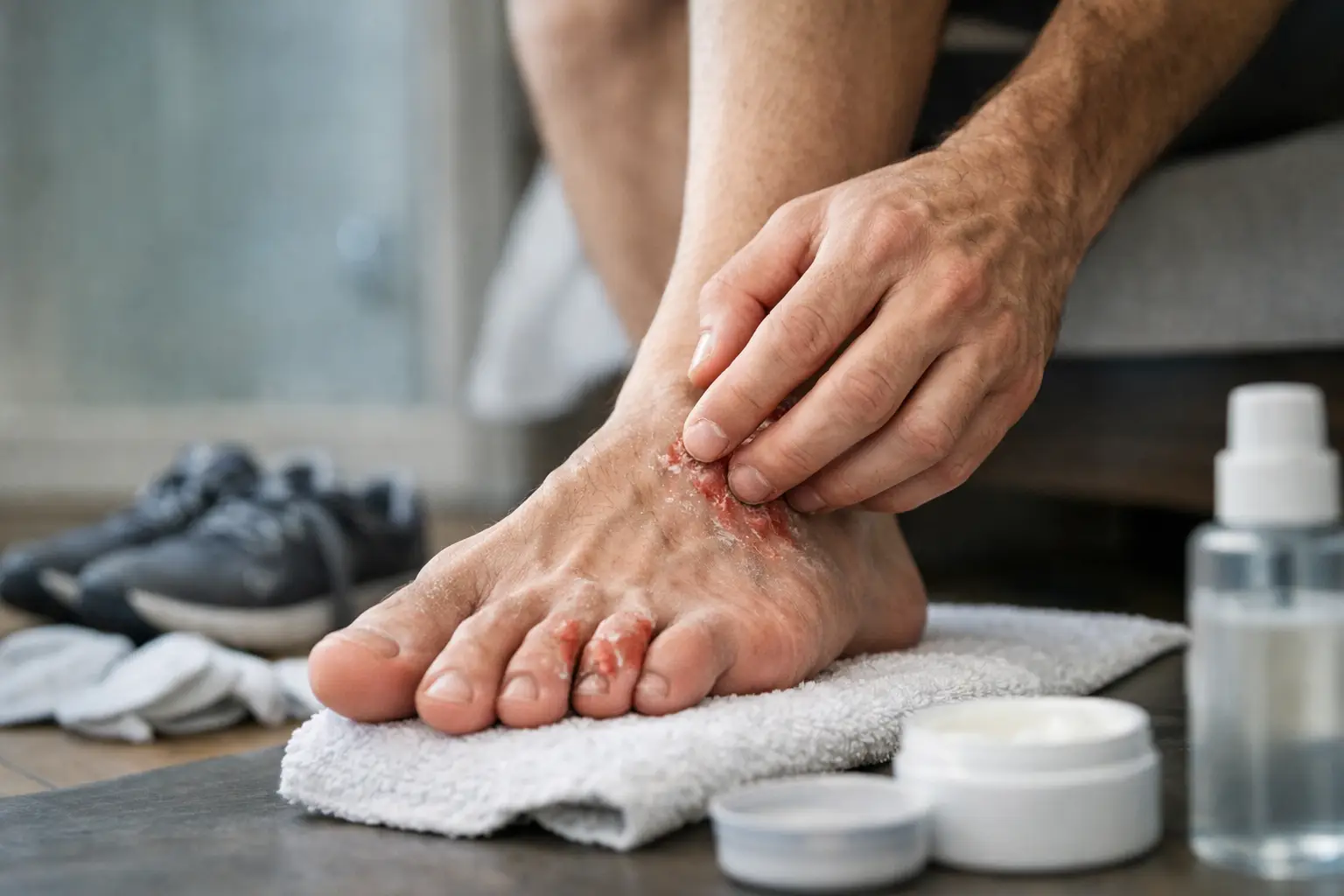
You clear the itching, the peeling calms down, and your skin starts to look normal again – then a few weeks later the burning between your toes is back. If you have been asking why does athlete foot keep returning, the frustrating answer is usually not one single cause. Most repeat cases happen because the fungus was reduced but not fully eliminated, or because the feet keep getting exposed to the same warm, damp conditions that let it grow.
Athlete’s foot, or tinea pedis, is a fungal infection that thrives in skin folds, sweaty shoes, locker room floors, and socks that trap moisture. It often starts as scaling, redness, stinging, itching, or cracking between the toes, but recurrent cases can spread to the soles, sides of the feet, and even the toenails. Once nails become involved, the infection becomes harder to fully control and easier to re-seed onto the surrounding skin.
Why does athlete foot keep returning after treatment?
One of the most common reasons is stopping treatment too soon. Symptoms often improve before the fungus is gone, so people discontinue care as soon as the itching eases or the peeling looks better. That can leave enough fungal growth behind to flare again, especially once the feet get sweaty or occluded inside shoes.
Reinfection is another major factor. The fungus does not just live on the skin. It can persist in shoes, on insoles, in damp bath mats, on shower floors, and in socks that were worn during an active outbreak. If those sources are not addressed, you may be treating the skin while repeatedly exposing it to the same organism.
There is also the issue of misidentification. Not every red, flaky foot rash is simple athlete’s foot. Eczema, contact irritation, psoriasis, and bacterial overgrowth can mimic or overlap with fungal infection. In some stubborn cases, there may be both fungal infection and a bacterial superinfection, especially when the skin is cracked, inflamed, macerated, or malodorous.
The hidden reasons athlete’s foot becomes stubborn
Moisture is the biggest driver of recurrence. Feet spend hours in enclosed shoes, often with limited airflow and repeated sweating. If the skin between the toes stays damp, the barrier weakens and fungi have an easier time taking hold. This is why runners, gym users, service workers, and anyone in work boots often deal with repeat episodes.
Your personal risk factors matter too. A history of excessive sweating, diabetes, poor circulation, nail fungus, communal shower use, or minor skin trauma increases the odds of recurrence. Even something as ordinary as putting socks on before the feet are fully dry can keep the cycle going.
Treatment choice matters as well. A general skin cream may soothe irritation without targeting the organisms driving the infection. Recurrent athlete’s foot usually responds better to a condition-specific approach that focuses on controlling fungal growth, calming inflammation, and supporting damaged skin while avoiding unnecessary synthetic antibiotic exposure when the problem is primarily fungal.
That is where a targeted product can make more sense than trial-and-error self-treatment. ATHLECONT is formulated specifically for athlete’s foot and tinea pedis, using natural active compounds in a topical ointment designed for direct application to affected skin. For cases that appear more inflamed, more painful, or complicated by signs of bacterial involvement such as stronger odor, worsening redness, or soggy skin breakdown, ATHLECONT-MAX may be the more appropriate condition-specific option.
What helps stop the cycle for good?
The first step is to treat long enough for the infection, not just the symptoms. If the skin looks better but still feels tender, peels after bathing, or shows faint scaling between the toes, the fungus may still be present. Consistent application matters more than aggressive application. Missing days, switching products repeatedly, or using treatment only when symptoms are obvious tends to prolong the problem.
The second step is environmental control. Shoes should be allowed to dry fully between wears, and alternating pairs often helps. Socks need to be changed when damp, not just at the end of the day. Towels, bath mats, and any surfaces that stay moist should be cleaned regularly during and after treatment. If one pair of shoes seems to trigger the same irritation every time, it may be acting as a reservoir.
Skin care for recurrent tinea pedis should stay practical and focused. Dry carefully between the toes after bathing. Do not share nail tools, shoes, or towels. If the skin is fissured, protect it early rather than waiting for it to become raw and more vulnerable to secondary infection.
It also helps to pay attention to pattern. If the rash always returns in the same spot, if the toenails are thickened or discolored, or if the feet smell unusually strong despite washing, the issue may be more than straightforward athlete’s foot. Nail involvement and bacterial overgrowth commonly make recurrence harder to break, and those signs call for a more targeted response.
For many adults, the real question is not whether athlete’s foot can be treated. It is whether the treatment plan is specific enough for the way the infection behaves. Recurrent fungal infections usually need more than symptom relief. They need a product designed for the condition, consistent use, and changes that remove the moist, contaminated environment the fungus depends on.
If your athlete’s foot keeps returning, do not keep cycling through generic creams and hoping this time will be different. Choose a condition-specific topical option such as ATHLECONT, or ATHLECONT-MAX when bacterial superinfection may also be part of the picture, and address both the skin and the source of reinfection. The sooner you treat the infection thoroughly, the sooner your feet can stay comfortable, clear, and ready for daily life.