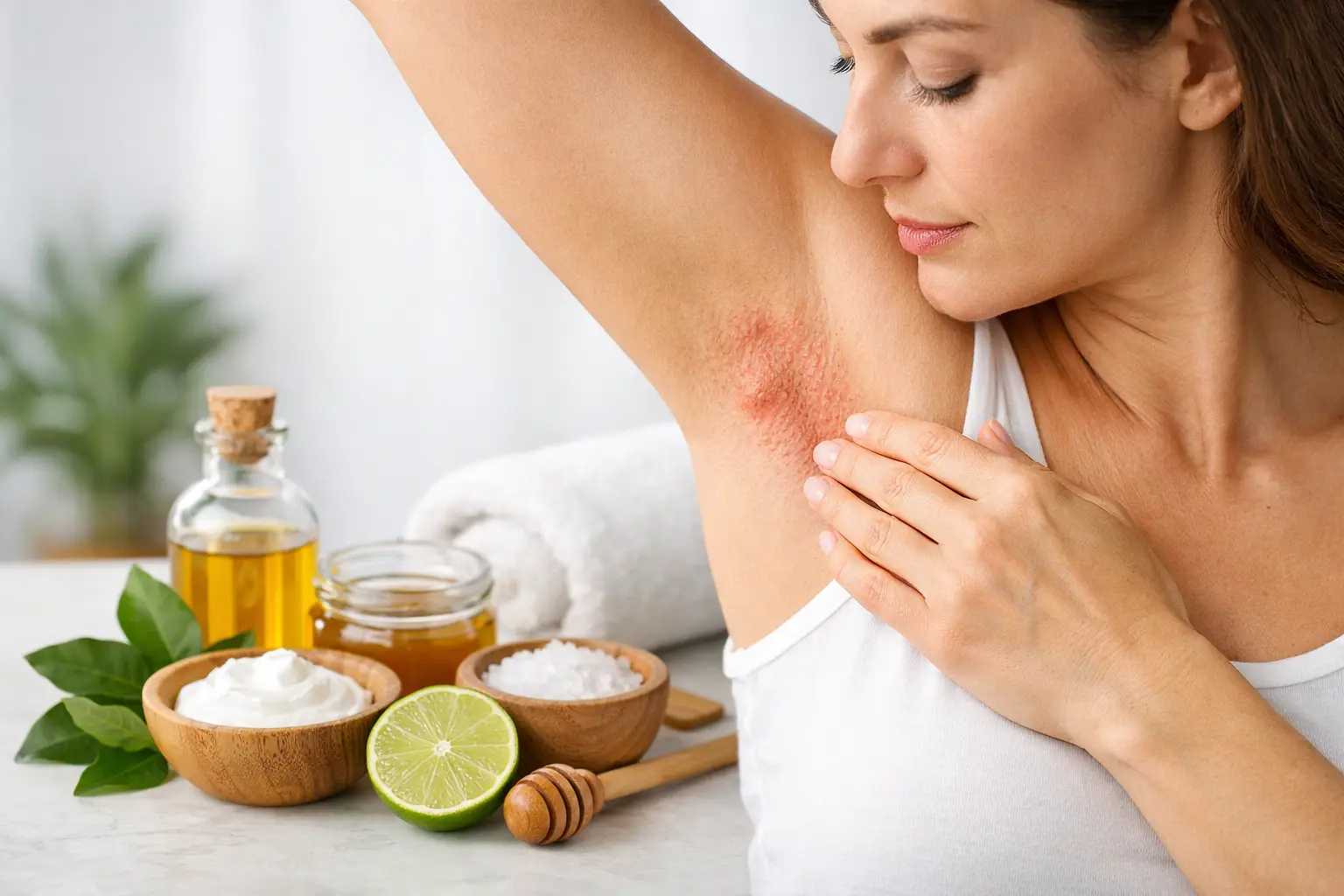
Underarm erythrasma usually does not start as a dramatic rash. It often shows up as a stubborn patch of brownish-red discoloration, mild scaling, odor, or irritation that does not respond the way a typical deodorant rash or simple chafing should. If you are looking for a natural treatment for underarm erythrasma, the key is not just soothing the skin. The real goal is to reduce the bacterial overgrowth driving the problem while keeping the underarm dry, calm, and less hospitable to recurrence.
What underarm erythrasma actually is
Erythrasma is a superficial bacterial skin infection most commonly associated with Corynebacterium minutissimum. It tends to develop in warm, moist skin folds where friction, sweat, and trapped moisture create the right environment for overgrowth. The underarms are a common site because the skin stays occluded, rubs together, and is exposed to sweat and product buildup.
This is one reason underarm erythrasma is often mistaken for fungal rash, contact dermatitis, or intertrigo. The color can be reddish-brown or tan. The skin may look dry, slightly wrinkled, or finely scaly rather than intensely inflamed. Some people notice itching or burning, while others are more bothered by odor or persistent discoloration.
That distinction matters. If the problem is bacterial, a moisturizer alone will not clear it, and repeated use of the wrong product can keep the cycle going.
When a natural treatment for underarm erythrasma makes sense
A natural approach is usually most useful when the condition appears mild to moderate, remains limited to the underarm area, and there are no signs of deeper infection. In that setting, treatment should focus on two things at the same time: active control of surface bacteria and correction of the local skin conditions that let the infection persist.
Natural treatment does not mean passive treatment. It should still be targeted. Oils, botanical compounds, and ointment bases need to do more than moisturize. They should be selected for anti-infective activity, skin tolerance, and suitability for use in a high-friction fold where excessive greasiness can make moisture retention worse.
For that reason, a condition-specific topical formula is usually a better fit than improvised home remedies. The underarm is sensitive skin, and not every natural ingredient belongs there.
What to look for in a natural topical approach
An effective natural treatment strategy for underarm erythrasma should support bacterial control, reduce irritation, and help restore a healthier skin environment. Topical products built around natural anti-infective compounds can be useful here, especially when they are formulated specifically for bacterial or mixed-overgrowth skin conditions rather than marketed as general skin creams.
The best options are usually those that can be applied in a thin layer, stay in contact with the affected skin, and help calm symptoms such as odor, burning, mild itching, scaling, and discoloration over time. If a product is heavily fragranced or loaded with unnecessary cosmetic additives, it may worsen irritation in an already compromised skin fold.
This is also where many people go wrong with raw essential oils. Some natural compounds have strong antimicrobial potential, but undiluted or poorly diluted oils can sting, sensitize, or inflame the underarm. A formulated ointment or cream is generally safer and more practical than trying to self-mix strong ingredients on delicate skin.
Daily care matters as much as the active treatment
Even a well-chosen natural topical will have limited results if the underarm stays warm and wet for most of the day. Erythrasma thrives in moisture. Control that, and you improve your odds of clearing the infection and keeping it from returning.
Wash the area gently once or twice daily with a mild cleanser, then dry it completely. That last step matters more than most people realize. Pat dry rather than scrub, and give the underarm an extra moment to air dry before applying any treatment or putting on clothing.
Loose, breathable fabrics help reduce friction and sweating. If you are exercising or working in heat, changing out of damp clothing quickly can make a real difference. Some people also need to reconsider their deodorant or antiperspirant. If a product causes stinging or leaves heavy residue, it may be adding to irritation or trapping moisture against the skin.
There is a balance here. Overwashing, harsh scrubs, and aggressive exfoliation can damage the skin barrier and make the area more reactive. The goal is control, not abrasion.
What natural treatment can and cannot do
Natural treatment for underarm erythrasma can help reduce bacterial burden and improve the environment that allows overgrowth, but results depend on severity, consistency, and whether the diagnosis is correct. Mild cases may respond well to a focused natural topical routine and moisture control. More persistent cases may improve slowly, especially if the condition has been present for weeks or months.
Discoloration often lingers longer than odor or irritation. That does not always mean treatment is failing. Once bacterial activity drops, the skin may still need time to normalize in color and texture. What you want to watch for is a gradual reduction in active symptoms such as odor, scaling, tenderness, and spread.
It is also possible to have overlap with other conditions. Fungal overgrowth, irritation from shaving, contact dermatitis, and intertrigo can coexist in the same area. When that happens, one-dimensional treatment tends to disappoint. A good topical approach needs to be both anti-infective and skin-compatible.
Signs you may be dealing with something else
If the rash is very itchy, bright red, swollen, sharply inflamed, or covered with pustules, it may not be straightforward erythrasma. If there is pain, drainage, cracking, fever, or rapidly expanding redness, home care is not enough. Those features raise concern for a more significant infection or a different diagnosis.
A Wood’s lamp exam in a clinical setting can help confirm erythrasma because affected skin may show a characteristic coral-red fluorescence. Not everyone has access to that evaluation right away, but it explains why recurring underarm rashes should not be treated as guesswork forever.
If a natural treatment plan is not helping after a reasonable trial, the issue may be misidentified or more advanced than it appears.
How to use a natural treatment for underarm erythrasma effectively
Consistency beats intensity. Apply the product exactly as directed to clean, fully dry skin. More is not always better. In the underarm, a thin, even application is usually preferable to a thick coating that traps heat and sweat.
Continue treatment long enough to address not just symptom relief but bacterial control. People often stop once odor improves, then wonder why the problem returns. Recurrence is common when the environment stays favorable for overgrowth or treatment is discontinued too early.
It also helps to reduce other aggravators during treatment. Shaving over visibly irritated skin can increase friction and microtrauma. Heavy occlusive products, strongly perfumed body care, and tight synthetic fabrics can all work against progress.
Theracont Scientific approaches this category with a practical goal: targeted topical treatment that uses natural active compounds to address infection-causing organisms while relieving symptoms and avoiding unnecessary antibiotic exposure when an over-the-counter option is appropriate.
When to seek medical care
Natural care has a real place in managing mild underarm erythrasma, but there are times when escalation is the smarter move. If the area is worsening, spreading beyond the underarm, failing to improve after consistent use of an appropriate topical, or recurring frequently despite good hygiene and moisture control, get it evaluated.
Medical review is especially important if you have diabetes, significant obesity, immune compromise, or repeated infections in multiple skin folds. Those factors can make recurrence more likely and can complicate what appears to be a simple superficial rash.
A clinician may confirm the diagnosis, rule out fungal infection or dermatitis, and decide whether prescription treatment is necessary. That does not mean natural approaches were pointless. It simply means the treatment plan has to match the biology of the condition.
The practical bottom line
Underarm erythrasma responds best when treatment is targeted, not cosmetic. A natural treatment for underarm erythrasma should do more than make the skin feel better for a few hours. It should help control bacterial overgrowth, reduce odor and irritation, and make the underarm less favorable to recurrence by keeping the area clean, dry, and protected.
If your underarm rash has been lingering, smelling unusual, or resisting standard skin care, treat it like a skin infection, not a minor nuisance. The right natural topical approach, used consistently and paired with moisture control, can be a practical next step toward getting the area comfortable and clear again.