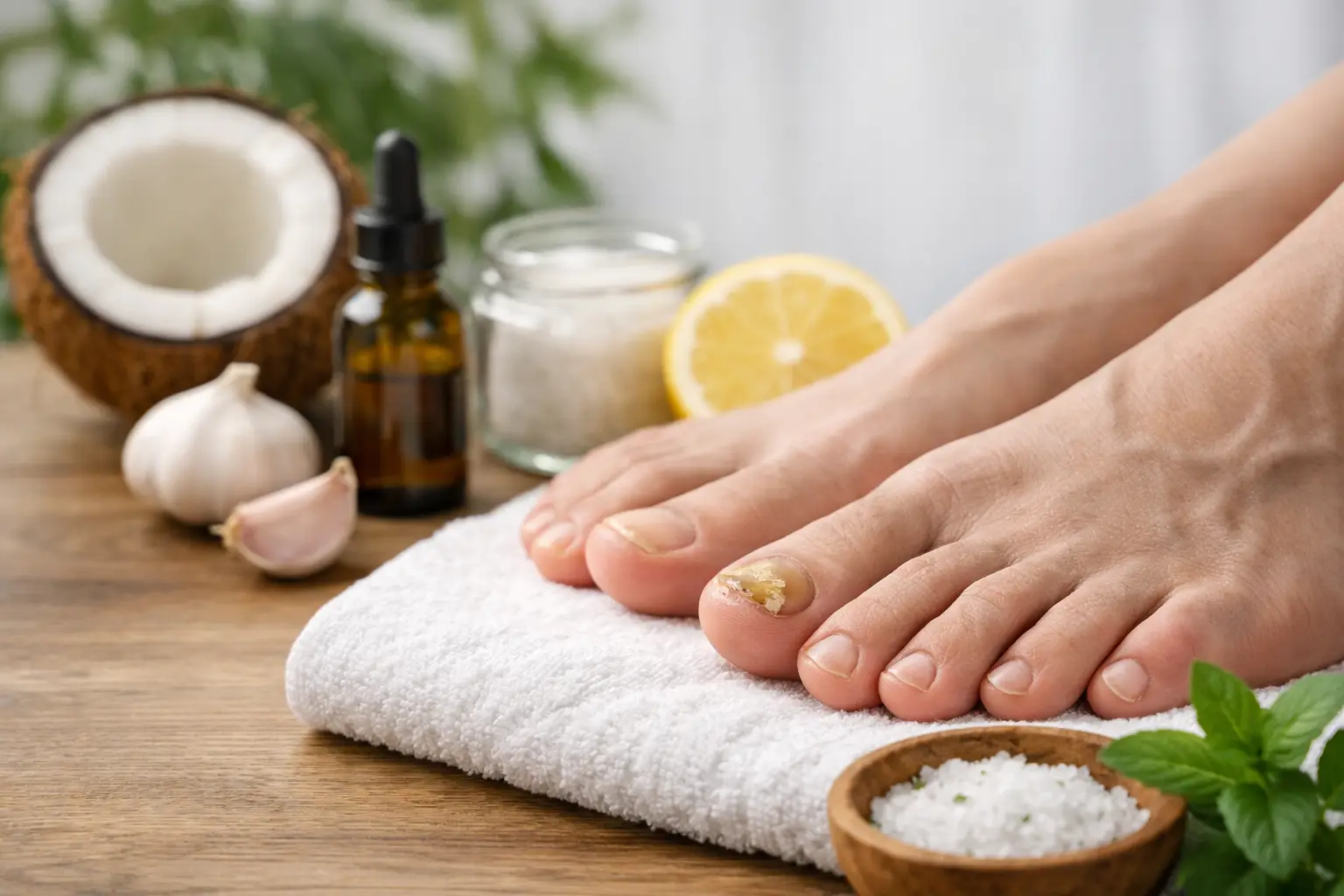
Toenail fungus rarely starts as a crisis. It starts as a small yellow mark, a nail that looks thicker than usual, or a corner that lifts and catches on socks. Then it lingers. If you are searching for what kills toenail fungus naturally, the real question is not just which ingredient sounds antifungal. It is which natural compounds can actually reach the infection, reduce fungal growth, and support clear nail regrowth over time.
What kills toenail fungus naturally – and what usually does not
Natural antifungal care can help, but toenail fungus is harder to treat than surface skin fungus. The problem is location. In onychomycosis, the fungus often lives under the nail plate or within the nail bed, where many home remedies simply do not penetrate well enough to matter.
That is why some popular DIY options fail even when the ingredient itself has antifungal activity in a lab setting. A vinegar soak may change the surface environment. Tea tree oil may have antifungal effects. Certain plant-derived compounds may interfere with fungal cell membranes. But if the active material does not stay in contact long enough or move through the thickened nail, the infection can persist.
The most useful natural options are the ones with two qualities: documented antifungal activity and a delivery method that gives them a realistic chance of contacting infected tissue. That is the difference between a home remedy that sounds appealing and one that has a practical therapeutic role.
The natural ingredients with the strongest case
Tea tree oil is one of the most commonly discussed natural antifungals, and for good reason. It contains terpinen-4-ol and related compounds that show antifungal action against dermatophytes, the fungi often involved in toenail infections. Some people see improvement in discoloration or surface changes with consistent use. The limitation is that straight oil is not always well tolerated, and inconsistent application usually leads to disappointing results.
Oregano oil is another plant-derived option with recognized antimicrobial activity, largely due to compounds such as carvacrol and thymol. It is potent, but that potency cuts both ways. Undiluted oregano oil can irritate surrounding skin, especially around a damaged nail fold. For people with sensitive skin, redness and burning can become a bigger problem than the infection itself.
Undecylenic acid deserves more attention than it usually gets. It is derived from castor oil and has a long history in over-the-counter antifungal products. While not a kitchen remedy, it aligns well with a natural-care approach because it is plant-derived and condition-focused. It is often more practical than raw essential oils because it is used in formulations designed for repeated therapeutic application.
Certain botanical extracts and natural fatty acids may also support antifungal treatment, especially when combined in a topical product formulated for fungal nail involvement. That formulation piece matters. A well-designed topical has a better chance of staying where it is needed, minimizing irritation, and delivering active compounds in a usable concentration.
Why common home remedies often fall short
A lot of people try Vicks-type rubs, vinegar, hydrogen peroxide, baking soda, or bleach alternatives before they try targeted treatment. The appeal is obvious. They are inexpensive, familiar, and easy to find. The problem is that familiarity is not the same as efficacy.
Vinegar may acidify the surface a bit, but it is not a reliable way to clear fungus embedded in a thickened nail. Baking soda can help with moisture control in shoes, which is useful for prevention, but it does not kill an established nail infection on its own. Hydrogen peroxide may have some surface antiseptic action, yet it is not considered a dependable cure for onychomycosis. Bleach should not be used on skin or nails as a treatment approach because the irritation risk is high and the therapeutic value is poor.
This is where people lose months. They keep rotating through internet remedies that may slightly improve odor or soften debris without meaningfully reducing the fungal burden.
Natural treatment works better when the nail is prepared
Even the best natural antifungal has limits if it is placed over a dense, overgrown nail plate. Preparation improves the odds. Trimming the nail short, carefully filing down thickened areas, and keeping the underside free of loose debris can help a topical agent contact more of the infected structure.
This should be done gently. Aggressive digging under the nail or forceful cutting into the sides can create trauma and open the door to secondary bacterial infection. The goal is not to excavate the nail. The goal is to reduce thickness and improve access.
Clean, dry feet also matter more than most people expect. Fungi thrive in warm, moist environments. If the nail is treated but the foot stays damp inside shoes for ten hours a day, treatment is working against constant reinoculation. Natural care is not just about the product. It is also about controlling the environment that allows fungal growth to continue.
What a realistic natural regimen looks like
If you want a natural approach to toenail fungus, consistency matters more than intensity. A targeted topical antifungal applied once or twice daily for a short period rarely changes a chronic nail infection. Nails grow slowly, and infected nail has to grow out while fungal activity is suppressed.
A practical regimen usually includes daily cleansing, careful drying, regular nail thinning if the nail is thick, and repeated application of a natural antifungal formulation intended for fungal nail care. Shoe hygiene also matters. If your socks stay damp, your shoes are never rotated, or your feet remain occluded all day, progress will be slower.
It also helps to manage expectations. Surface improvement may appear before the new nail looks normal. A less yellow color, reduced crumbling, and slower thickening are early signs that the environment is changing. Clear regrowth from the base of the nail is the more meaningful sign, but it takes time.
When natural care is enough – and when it probably is not
It depends on the severity of the infection. Mild early nail fungus affecting a small area of one nail is more likely to respond to consistent topical care than a long-standing infection involving several nails, major thickening, nail separation, or repeated recurrence.
If the nail is badly distorted, painful, or lifting extensively from the nail bed, natural treatment may still play a supportive role, but it may not be enough by itself. The same is true if you have diabetes, poor circulation, immune compromise, or frequent skin breakdown around the toes. In those cases, delay is not harmless. Fungal nails can become a reservoir for ongoing infection and can increase the risk of secondary complications.
This is also where product quality starts to matter a lot. Generic, multipurpose skin creams are often not built for nail penetration or chronic fungal burden. A more condition-specific natural topical approach is usually the better fit. Theracont Scientific approaches fungal skin and nail conditions with that targeted logic rather than treating every foot problem like the same minor irritation.
Signs your natural treatment is not working
If several months pass with no visible clear growth at the base of the nail, no reduction in thickening, and no improvement in color or brittleness, the current plan is probably inadequate. If the surrounding skin becomes more inflamed, if the nail becomes painful, or if the infection appears to spread to other nails, reassessment makes sense.
People often continue an ineffective routine because the nail looks slightly cleaner after filing or soaking. Cosmetic change is not the same as fungal control. What matters is whether healthier nail is replacing damaged nail over time.
The best natural strategy is targeted, not improvised
So what kills toenail fungus naturally? The most credible answer is not a single miracle ingredient from the pantry. It is a targeted natural antifungal approach built around active compounds with known antifungal properties, delivered consistently, combined with nail thinning, moisture control, and enough time for healthy regrowth.
That means the better question is often not which home remedy is trending. It is which natural antifungal treatment is actually formulated to address fungal infection where it lives. Toenail fungus is stubborn because the nail protects it. Beating it naturally requires the same level of seriousness.