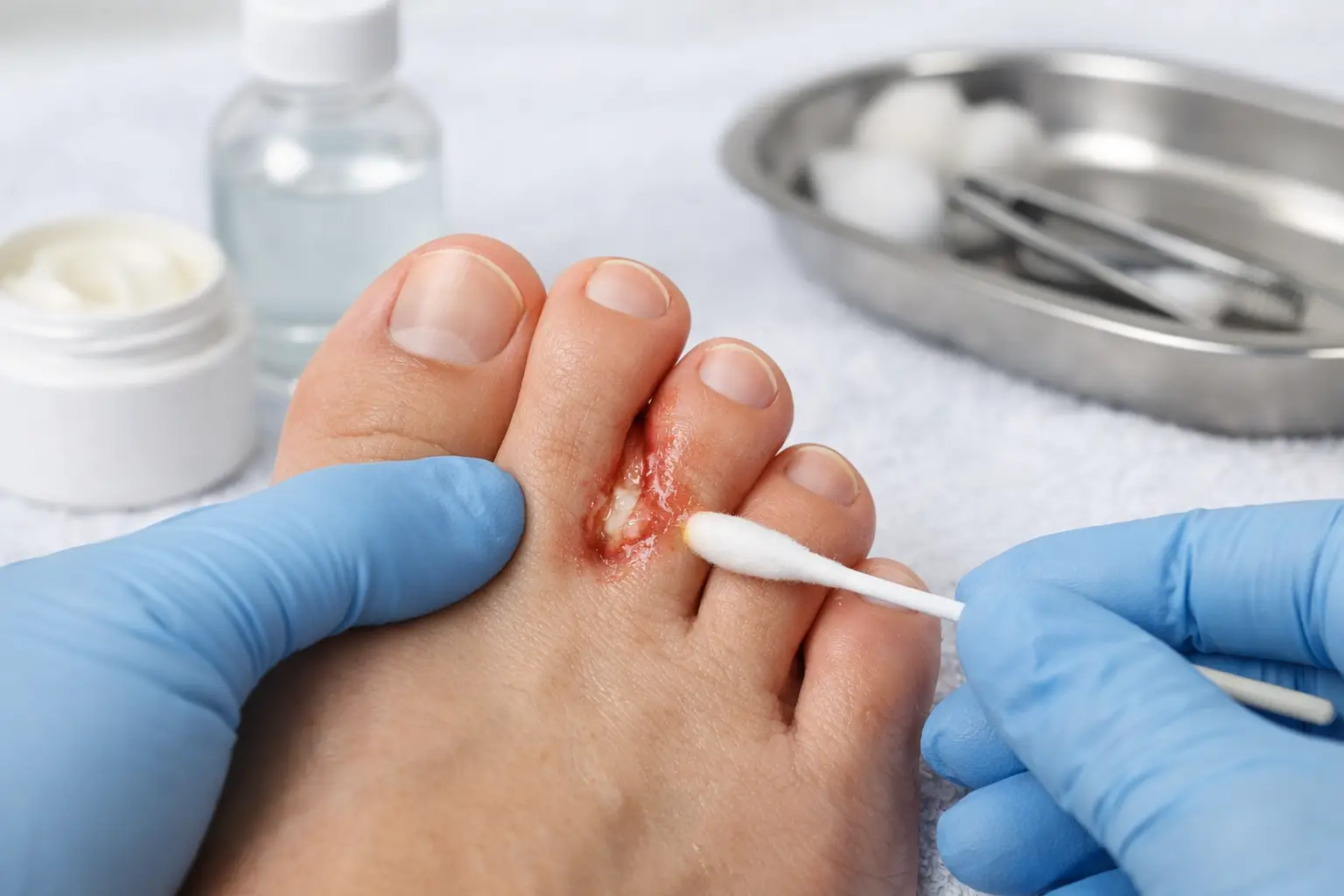
When the skin between your toes turns white, soggy, painful, and foul-smelling, you are usually not dealing with simple dryness or a minor rash. Bacterial toe web infection treatment needs to address active microbial overgrowth, excess moisture, and skin breakdown at the same time. If you only cover the symptoms, the infection often lingers, spreads, or returns.
This condition commonly develops in the tight, damp space between the toes, especially after sweating, exercise, occlusive footwear, or a preexisting fungal problem such as athlete’s foot. Once the skin becomes macerated, bacteria can multiply quickly. That is why many people notice a fast shift from mild irritation to burning, tenderness, odor, fissuring, and raw skin.
What a bacterial toe web infection looks like
A bacterial toe web infection often appears as whitening or soggy softening of the skin between the toes, usually with redness around the edges and a distinct unpleasant odor. In more active cases, the skin can split, ooze, sting, or feel sharply tender when walking. Some people also see peeling, crusting, or greenish-yellow discoloration, depending on which bacteria are involved.
It can be confused with fungal infection because the location is similar and the symptoms overlap. The difference is that bacterial involvement often brings more moisture, more odor, more pain, and more inflammation. If the area feels wet and eroded rather than just dry and flaky, bacteria are often part of the problem.
Why treatment has to do more than dry the skin
Drying the area matters, but it is only one part of effective bacterial toe web infection treatment. The infection develops because the skin barrier has already been compromised. Sweat, friction, trapped moisture, and microbial overgrowth create a cycle that keeps the web space inflamed and vulnerable.
That means treatment should focus on three goals: reduce the bacterial load, calm irritation, and help the skin recover in a dry environment. If one of those steps is missing, improvement may be slow. For example, drying powders alone may reduce moisture but do little for active infection. On the other hand, using a heavy cream that traps moisture can make a wet toe web worse, even if it contains helpful ingredients.
Common causes and risk factors
Most cases start with a moisture problem. Feet spend hours in socks and shoes, often in heat and friction. Add exercise, work boots, synthetic socks, or poor ventilation, and the toe webs remain damp long enough for microorganisms to thrive.
A second common factor is fungal disease. Athlete’s foot can damage the outer skin and create an opening for bacteria to colonize. In practice, mixed infections are common. That matters because some people keep using antifungal products for weeks without improvement, not realizing the bacterial component is now driving the pain, odor, and erosion.
Risk is higher in people with excessive sweating, diabetes, circulatory problems, recurrent skin infections, obesity, or jobs that require prolonged closed footwear. Public locker rooms and shared showers do not directly cause every case, but they can contribute to the fungal side of the problem that later sets the stage for bacterial overgrowth.
Bacterial toe web infection treatment at home
For mild to moderate cases, home care can be effective if you act early and stay consistent. The first step is to reduce moisture exposure aggressively. Wash the feet gently, dry thoroughly, and pay particular attention between each toe. A cool hair dryer setting can help when the skin is too tender for rubbing.
Next, use a targeted topical product intended for bacterial or mixed toe web infections rather than a general moisturizer. This matters because the ideal formula should support antimicrobial action without creating a sealed, overly wet environment. Many consumers prefer natural active compounds for this reason, especially when they want an over-the-counter option that avoids unnecessary antibiotic exposure while still focusing on infection control.
Footwear also needs to change during treatment. Rotate shoes so each pair can dry fully. Choose breathable materials when possible, and switch socks during the day if your feet sweat heavily. If toe crowding keeps the area closed and damp, separating the toes gently with clean gauze may help improve airflow while the skin heals.
What to avoid while treating it
A wet toe web infection usually gets worse when the area is overtreated with thick occlusive products. Petroleum-heavy layers, unless specifically indicated for a dry fissure, can trap heat and moisture. Harsh scrubbing is another mistake. It may remove softened skin temporarily, but it can also worsen erosion and increase pain.
It is also risky to assume every case is fungal and keep repeating the same antifungal routine for weeks with no response. If odor, maceration, and tenderness are increasing, the treatment plan may need to shift toward bacterial control. The same caution applies to using leftover prescription antibiotics without a diagnosis. Not every irritated toe web needs systemic antibiotics, and unnecessary use works against good antimicrobial stewardship.
When a mixed infection is likely
Many persistent toe web infections are not purely bacterial or purely fungal. If you have scaling on the sole, chronic athlete’s foot, nail fungus, or recurrent peeling with periodic flare-ups of odor and soggy breakdown, a mixed infection is very possible.
In that setting, treatment has to be more precise. You may need to control both organisms and repair the barrier while keeping the web space dry. This is one reason condition-specific topicals can be more useful than generic foot creams. A targeted approach tends to match the biology of the problem better than a one-size-fits-all product.
Signs you need medical evaluation
Home treatment is reasonable for limited, early infection, but there are clear situations where you should not wait. Rapid spreading redness, marked swelling, pus, fever, severe pain, or extension onto the top of the foot can signal a deeper infection that needs professional care.
People with diabetes, neuropathy, immune suppression, poor circulation, or a history of foot ulcers should be especially cautious. Even a small toe web infection can become more serious when healing is impaired. If walking becomes difficult, the skin is deeply cracked, or there is no improvement after several days of consistent care, a medical evaluation is the safer move.
How long treatment usually takes
Mild cases may start improving within a few days once moisture is controlled and the right topical is used. Odor and burning often improve first. The skin itself may take longer to normalize, especially if there has been prolonged maceration or a mixed infection.
More stubborn cases can take one to three weeks of steady care. That timeline depends on how damaged the skin is, whether fungus is also present, and whether the feet keep returning to the same warm, wet conditions. If you stop treatment as soon as the discomfort improves but before the skin barrier recovers, recurrence is common.
Preventing another flare
Prevention is practical, not complicated. Keep toe webs dry, change damp socks promptly, and avoid wearing the same shoes day after day without letting them air out. If you are prone to athlete’s foot, treating that early can reduce the chance that bacteria will take advantage of broken skin later.
It also helps to pay attention to the first warning signs. A little whitening, a slight odor, or mild tenderness between the toes is easier to control than a fully macerated infection. Fast action usually means a shorter course of treatment and less disruption to comfort, activity, and hygiene.
For consumers who want an over-the-counter option, the best fit is usually a condition-specific topical designed for infected, high-moisture skin rather than a general skin cream. That targeted strategy reflects the same principle Theracont Scientific applies across its anti-infective care line: treat the actual microbial problem, relieve symptoms quickly, and support the skin without defaulting to unnecessary antibiotics.
If the area between your toes looks wet, smells strong, and feels increasingly sore, take it seriously. The right response is not to hide it or keep guessing. It is to dry the environment, use a focused topical approach, and interrupt the infection before it settles in.