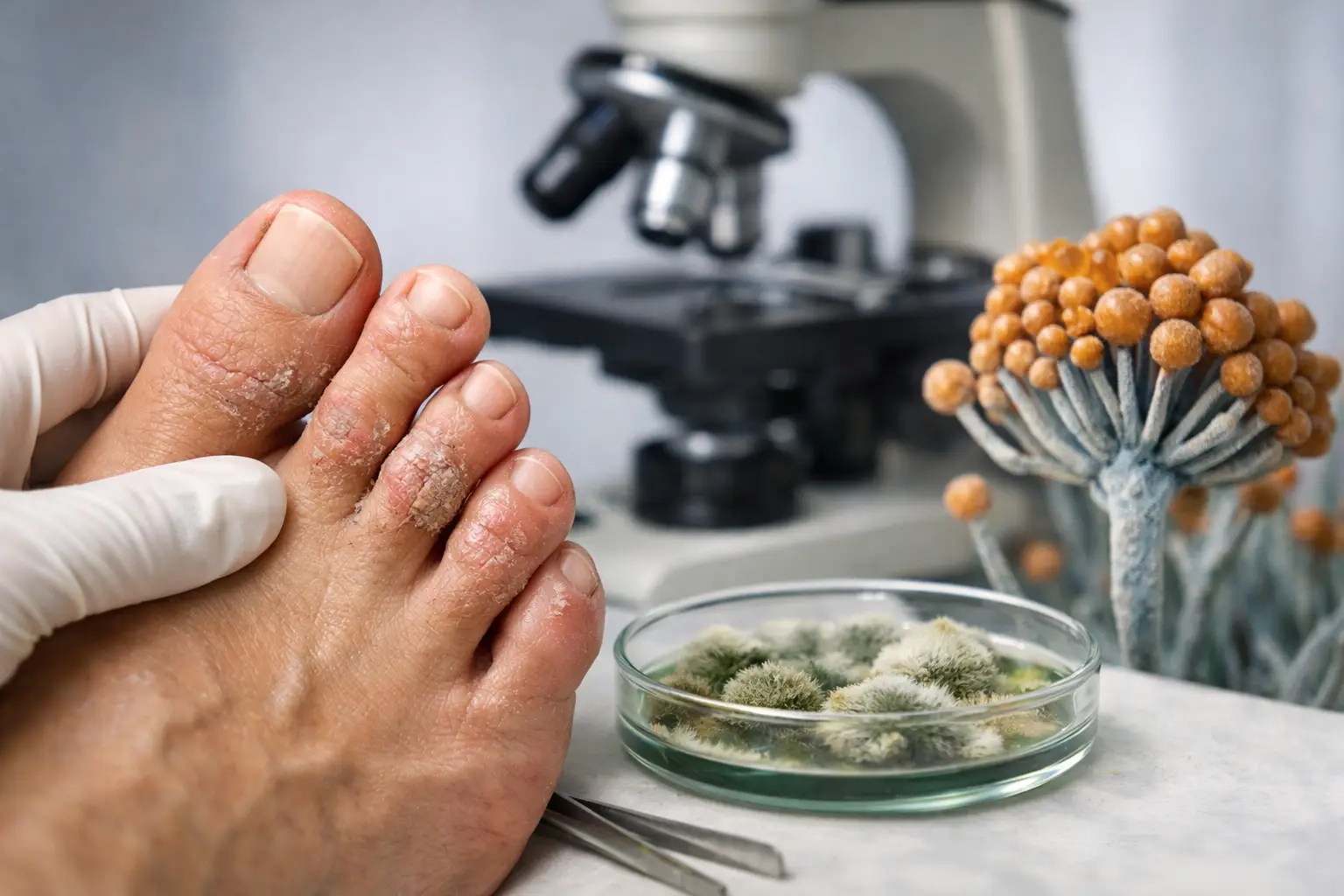
That itchy patch between the toes that keeps returning after treatment is not just frustrating. It is a sign that the infection was never fully controlled, the wrong organism may be involved, or the local skin environment is still helping fungi survive. This guide to stubborn fungal infections is built for people dealing with persistent scaling, cracking, burning, odor, discoloration, or thickened nails who want a clear, treatment-focused path forward.
Stubborn fungal infections are rarely about one bad day at the gym or one pair of damp shoes. They tend to persist because fungi thrive in warm, moist, high-friction areas, and because many people stop treatment as soon as symptoms improve. That can leave enough fungal growth behind to flare again. In other cases, what looks fungal may be mixed with bacterial overgrowth, skin irritation, eczema, or a different condition entirely.
Why some fungal infections are so hard to clear
Fungi are opportunistic. They settle into places where heat, sweat, friction, and limited airflow weaken the skin barrier. Feet are the classic example, especially between the toes and along the sole. But the groin, underarms, skin folds, and nails can also become chronic problem areas.
A persistent infection usually has one or more of the same drivers. Moisture is a major one. If the skin stays damp for hours at a time, topical treatment has to work against an environment that keeps favoring regrowth. Reinfection is another. Socks, shoes, shower floors, nail tools, and tight clothing can repeatedly expose the area. Then there is undertreatment. A product may reduce itching quickly, but symptom relief is not the same as eradication.
Nails are a category of their own. Onychomycosis can be especially stubborn because the infection lives under or within a dense nail plate. Topical products have a harder time reaching the affected tissue, and visible improvement takes time because the damaged nail has to grow out.
A practical guide to stubborn fungal infections by location
Location matters because treatment success depends on the skin surface, the level of moisture, and whether the infection is on soft tissue or nail.
Feet and between the toes
Athlete’s foot and tinea pedis often present with itching, peeling, whitening between the toes, redness, cracking, or a burning sensation. In more persistent cases, the sole may look dry and scaly in a moccasin-like pattern. When odor becomes pronounced or the skin starts looking punched out or soggy between the toes, bacterial involvement may also be present.
This is where people often make a mistake. They assume any foot rash is simple athlete’s foot and treat it casually. But long-standing foot infections can be mixed infections. If treatment only addresses part of the problem, symptoms improve and then return.
Groin and skin folds
Fungal infections in the groin or body folds often thrive because of sweat, friction, and occlusion. These rashes can be intensely itchy and irritating, but they can also become secondarily inflamed from constant rubbing. Tight workout clothing, non-breathable underwear, and incomplete drying after bathing can all prolong the cycle.
Underarms and high-friction areas
Not every rash in a damp skin fold is purely fungal. Underarms and toe webs can also develop bacterial overgrowth that mimics or overlaps with fungal symptoms. This matters because discoloration, odor, and irritation may not respond well to a one-size-fits-all cream. Persistent symptoms deserve a more targeted approach.
Toenails and fingernails
Nail fungus tends to move slowly and linger. Thickening, yellowing, brittleness, edge crumbling, and separation from the nail bed are common signs. Even with effective care, the timeline is longer than people expect. You are not waiting for the product alone to work. You are also waiting for healthy nail growth to replace damaged nail.
How to treat stubborn fungal infections more effectively
The best treatment plan is usually straightforward, but it has to be consistent. Start by matching the product to the condition and site. A broad cosmetic cream is often not enough for a persistent infection. A condition-specific topical with active compounds chosen for antifungal action is a more rational choice, especially when symptoms have lingered or returned after generic treatment.
Clean the area gently and dry it fully before application. This sounds basic, but it is one of the biggest variables in real-world results. Moisture trapped between toes, under breasts, in the groin, or under the nail edge keeps working against treatment.
Then stay with the regimen long enough. One of the main reasons fungal infections come back is premature stopping. Itching may improve before the fungal burden is truly reduced. Continue treatment for the full recommended period, and for nails, expect a longer commitment.
It also helps to reduce the fungal habitat around the skin. Rotate shoes so they dry fully. Change socks if your feet sweat heavily. Use breathable fabrics where friction and moisture are recurring problems. Do not share nail clippers, shoes, or towels. If the infection involves the feet, remember that the shoe environment may be part of the problem, not just the skin.
When natural topical care makes sense
Many consumers want an over-the-counter option that is both targeted and easier to use consistently than prescription therapy. That is a reasonable goal, particularly for mild to moderate superficial fungal infections or recurrent flare-ups that need active symptom control.
A scientifically formulated natural topical can make sense when it is designed for a specific infectious condition rather than positioned as a generic soothing cream. The distinction matters. Targeted formulations are built around active compounds selected to address infection-causing organisms while also helping reduce itching, burning, redness, scaling, and irritation.
That is also where product selection should stay practical. The right choice for athlete’s foot is not always the right choice for thickened fungal nails or for a malodorous toe-web infection that may involve bacterial overgrowth. Theracont Scientific approaches this by separating conditions into focused treatment categories instead of treating all skin problems as interchangeable.
What can interfere with treatment
If you have used a product faithfully and still see little progress, several factors may be slowing recovery. The first is misdiagnosis. Psoriasis, eczema, contact dermatitis, erythrasma, and pitted keratolysis can resemble fungal disease or overlap with it. The second is infection depth. Surface skin usually responds faster than nails. The third is ongoing irritation from friction, sweating, or occlusive footwear.
There is also the issue of damage that remains after the infection starts improving. Thickened skin, discoloration, or a damaged nail can persist for a while even after the fungal load drops. People often read that as treatment failure. Sometimes it is. Sometimes the tissue simply needs time to recover and grow out.
When to get medical evaluation
Persistent does not always mean dangerous, but some cases should not be managed indefinitely at home. If the rash is spreading, painful, draining, severely inflamed, or not responding after a full course of appropriate topical care, get it checked. The same applies if you have diabetes, poor circulation, immune suppression, recurrent cellulitis, or a foot wound.
Nail infections may also need evaluation if the nail is lifting significantly, multiple nails are involved, or the diagnosis is unclear. A clinician can help determine whether it is truly fungal and whether topical care alone is likely to be enough.
How to prevent stubborn fungal infections from returning
Prevention is less about complicated routines and more about breaking the conditions fungi prefer. Keep susceptible areas clean and dry. Dry carefully between the toes and in skin folds. Wear breathable shoes and moisture-managing socks. Change out of damp clothing quickly. If nails are involved, trim carefully, disinfect tools, and avoid repeated trauma from tight footwear.
Most of all, think beyond symptom relief. If an area has a history of recurring infection, treat the environment as part of the condition. That means reducing moisture, limiting friction, and using a targeted product long enough to do more than quiet the itch.
A stubborn fungal infection can feel like a small problem that keeps taking over daily comfort. The good news is that persistence usually has a reason, and once you address that reason with targeted treatment and better control of the local skin environment, progress becomes much more realistic.