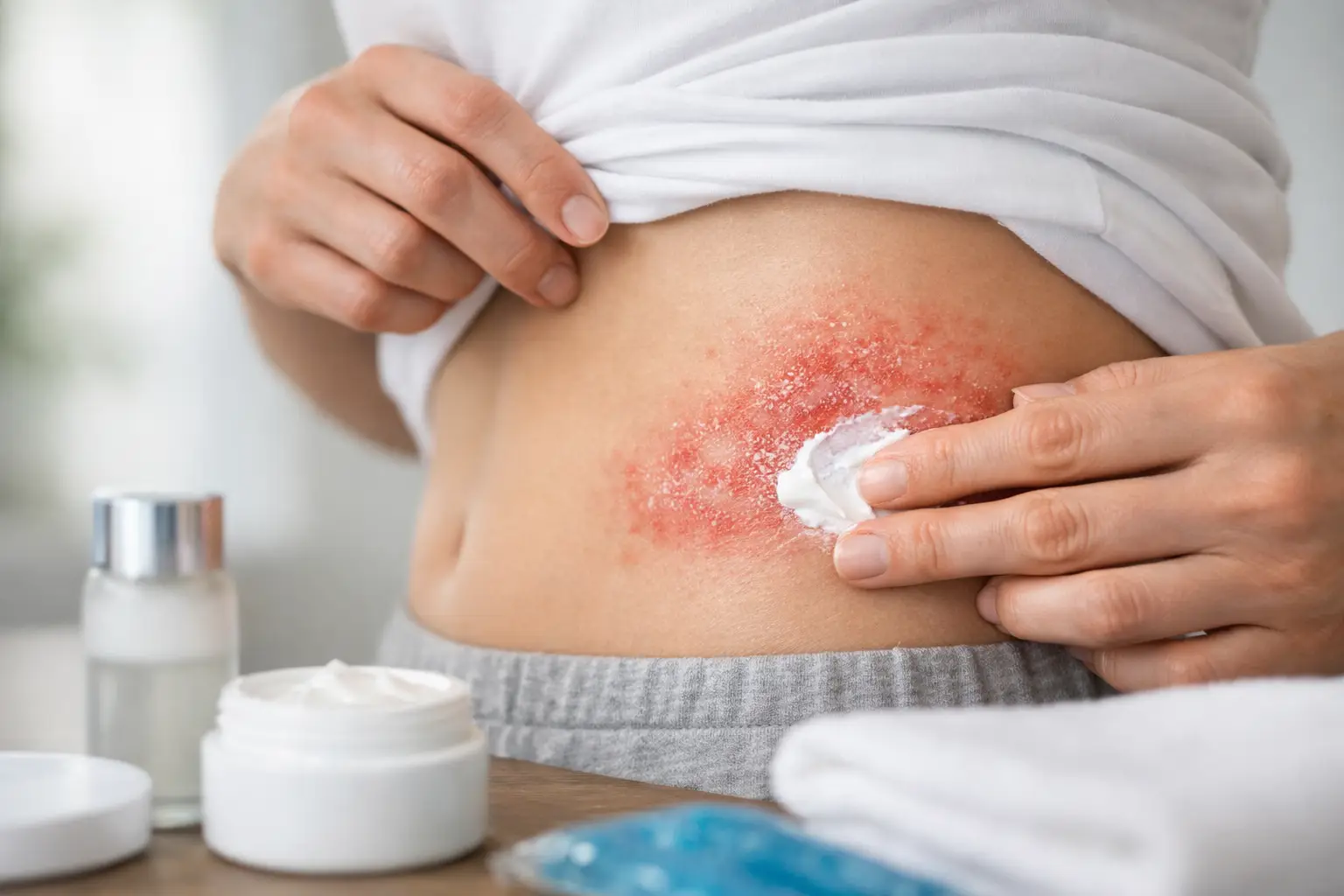
A fungal rash that burns is hard to ignore. It can sting when you walk, flare after a shower, and become more aggressive in warm, high-friction areas like the feet, groin, underarms, and skin folds. If you are searching for how to soothe burning fungal rash symptoms, the goal is not just comfort for a few hours. You need to calm the skin while also reducing the fungal overgrowth that keeps the irritation active.
Why a fungal rash starts to burn
Burning usually means the skin barrier is already inflamed. With fungal conditions, that often happens when moisture, friction, and overgrowth combine. The fungus disrupts the outer layer of skin, then sweat, rubbing, heat, and scratching push the irritation further. What starts as itching can become a raw, hot, stinging rash.
This is common with athlete’s foot, jock itch, ringworm, and yeast-driven rashes in folds of skin. In some cases, the burning gets worse after exercise, long hours in shoes, tight clothing, or repeated exposure to damp fabric. The more compromised the skin becomes, the more sharply it reacts.
That is why symptom relief and infection control need to happen together. Cooling the area helps, but if the fungal trigger stays in place, the burn usually returns.
How to soothe burning fungal rash without making it worse
The first step is to reduce heat and friction. Wash the area gently with lukewarm water and a mild cleanser, then pat dry completely. Do not scrub. Scrubbing feels productive when the skin is irritated, but it often creates more surface damage and more burning.
After cleansing, let the area breathe for a few minutes before applying any treatment. If the rash is in a fold or between the toes, trapped moisture can keep the fungal environment active. Dry skin is not the same as dehydrated skin in this context. A fungal rash generally improves when excess moisture is controlled.
A cool compress can help settle the sting. Keep it short, around 10 to 15 minutes, and use a clean cloth each time. Ice directly on the skin is too harsh for inflamed tissue and can add another layer of irritation.
Then apply a targeted antifungal treatment. This matters because many people try to soothe the burn with thick occlusive creams or heavily fragranced lotions that trap heat and moisture. That can backfire. A condition-specific topical formula is usually the better approach because it is designed to address fungal overgrowth while easing active symptoms such as burning, redness, scaling, and irritation.
What actually helps burning fungal rash symptoms
When choosing treatment, focus on products meant for fungal skin conditions rather than general moisturizers or cosmetic skin creams. The right topical should help create a less favorable environment for fungal growth while supporting visible symptom relief.
Keep the area clean and fully dry
This sounds basic, but it is one of the biggest treatment variables. Fungi thrive in warm, damp spaces. Drying carefully after bathing, sweating, or exercise can reduce the constant cycle of re-irritation. If the rash is on the feet, dry between the toes. If it is in the groin or under folds, pay attention to creases where moisture sits unnoticed.
Reduce friction while the skin recovers
Burning often intensifies when inflamed skin rubs against fabric or adjacent skin. Loose, breathable clothing helps. So do moisture-wicking socks and changing out of sweaty garments quickly. If the rash is on the feet, rotating shoes and allowing them to dry between wears can make a real difference.
Use an antifungal ointment or topical with therapeutic intent
A targeted ointment can do more than coat the skin. The best formulas are designed to actively address fungal involvement while easing discomfort. This is where many people get stuck with generic products that offer temporary relief but are not built around the actual condition. Theracont Scientific takes a condition-specific approach for that reason – direct topical care should target the organisms driving the problem, not just mute symptoms.
Avoid common irritants
Fragrance, harsh soaps, alcohol-heavy products, and aggressive exfoliation can all intensify the burn. So can home remedies that are too concentrated or abrasive. Natural care can be useful, but natural does not automatically mean gentle in every form. Irritated fungal skin usually responds better to controlled, purpose-built treatment than improvised mixtures.
When burning suggests a more severe problem
Not every fungal rash is simple. Some are complicated by secondary bacterial overgrowth, open cracks, maceration, or prolonged inflammation. If the area is swollen, draining, bleeding, or has a strong odor, there may be more than a routine fungal process going on. A rash that spreads quickly or becomes sharply painful also deserves closer evaluation.
People with diabetes, poor circulation, immune compromise, or recurring foot infections should be especially careful. In those cases, burning can be an early sign that the skin is breaking down in a way that needs medical attention, not just over-the-counter symptom management.
There is also the issue of misidentification. Inverse psoriasis, contact dermatitis, erythrasma, intertrigo, and some bacterial conditions can look fungal at first glance. If you have treated the rash consistently and it is not improving, the diagnosis may be off.
Mistakes that keep a fungal rash burning
One common mistake is stopping treatment too early. The burn fades, the redness looks better, and people assume the infection is gone. Then the area heats up again a few days later. Fungal conditions often need sustained treatment beyond the point where symptoms start easing.
Another mistake is over-moisturizing. On dry, inflamed skin, adding cream seems logical. But if the formula traps heat or moisture in a fungal-prone area, it can prolong the problem. The skin needs support, but it also needs an environment that does not feed fungal survival.
Steroid creams are another issue. They may reduce redness temporarily, but if used without the right antifungal approach, they can mask progression while the fungal source remains active. That can lead to a rash that looks less dramatic for a short time but becomes harder to control.
Poor hygiene is not the only driver, and many people assume they caused the rash by not being clean enough. In reality, fungal rashes often develop in people who shower regularly but deal with sweat, occlusion, repeated friction, communal floors, or recurring exposure from shoes and towels. The practical fix is not more scrubbing. It is better control of moisture, reinfection, and treatment consistency.
How long relief usually takes
If you start the right topical care early and remove the conditions that keep the area irritated, burning may begin to improve within days. That said, timing depends on location, severity, and whether the skin is cracked or raw. A mild athlete’s foot flare may calm fairly quickly. A rash in skin folds that stays moist all day can take longer.
Visible healing also tends to lag behind symptom relief. Less burning does not always mean the fungal issue is fully resolved. Keep using the product as directed, keep the area dry, and continue minimizing friction even after the rash starts looking better.
How to soothe burning fungal rash in high-risk areas
Different body sites need slightly different handling. Feet usually require aggressive moisture control, sock changes, and shoe management. Groin rashes benefit from loose underwear, breathable fabric, and less heat buildup. Under-breast and abdominal fold rashes improve when the skin is kept dry without constant rubbing.
The principle stays the same across all sites: reduce fungal load, reduce moisture, reduce friction, and avoid irritants. What changes is the source of the stress on the skin. That is why targeted care works better than one-size-fits-all skin products.
When to seek medical care
Get professional evaluation if the rash is rapidly worsening, severely painful, spreading despite treatment, or producing pus, drainage, or significant swelling. You should also seek help if you have recurrent infections in the same area, thick nail involvement with foot rash, or persistent symptoms after a full course of over-the-counter treatment.
A clinician can confirm whether the condition is fungal, bacterial, mixed, or something else entirely. That matters because the right treatment path depends on the actual cause, not just the appearance.
Relief starts with recognizing that burning is a sign of active irritation, not something to simply cover up. Treat the source, protect the skin, and give the area the dry, controlled environment it needs to recover.