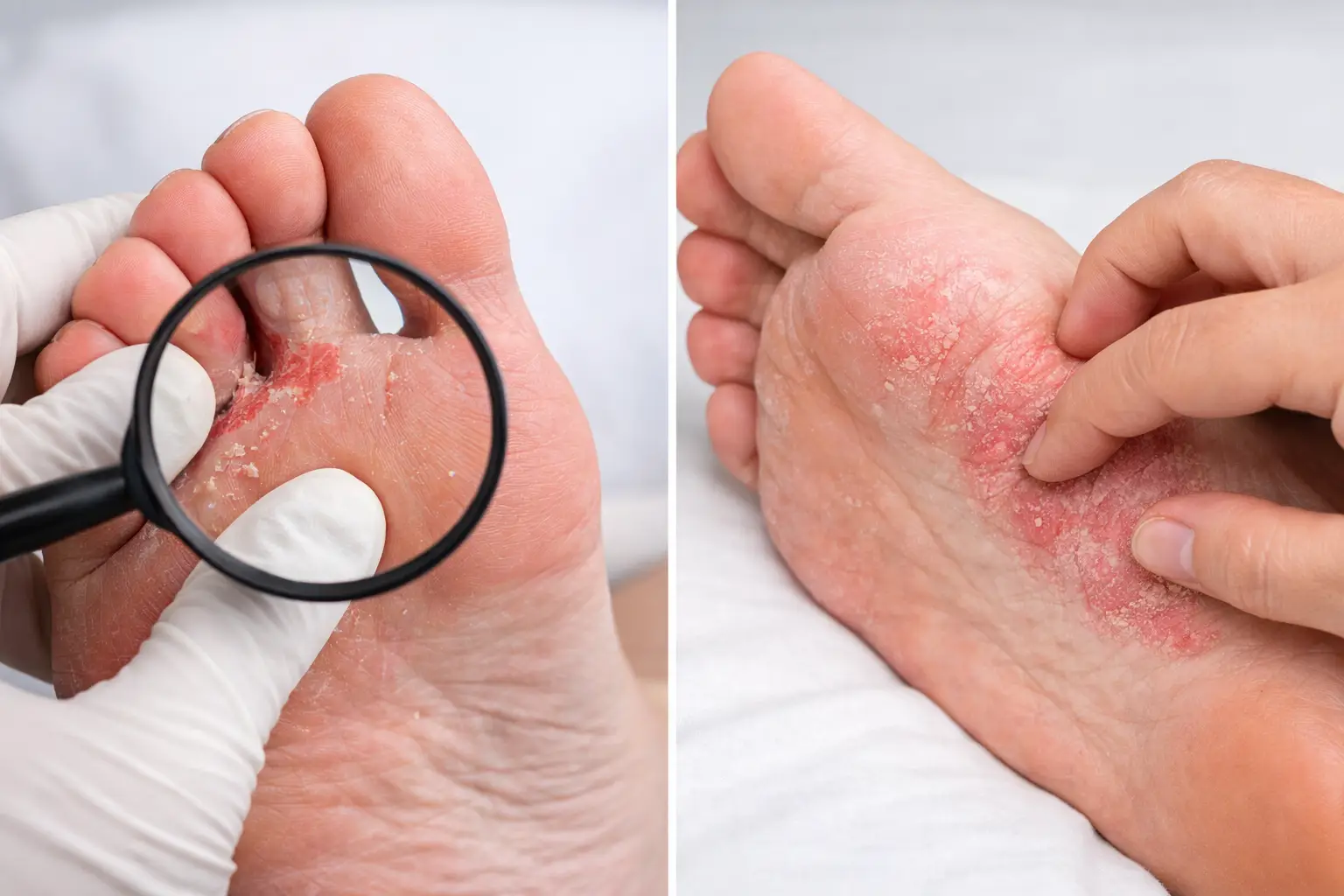
An itchy, peeling foot does not always mean the same thing. In the tinea pedis vs eczema question, the difference matters because one problem is driven by fungal overgrowth, while the other is an inflammatory skin condition. They can look similar at first glance, but treating the wrong one often leads to more irritation, more time, and slower relief.
For adults dealing with persistent foot discomfort, this is where confusion starts. Redness, scaling, cracking, burning, and itch can show up in both conditions. But the pattern, triggers, and response to treatment are usually different enough to point you in the right direction.
Tinea pedis vs eczema: the core difference
Tinea pedis is a fungal infection of the feet. It is commonly called athlete’s foot and is caused by dermatophyte fungi that thrive in warm, damp environments such as sweaty shoes, locker rooms, communal showers, and occlusive socks. The infection feeds on keratin in the outer skin layer and tends to spread when moisture and friction are present.
Eczema is not a fungal infection. It is a broad term for inflammatory skin disorders that weaken the skin barrier and trigger itching, dryness, and irritation. On the feet, eczema may show up as atopic dermatitis, contact dermatitis from footwear materials or topical products, or dyshidrotic eczema with small itchy blisters.
That distinction shapes treatment. Tinea pedis needs antifungal control. Eczema needs inflammation management and skin-barrier support. If a fungal infection is treated as eczema alone, the infection may continue to spread. If eczema is treated aggressively as fungus without considering irritation, the skin can become even more inflamed.
What tinea pedis usually looks and feels like
Tinea pedis often starts between the toes, especially the fourth and fifth toes. The skin may look white, soggy, macerated, flaky, or cracked. Many people notice itching first, then burning, stinging, or a raw feeling when the skin splits.
In other cases, the infection shows up on the soles and sides of the feet in a dry, scaly “moccasin” pattern. This form can be stubborn and may look like chronically dry skin. Some people also develop small inflamed bumps or blisters, particularly if the infection becomes more reactive.
A fungal foot infection also tends to favor certain conditions. Tight shoes, prolonged sweating, gym use, shared floors, and recurring nail fungus all increase the odds. If you have scaling between the toes plus odor, skin breakdown, or thickened toenails, tinea pedis moves higher on the list.
What foot eczema usually looks and feels like
Eczema on the feet can be red, dry, rough, cracked, and intensely itchy. Unlike tinea pedis, it is not caused by an infectious organism. It is often connected to a disrupted skin barrier, an allergy, a chemical irritant, or an underlying tendency toward sensitive skin.
Dyshidrotic eczema is one of the most confusing presentations because it can cause small deep blisters on the sides of the feet or toes, along with itching and scaling as the blisters dry out. Contact dermatitis can appear after exposure to shoe adhesives, rubber, leather treatments, detergents, or fragranced foot products. In these cases, the rash may mirror the area of contact rather than concentrating between the toes.
Eczema also tends to come and go in flares. Stress, sweating, dryness, harsh soaps, and allergens can all worsen it. Some people have eczema elsewhere on the body, which makes a foot eczema diagnosis more likely.
Tinea pedis vs eczema symptoms: where the clues are
The overlap is real, but there are useful clues. Tinea pedis more often affects the toe webs, may be one-sided at first, and commonly involves peeling, maceration, or scaling with a fungal pattern. Eczema is more likely to be symmetrical, linked to irritation or allergy, and associated with very dry or blister-prone skin.
Itch happens in both. Burning can happen in both. Cracking can happen in both. That is why location and pattern matter more than any single symptom.
If the skin is soggy and white between the toes, fungus is a strong possibility. If the rash follows the shape of a sandal strap or the inside of a shoe and flares after exposure, contact eczema becomes more likely. If there are thick scales on the sole with concurrent nail changes, fungal involvement should be considered carefully.
The gray area is that eczema and fungal infection can exist at the same time. Inflamed skin is easier to irritate and easier to damage, and a compromised barrier can complicate the picture. In persistent cases, guessing is not efficient.
Why people get the diagnosis wrong
A lot of people assume any itchy foot rash is athlete’s foot. Others assume dry, peeling skin must be eczema because it does not look dramatic enough to be an infection. Both assumptions can miss the mark.
Over-the-counter hydrocortisone is one reason this gets messy. A steroid cream may calm redness and itching temporarily, so the skin looks better for a short time. But if the underlying issue is tinea pedis, the fungus is still there. In some cases, steroid use can blur the appearance of the infection and make it harder to recognize.
On the other side, using harsh antifungal products on already irritated eczematous skin can increase stinging, dryness, and barrier damage. The result is more discomfort and less clarity.
How diagnosis is confirmed
A clinician can often tell the difference from the appearance and distribution of the rash, but not always. If the presentation is unclear, a skin scraping with potassium hydroxide testing or fungal culture may be used to confirm fungal elements. That is especially helpful when the rash has been recurrent, treatment has failed, or the sole of the foot has a thick scaly pattern that could be mistaken for dermatitis.
This is worth doing when symptoms keep returning. Chronic foot irritation is not just a cosmetic issue. Cracks in the skin can make walking uncomfortable and create entry points for secondary bacterial problems.
Treatment depends on the cause
If the problem is tinea pedis, treatment should focus on antifungal action and moisture control. That usually means a targeted topical antifungal and practical steps to reduce the environment fungi prefer. Feet should be kept dry, socks changed regularly, and footwear allowed to air out fully. If nail fungus is present, that also needs attention because it can act as a reservoir for reinfection.
If the problem is eczema, treatment centers on reducing inflammation and protecting the skin barrier. That may involve avoiding triggers, switching footwear materials, using gentle cleansers, and applying appropriate moisturizers or clinician-directed anti-inflammatory treatment. The key point is that eczema is not something you eliminate with an antifungal alone.
When symptoms strongly suggest fungus, a condition-specific topical product makes more sense than a general skin cream. For consumers looking for a non-prescription approach, targeted natural anti-infective options may appeal because they are built around control of fungal overgrowth while also addressing itching, burning, scaling, and irritation. Theracont Scientific positions this kind of care around targeted symptom relief and infection-focused treatment rather than generic moisturizing.
When to stop self-treating
If you have had the rash for more than a few weeks without improvement, if it keeps recurring, or if the skin is painful, swollen, draining, or foul-smelling, it is time to get a proper evaluation. The same applies if you have diabetes, poor circulation, immune compromise, or major skin breakdown.
It is also smart to get checked if the rash spreads to the nails, hands, groin, or other areas, or if you are cycling through products without a clear response. Persistent scaling is not always simple dryness. Recurrent itching is not always eczema. The longer the wrong treatment is used, the longer the skin stays inflamed or infected.
A practical way to think about tinea pedis vs eczema
Think in terms of cause, pattern, and response. Cause asks whether this looks infectious or inflammatory. Pattern asks where it started, whether it is between the toes or linked to shoe contact, and whether the distribution is fungal-looking or dermatitis-looking. Response asks whether antifungal care or barrier-focused care actually improves the skin.
That framework is more useful than guessing based on itch alone. The feet deal with heat, sweat, friction, and prolonged shoe contact every day, so both fungal infection and eczema are common there. But common does not mean interchangeable.
If your foot rash is persistent, uncomfortable, or embarrassing, getting the cause right is the fastest route to real relief. Skin clears better when treatment matches the problem.