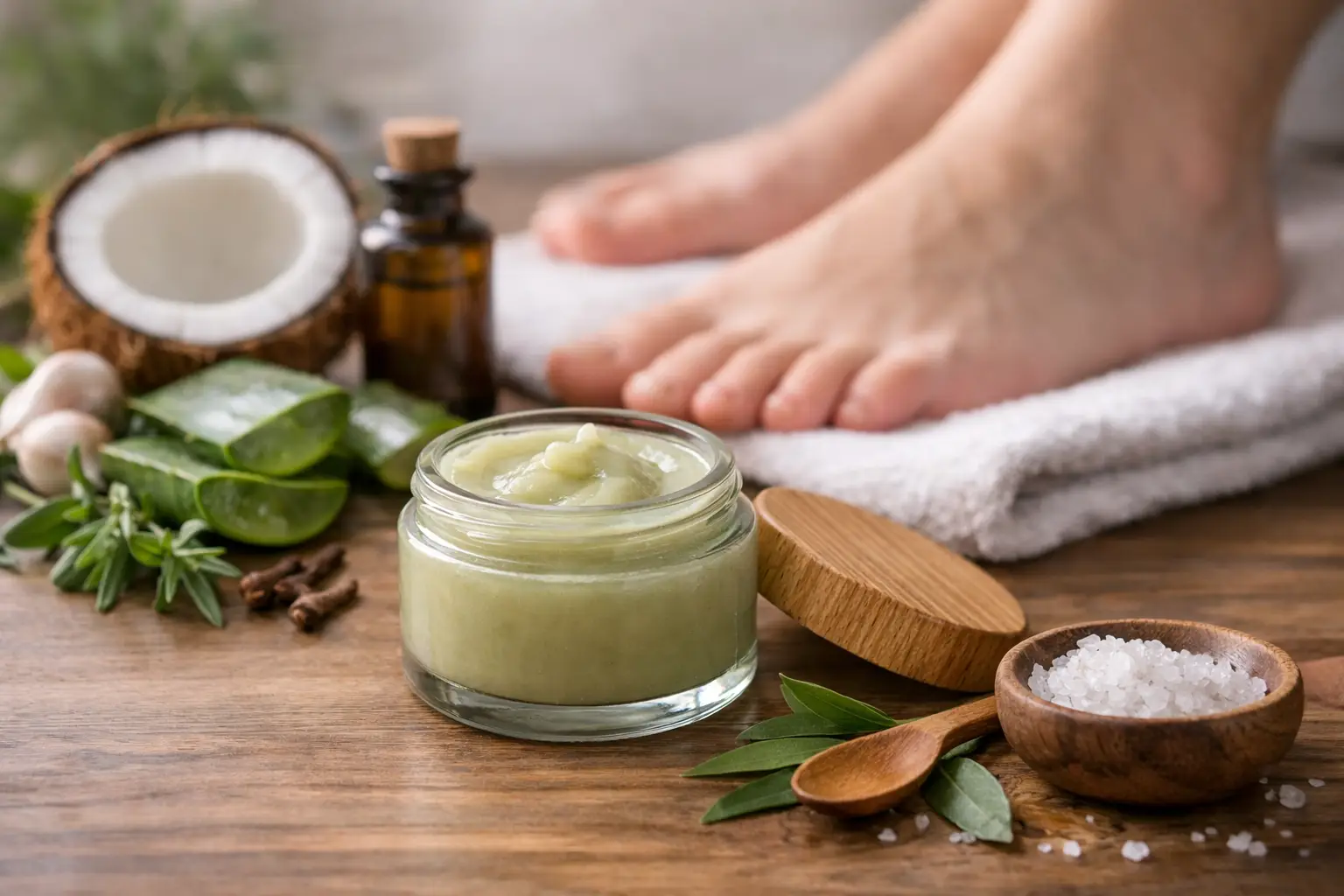
That persistent itch between the toes is not a minor skin annoyance. It is often an active fungal infection, and a serious natural athlete’s foot ointment review should judge products by how well they address both the organism and the skin damage it leaves behind. If an ointment only cools the area for an hour but does little for scaling, cracking, odor, or recurrence, it is not doing enough.
Athlete’s foot, or tinea pedis, tends to thrive in warm, damp, high-friction environments. Shoes, locker rooms, sweaty socks, and prolonged moisture create the exact setting fungi prefer. Many people do not treat it early because it starts small – a little peeling, mild burning, occasional itching. By the time the skin becomes raw, inflamed, and difficult to ignore, the infection may already be established.
That is why evaluating a natural ointment requires more than checking whether it contains botanical ingredients. The real question is whether the formula is built for antifungal action, symptom control, and practical use on compromised skin.
What a natural athlete’s foot ointment review should actually measure
A useful review starts with the condition itself. Athlete’s foot is not uniform. Some cases are mostly dry and scaly. Others involve redness, burning, fissures, maceration between the toes, or a sharp foot odor that suggests overlapping microbial imbalance. The best ointment for one presentation may not be the best choice for another.
For that reason, the first standard is active compound selection. Natural products vary widely. Some rely on plant oils with known antifungal properties, while others are little more than moisturizers scented with essential oils. There is a difference. A treatment-focused ointment should contain ingredients selected for anti-infective activity, not just a natural label.
The second standard is contact time. Sprays and powders can be useful in broader foot care, but ointments stay on the skin longer. That matters when the target is a persistent fungal area, especially in toe webs, on irritated borders of the foot, or over rough, scaling patches. A well-designed ointment should create sustained coverage without leaving the area overly occluded or greasy.
The third standard is symptom relief. Burning, itching, tenderness, and redness affect sleep, exercise, work comfort, and even walking. A product that helps control the fungal burden but leaves the skin inflamed and miserable may not support consistent use. Effective treatment has to be tolerable enough for people to keep using it as directed.
Ingredients matter, but formulation matters more
Consumers often look first for tea tree oil, oregano oil, eucalyptus, menthol, or other recognizable natural ingredients. That instinct makes sense, but ingredient familiarity is not the same as product quality. Concentration, stability, delivery base, and skin compatibility all shape how well a formula performs.
A strong natural antifungal ingredient can still fail in practice if the ointment base spreads poorly, separates, stings broken skin, or wears off too quickly inside socks and shoes. The opposite is also true. A carefully balanced formulation can improve how active compounds adhere to affected skin and how consistently they are used.
This is where many natural products divide into two categories. One group is cosmetic-first. These formulas may soften skin or reduce odor temporarily, but they are not clearly designed as targeted anti-infective care. The other group is treatment-first. These products are built around the condition, the symptom pattern, and the need for repeated use on infected skin.
For buyers comparing options, that distinction matters more than packaging language. If the product reads like a general wellness balm, it may not be enough for recurring tinea pedis.
How to tell if an ointment is built for real athlete’s foot relief
The most credible products usually make a clear therapeutic case. They explain what condition they target, what symptoms they are meant to relieve, and why the actives were selected. Vague promises about freshening or restoring skin are less useful than direct language about itching, burning, scaling, fungal overgrowth, and irritation.
Texture also matters. An athlete’s foot ointment should be thick enough to stay where it is applied, especially between toes and along the sole margins, but not so heavy that it traps excessive moisture. That balance is not trivial. Skin affected by fungus is often vulnerable, and the wrong texture can worsen discomfort or make the area feel constantly damp.
Skin tolerance is another major review point. Natural does not automatically mean gentle. Essential oils and plant-derived actives can irritate inflamed or fissured skin if poorly balanced. A better ointment will aim for antimicrobial action while still supporting damaged skin barriers.
This is where condition-specific products tend to perform better than broad natural creams. When a company formulates around athlete’s foot rather than around generic skin soothing, the product is more likely to account for fungal persistence, recurrent itching, moisture-prone areas, and the need for repeated application.
Natural vs synthetic is not a simple decision
A fair natural athlete’s foot ointment review should avoid one-sided claims. Synthetic antifungals remain appropriate in many cases and can be effective. At the same time, many consumers want a non-prescription option that aligns with a more selective approach to topical anti-infective care. They may be reacting to irritation from prior products, looking to avoid unnecessary antibiotic exposure, or seeking a focused natural alternative they can use consistently.
The trade-off is straightforward. Natural ointments can appeal to people who want plant-based active compounds and targeted symptom relief, but not every natural formula is equally strong or equally specific. Synthetic products may have a more familiar drug profile, but they can also come with limitations in tolerability, preference, or repeat use for some consumers.
So the better question is not which category is universally best. It is whether the individual ointment is built to control fungal activity, reduce symptoms, and support adherence over time.
Where some natural ointments fall short
The weakest options usually fail in one of three ways. First, they overpromise and under-specify. If a product claims to help with athlete’s foot, nail fungus, eczema, acne, rashes, and insect bites all at once, it may not be specialized enough to trust for a stubborn fungal infection.
Second, they focus too heavily on sensory effect. Cooling ingredients can make feet feel better quickly, but cooling is not treatment. A pleasant tingle is not evidence of fungal control.
Third, they ignore recurrence. Athlete’s foot is well known for coming back, especially when treatment stops as soon as itching improves. Better ointments are usually positioned for a complete treatment window, not just short-term comfort.
What stronger products tend to get right
The better natural ointments usually share a few traits. They are condition-specific, built around antifungal or broader anti-infective natural compounds, and designed to relieve active symptoms while remaining practical for daily use. They also speak plainly about the skin problems users are trying to solve – itching, burning, scaling, cracking, odor, irritation, and visible inflammation.
A scientifically framed natural brand often has an advantage here. When formulation is tied to microbial control rather than marketing trends, the product tends to feel more credible and more useful in real-world treatment. That is especially true for consumers dealing with recurring infections who are tired of trying generic creams that are too mild, too vague, or too cosmetic.
Theracont Scientific fits this more targeted model. Its approach is not centered on a catch-all skin balm. It is centered on natural anti-infective ointments developed for specific bacterial and fungal conditions, with direct attention to symptom relief and accessible over-the-counter care. That kind of positioning is more aligned with how people actually shop when they are trying to stop an uncomfortable foot infection.
When a natural ointment may not be enough on its own
There are situations where even a strong natural product may need backup from better foot care habits or medical evaluation. If the skin is deeply cracked, bleeding, severely swollen, draining, or spreading rapidly, home treatment may not be sufficient. The same applies if the infection appears to involve the nails extensively or keeps returning despite proper use.
Daily management still matters. Drying the feet well, changing socks, reducing prolonged moisture, and treating shoes as part of the problem can all influence outcomes. An ointment can do meaningful therapeutic work, but constant reinoculation and wet skin will slow progress.
That does not weaken the value of a natural ointment. It just puts it in the right clinical context. Treatment success usually depends on both the product and the environment where the infection keeps trying to persist.
Final judgment
A worthwhile natural athlete’s foot ointment review should ask one clear question: is this formula made to treat an actual fungal problem, or is it just a natural skin product wearing the language of treatment? The best options are targeted, symptom-driven, and formulated with enough seriousness to address itching, burning, scaling, irritation, and recurrence together. If a product can do that while staying accessible, non-prescription, and grounded in carefully selected natural actives, it earns attention for the right reasons. Relief matters, but so does choosing an ointment that treats the condition with the level of focus it deserves.