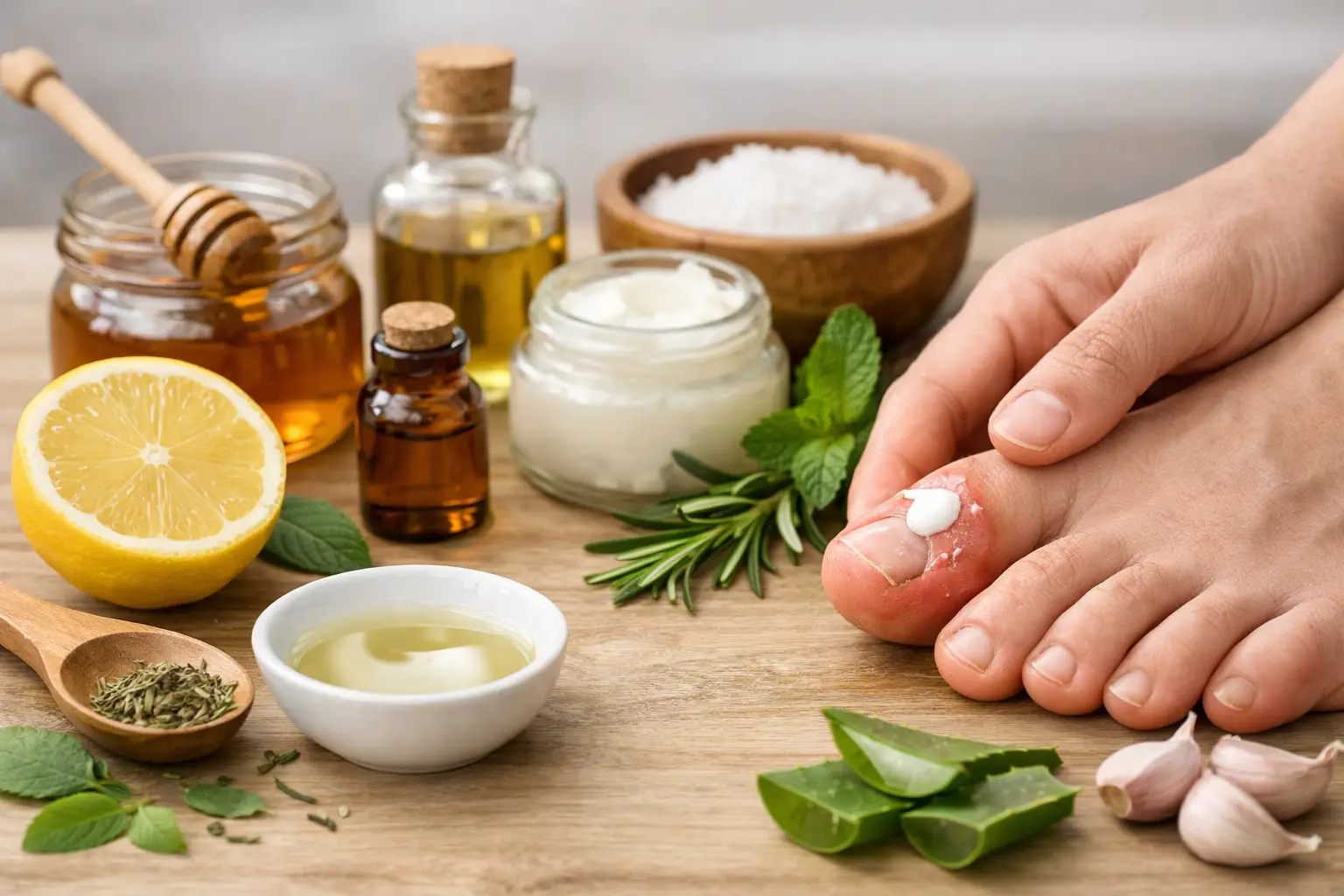
When your feet start itching, burning, peeling, or giving off an odor that does not improve with basic hygiene, you are usually not dealing with dry skin. You may need a natural foot infection treatment that addresses the actual source of the problem – fungal overgrowth, bacterial overgrowth, or both. The right treatment is not just about comfort. It is about stopping progression, reducing recurrence, and getting back to normal walking, working, and daily activity without irritation.
Many people wait too long because foot infections often start small. A little scaling between the toes can turn into cracked skin. Mild odor can become persistent malodor that returns within hours. Nail discoloration can spread from one edge of the nail to the full plate. Once an infection gains ground, generic moisturizers and broad “skin creams” usually do very little.
What a natural foot infection treatment should actually do
A useful natural foot infection treatment needs to do more than soothe symptoms for a few hours. It should help reduce the organisms driving the infection while also calming the skin barrier enough for the area to recover. That balance matters. If a product is only soothing, the infection can continue underneath. If it is overly harsh, damaged skin may become even more vulnerable.
For most foot conditions, effective topical care has four jobs. It should help control fungal or bacterial growth, reduce symptoms like itching, burning, redness, and odor, support skin recovery in high-friction areas, and be practical enough to use consistently. Consistency is not a minor detail. Many foot infections linger because treatment is stopped as soon as symptoms begin to ease.
Natural active compounds can fit well here when they are chosen for anti-infective purpose rather than cosmetic appeal. That is the difference between a treatment approach and a wellness approach. Tea tree, certain botanical antifungal compounds, and plant-derived antimicrobial ingredients may help in some cases, but the formula, concentration, and condition match matter more than the label saying natural.
Not every foot infection is the same
One reason home treatment fails is simple misidentification. People often use the same cream for every foot problem, even though athlete’s foot, nail fungus, pitted keratolysis, and erythrasma do not behave the same way.
Athlete’s foot, also called tinea pedis, is fungal. It often shows up as itching, scaling, peeling skin, and fissures between the toes or on the soles. In some cases it causes a dry, powdery pattern. In others it looks red, inflamed, and raw.
Toenail fungus, or onychomycosis, usually moves more slowly. The nail may thicken, turn yellow or brown, become brittle, or separate from the nail bed. This condition is harder to treat because the infection sits in and under a dense nail structure.
Pitted keratolysis is different. It is bacterial, not fungal, and commonly causes strong foot odor with small crater-like pits on pressure-bearing areas of the sole. It often affects people whose feet stay sweaty for long periods.
Erythrasma is another bacterial condition. It can affect the feet, especially toe web spaces, and may look like reddish-brown, scaly patches. It is sometimes mistaken for fungus, which leads to the wrong treatment.
That is why symptom recognition matters. If the infection type is off, the product choice is off.
How to choose a natural foot infection treatment
Start with the location and the symptom pattern. If the problem is mainly between the toes with itching, peeling, and white soggy skin, a targeted antifungal topical is usually the logical place to begin. If the issue is intense odor with pitting on the soles, you should think more seriously about bacterial overgrowth. If the nail itself is thickened and discolored, you need a treatment designed for nail penetration and long-term use, not a standard skin ointment.
A condition-specific approach is usually more effective than a general natural cream because foot infections differ in depth, moisture exposure, and organism type. A product formulated for athlete’s foot may not be enough for nail fungus. A nail formula may not be the best fit for malodor caused by pitted keratolysis.
This is where a targeted brand approach makes sense. Theracont Scientific, for example, positions natural topical care around distinct bacterial and fungal conditions rather than asking one cream to do every job. That is a practical model because it reflects how these infections actually behave.
What to expect from treatment, and what not to expect
Relief and clearance are not the same timeline. Itching, burning, and odor may improve first. Visible skin recovery usually follows. Nail appearance is the slowest to change because healthy nail has to grow out over time.
For mild fungal skin infections, some people notice improvement within days to a couple of weeks if the treatment is well matched and used consistently. More stubborn or recurrent cases take longer. Nail fungus can require months of steady application. Bacterial odor conditions may improve quickly if the product controls overgrowth and the moisture problem is addressed at the same time.
Do not assume a treatment failed just because the skin is still discolored after the discomfort improves. On the other hand, do not keep using a product indefinitely if symptoms are worsening, spreading, or becoming painful. Natural treatment can be effective, but it still needs to be the right treatment.
Natural foot infection treatment works better with moisture control
Topical treatment does not work in isolation. Fungi and bacteria thrive in warm, damp, enclosed environments. If your shoes stay wet, your socks trap sweat, or your feet never fully dry after bathing, even a strong treatment can struggle.
Drying between the toes matters. Rotating shoes matters. Clean socks matter. If you exercise, work on your feet all day, or wear occlusive footwear, those habits become part of treatment rather than general hygiene advice. This is especially true for recurrent tinea pedis and odor-heavy bacterial conditions.
There is also a trade-off here. Rich occlusive products may feel soothing on cracked skin, but in very moist toe web infections they can sometimes keep the area too damp. In contrast, a lighter targeted topical may be better for interdigital use. The best formulation depends on where the infection is and how wet the environment stays throughout the day.
When natural treatment is a reasonable option
Natural topical care makes the most sense for mild to moderate infections, early-stage symptoms, recurrent conditions that need ongoing management, and people who want to avoid unnecessary exposure to synthetic antibiotic-based products when a non-prescription option is appropriate. It can also be a good fit for consumers who are looking for active antimicrobial support rather than a product that simply masks odor or softens skin.
That said, natural does not mean weak, and prescription does not automatically mean necessary. The better question is whether the treatment is targeted and whether the condition is still manageable at home.
When you should stop self-treating and get medical help
Some foot infections need formal evaluation. If you have diabetes, poor circulation, nerve loss, significant swelling, fever, pus, or rapidly spreading redness, do not rely on over-the-counter care alone. The same applies if walking becomes painful, the skin breaks deeply, or the nail area becomes acutely inflamed.
You should also get checked if you are unsure whether the condition is fungal, bacterial, inflammatory, or something else entirely. Psoriasis, eczema, contact dermatitis, and friction damage can mimic infection. So can mixed infections, where more than one problem is present at once.
The real standard for a good treatment
A good natural foot infection treatment is not judged by how pleasant it smells or how “clean” the label looks. It is judged by whether it reduces the infective burden, relieves symptoms that interfere with daily life, and supports consistent use long enough to change the condition. That means matching the treatment to the diagnosis as closely as possible and respecting the role of moisture, friction, and reinfection.
If your feet are itching, scaling, burning, malodorous, or showing nail changes, the best next step is usually not another generic skin product. It is a more specific treatment decision based on what kind of infection you are actually dealing with. Getting that part right is often what finally moves the condition in the right direction.